January 2026 in “Animal Genetics” A genetic variant in the GJB6 gene likely caused the Labrador's paw pad condition.
8 citations
,
January 2017 in “Journal of Biological Chemistry” Astrotactin-2 is cleaved in a specific way that helps understand its maturation.
1 citations
,
April 2007 in “The FASEB Journal” Lack of certain fatty acids causes skin, immune, and fertility issues in mice.
53 citations
,
March 2006 in “Biopolymers” TTD hair is brittle due to fewer sulfur amino acids and unstable disulfide bonds.
 18 citations
,
February 2015 in “Acta Crystallographica Section D: Structural Biology”
18 citations
,
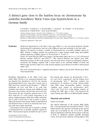
February 2015 in “Acta Crystallographica Section D: Structural Biology” The study concludes that certain domains in Clostridium histolyticum enzymes are structurally unique, bind calcium to become more stable, and play distinct roles in breaking down collagen, with potential applications in medicine and drug delivery.
 36 citations
,
October 2000 in “British Journal of Dermatology”
36 citations
,
October 2000 in “British Journal of Dermatology” A different gene near the hairless gene on chromosome 8p21 causes a rare hair loss condition in a German family.
January 2013 in “Tampere University Institutional Repository (Tampere University)” Tudor-SN is important for immune cells, and polyamines can promote hair growth.
 3 citations
,
January 2009 in “Sen'i Gakkaishi”
3 citations
,
January 2009 in “Sen'i Gakkaishi” Using both TGA and DTDG in hair straightening reduces hair damage compared to using TGA alone.
November 2025 in “Journal of Investigative Dermatology” Skin-associated cartilage cells can influence hair growth by altering specific signaling pathways.
 May 2024 in “JCI insight”
 A variant in the ADAM17 gene causes hair loss by increasing protein degradation through TRIM47.
32 citations
,
May 1999 in “Biochemical and Biophysical Research Communications” A new enzyme, BSSP, is found in high amounts in the hair follicles of nude mice.
 March 2026 in “Folia Histochemica et Cytobiologica”
 LTBP1 is a key regulator in diseases and a potential target for new treatments.
161 citations
,
June 1993 in “Journal of Biological Chemistry” Trichohyalin helps in hair and skin cell structure and function by binding calcium and linking proteins.
2 citations
,
January 1993 Trichohyalin is a versatile protein involved in hair and skin structure.
64 citations
,
March 2004 in “Journal of Clinical Investigation” Targeting ornithine decarboxylase can help prevent skin cancer.
 31 citations
,
October 2010 in “Progress in lipid research”
31 citations
,
October 2010 in “Progress in lipid research” LPA3 is crucial for embryo implantation and links LPA to prostaglandin signaling.
April 2023 in “Zenodo (CERN European Organization for Nuclear Research)” High-dose vitamin D and an anti-inflammatory diet may help improve symptoms in autoimmune conditions like SLE and AA.
 68 citations
,
July 2011 in “Journal of Biochemistry/The journal of biochemistry”
68 citations
,
July 2011 in “Journal of Biochemistry/The journal of biochemistry” New LPA receptors (LPA4, LPA5, LPA6) have diverse roles in the body.
49 citations
,
October 1989 in “Genomics” Type I keratin genes are closely linked to the rex locus on mouse chromosome 11, affecting hair development.
 June 2013 in “Faculty Opinions – Post-Publication Peer Review of the Biomedical Literature”
 Wnt ligand secretion by hair follicle cells is essential for hair growth and repair.
44 citations
,
January 2017 in “Journal of Investigative Dermatology” Mutations in the KLHL24 gene cause skin blistering in epidermolysis bullosa simplex.
13 citations
,
October 2016 in “Acta Biochimica et Biophysica Sinica” GhPLDα1 helps thicken cotton fiber walls by boosting cellulose production.
 24 citations
,
July 2022 in “Journal of Applied Pharmaceutical Science”
24 citations
,
July 2022 in “Journal of Applied Pharmaceutical Science” Optimizing production conditions can improve hyaluronic acid's effectiveness and cost in cosmetics and therapy.
 24 citations
,
July 2018 in “Stem cells”
24 citations
,
July 2018 in “Stem cells” Runx1 controls fat-related genes important for normal and cancer cell growth, affecting skin and hair cell behavior.
 39 citations
,
March 2008 in “Journal of biological chemistry/The Journal of biological chemistry”
39 citations
,
March 2008 in “Journal of biological chemistry/The Journal of biological chemistry” GLI2 increases follistatin production in human skin cells.
3 citations
,
March 2009 in “Hirosaki University Repository for Academic Resources (Hirosaki University)” Hirosaki hairless rats have sparse, twisted hair due to missing hair keratin genes.
13 citations
,
January 2018 in “Advances in experimental medicine and biology”  July 2018 in “Elsevier eBooks”
 Lichen Planopilaris is a hair loss condition best treated early with various medications, including hydroxychloroquine, to prevent permanent baldness.
 April 2023 in “Journal of Investigative Dermatology”
 Changing YBX1 protein activity affects skin stem cell function and aging.
May 2024 in “Archives of Dermatological Research” TAT-GILZ peptide promotes hair growth by boosting stem cell activity.