 17 citations
,
June 2011 in “The journal of investigative dermatology/Journal of investigative dermatology”
17 citations
,
June 2011 in “The journal of investigative dermatology/Journal of investigative dermatology” The G60S Connexin43 mutation causes hair growth issues and poor hair quality in mice, similar to human ODDD patients.
 April 2016 in “Annals of laboratory medicine”
 The method reliably profiles eicosanoids and shows epitestosterone reduces their levels, similar to common anti-inflammatory drugs.
24 citations
,
October 2019 in “Genes” A new sheep gene, KRTAP36-1, may help breed sheep with better wool by reducing prickle factor.
 14 citations
,
November 2015 in “Annals of the New York Academy of Sciences”
14 citations
,
November 2015 in “Annals of the New York Academy of Sciences” Changing the diet of mice lacking the enzyme CBS can affect symptoms related to the genetic condition.
 2 citations
,
February 2004 in “Biopolymers”
2 citations
,
February 2004 in “Biopolymers” 4-(4-Phenoxybenzoyl)benzoic acid derivatives can both increase and decrease certain types of reactive oxygen species, and may be relevant to hair loss.
26 citations
,
January 1983 in “PubMed” Trichothiodystrophy involves brittle hair due to low sulfur amino acids, not a transport defect.
 105 citations
,
December 2009 in “Archives of dermatology”
105 citations
,
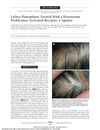
December 2009 in “Archives of dermatology” A specific drug can help treat Lichen Planopilaris, a condition causing permanent hair loss.
 9 citations
,
April 2016 in “Cutaneous and ocular toxicology”
9 citations
,
April 2016 in “Cutaneous and ocular toxicology” Alpha Lipoic Acid helps protect skin from smoking damage.
 3 citations
,
January 2004 in “Sen i Gakkaishi”
3 citations
,
January 2004 in “Sen i Gakkaishi” DTDG in hair treatments reduces damage and preserves hair structure.
 87 citations
,
September 2019 in “Nature Communications”
87 citations
,
September 2019 in “Nature Communications” SOX11 and SOX4 help skin cells act like embryonic cells to heal wounds in mice.
 April 2017 in “Journal of Investigative Dermatology”
 Cow milk sugars increase fat production and inflammation in skin oil cells.
13 citations
,
May 2019 in “Archives of dermatological research” Tranexamic acid reduces skin aging more in female mice.
January 2025 in “International journal of research studies in biosciences” Mitochondrial dysfunction and oxidative stress may play a role in Lichen Planopilaris.
 April 2019 in “Journal of Investigative Dermatology”
 Increasing COX-2 in mouse skin causes bigger sebaceous glands and thinner hair, but stopping COX-2 can reverse hair thinning.
2 citations
,
February 2023 in “International journal of molecular sciences” Tetrathiomolybdate reduces hair growth marker in skin cells by boosting harmful oxygen molecules, but effects can be reversed.
November 2025 in “Preprints.org” The gel effectively reduced folliculitis symptoms and was safe to use.
8 citations
,
January 2017 in “Journal of Biological Chemistry” Astrotactin-2 is cleaved in a specific way that helps understand its maturation.
138 citations
,
November 1977 in “Biochimica et Biophysica Acta (BBA) - Proteins and Proteomics” 57 citations
,
August 2002 in “American Journal Of Pathology” Cathepsin L deficiency causes hair and skin issues in mice.
1 citations
,
December 2025 in “International Journal of Molecular Sciences” Atelocollagen boosts collagen production and improves skin elasticity in aged skin.
 64 citations
,
November 2012 in “EMBO reports”
64 citations
,
November 2012 in “EMBO reports” Lamins are vital for cell survival, organ development, and preventing premature aging.
6 citations
,
October 1988 in “Clinics in Dermatology” The molecular details of hair growth are not well understood.
July 2025 in “Pharmaceutics” Recombinant Human Annexin A5 may help treat localized scleroderma by reducing skin thickening and inflammation.
 28 citations
,
May 2020 in “BMC plant biology”
28 citations
,
May 2020 in “BMC plant biology” The study concluded that three enzymes are important for plant development by affecting sugar composition and calcium binding in plants.
 December 2021 in “Signal transduction and targeted therapy”
 Increasing sebum production might help reduce fat and improve metabolism.
 35 citations
,
August 2010 in “The American journal of pathology”
35 citations
,
August 2010 in “The American journal of pathology” Researchers created a new mouse model for studying Citrullinemia Type I and similar conditions, showing symptoms and treatment responses like those in humans.
1 citations
,
September 2018 in “International journal of research - granthaalayah” Human hair medulla doesn't break down hydrogen peroxide, which may affect hair color formation.
 October 2023 in “Benha Journal of Applied Sciences”
 Men with male pattern baldness have lower levels of the antioxidant PON1.
 March 2026 in “Cosmetics”
 Using enzymes with laser hair removal may reduce unwanted hair growth better than laser alone.
 May 2014 in “Clinical and Experimental Dermatology”
 A 70-year-old woman with a rare skin condition improved after treatment with topical steroids and acitretin.