January 2025 in “Dermatology Research and Practice” Higher activity in lichen planopilaris is linked to certain immune and tissue genes.
20 citations
,
May 2011 in “Journal of Clinical Investigation” The study created a mouse model to mimic degenerative diseases for testing tissue repair and new therapies.
 December 2013 in “Appetite”
 A defective gene causes hair loss and taste insensitivity in BTBR mice.

MLO proteins are crucial for root hair growth by regulating calcium and ROS levels.
 73 citations
,
June 2010 in “PLoS Genetics”
73 citations
,
June 2010 in “PLoS Genetics” A gene mutation in mice causes hair loss, weak bones, and protein buildup, showing how protein processing issues can lead to diseases.
7 citations
,
March 2022 in “The FASEB journal” Adult mice with CBS deficiency show minimal health issues and normal lifespan despite high homocysteine levels.
5 citations
,
May 2009 in “American Journal of Dermatopathology” A rare hair follicle tumor showed unusual high levels of mucin.
 April 2015 in “Journal of Nutritional Therapeutics”
 Looser dietary restrictions can improve growth and reduce illness in methylmalonic acidemia patients.
 September 2016 in “Journal of Dermatological Science”
 A gene mutation worsens skin irritation in mice due to a lack of certain fats.
2 citations
,
March 2007 in “The journal of investigative dermatology/Journal of investigative dermatology” A new type of hereditary hair loss in a Chinese family is linked to chromosome 2p25.1–2p23.2.
 May 2025 in “The Journal of Rheumatology”
 Mixed Connective Tissue Disease can develop from overlapping symptoms of several autoimmune diseases, making diagnosis complex.
 21 citations
,
April 1982 in “Genetics Research”
21 citations
,
April 1982 in “Genetics Research” Mice with the naked gene have missing or abnormal hair cells.
21 citations
,
March 2015 in “Neurological Sciences” A new genetic mutation linked to CARASIL syndrome and small artery disease was found in a Chinese family.
35 citations
,
January 2006 in “Cancer Research” Mice with extra PKCδ resist chemical-induced skin cancer but not UV-induced.
 June 2024 in “British Journal of Dermatology”
 A 15-year-old boy was correctly diagnosed with a rare skin condition after initially being misdiagnosed.
April 2021 in “The journal of investigative dermatology/Journal of investigative dermatology” CTCF protein is essential for skin and hair follicle development in mice.
1 citations
,
July 2020 in “The Egyptian Journal of Hospital Medicine” The MDR1 C3435T polymorphism does not significantly affect methotrexate response in rheumatoid arthritis patients.
 June 2023 in “British journal of dermatology/British journal of dermatology, Supplement”
 A child with skin and tooth symptoms was found to have a genetic mutation causing cardiocutaneous syndrome, leading to heart problems.
 October 2024 in “Journal of the Endocrine Society”
 Certain genetic variants reduce enzyme activity, contributing to non-classic congenital adrenal hyperplasia.
37 citations
,
June 2000 in “Experimental dermatology” The Lanceolate hair-J mutation in mice mimics human hair disorders like Netherton's syndrome.
8 citations
,
September 2011 in “Scanning” Multiphoton microscopy effectively images mouse skin layers and structures.
January 2018 in “Elsevier eBooks” 5α-reductase-2 deficiency causes ambiguous genitalia at birth and affects male sexual development, but individuals often develop male characteristics at puberty.
74 citations
,
October 2012 in “The American Journal of Human Genetics” Mutations in the HOXC13 gene cause hair and nail development issues.
12 citations
,
October 2006 Matriptase imbalance contributes to cancer development and spread.
 2 citations
,
March 2023 in “JAAD case reports”
2 citations
,
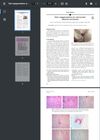
March 2023 in “JAAD case reports” Hair repigmentation can indicate malignancy and should be investigated.
79 citations
,
March 2005 in “Journal of Medical Genetics” A mutation in the hHb3 gene is linked to the hair disorder monilethrix.
September 2024 in “Dermatologica Sinica” Early and accurate diagnosis of congenital smooth muscle hamartomas is crucial to distinguish them from other conditions.
16 citations
,
September 2015 in “International Journal of Molecular Sciences” A specific gene variant causes severe skin issues and increases infection risk, requiring careful medical monitoring.
 January 2025 in “Dermatology Reports”
 Early and accurate diagnosis is crucial for managing rare genetic disorders like this localized variant of junctional epidermolysis bullosa.
33 citations
,
September 1987 in “American Journal of Medical Genetics” Uncombable hair is inherited dominantly with complete penetrance.