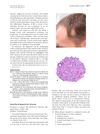
The man has Temporal Triangular Alopecia, a stable, non-scarring hair loss condition best treated with hair transplantation.
 1 citations
,
January 2014 in “Elsevier eBooks”
1 citations
,
January 2014 in “Elsevier eBooks” Melanocytes produce melanin; their defects cause vitiligo and hair graying, with treatments available for vitiligo.
 January 2024 in “Clinical, cosmetic and investigational dermatology”
 Dermatologists should customize cosmetic treatments for dark-skinned patients to minimize risks and complications.
 1 citations
,
January 2023 in “Advances in animal and veterinary sciences”
1 citations
,
January 2023 in “Advances in animal and veterinary sciences” Most cats with dermatophytosis had fungal infections, mainly caused by M. canis.
 8 citations
,
June 2018 in “ACTA SCIENTIAE VETERINARIAE”
8 citations
,
June 2018 in “ACTA SCIENTIAE VETERINARIAE” A maned wolf was successfully treated for a fungal infection, highlighting the need to understand such diseases for conservation.
 58 citations
,
November 2000 in “Journal of the American Veterinary Medical Association”
58 citations
,
November 2000 in “Journal of the American Veterinary Medical Association” Lufenuron effectively and quickly treats fungal infections in dogs and cats without side effects.
 February 2008 in “Vlaams dierengeneeskundig tijdschrift”
 A cat's hair loss was linked to a severe pancreatic cancer.
 109 citations
,
September 2011 in “Human molecular genetics online/Human molecular genetics”
109 citations
,
September 2011 in “Human molecular genetics online/Human molecular genetics” New treatments targeting specific genes show promise for treating keratin disorders.
 37 citations
,
November 2003 in “Veterinary pathology”
37 citations
,
November 2003 in “Veterinary pathology” Hair loss in mice starts with immune cells damaging hair roots before it becomes visible.
 1 citations
,
January 2009 in “Actas Dermo-Sifiliográficas”
1 citations
,
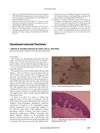
January 2009 in “Actas Dermo-Sifiliográficas” Docetaxel, a chemotherapy drug, was reported to cause psoriasis in a patient for the first time.

A 12-year-old girl was misdiagnosed with alopecia areata but actually had a nevus sebaceus with a genetic mutation.
 September 2011 in “Clinical Biochemistry”
 Sodium metasilicate improved spinal motoneuron recovery after sciatic nerve injury in rats.
 1 citations
,
July 2009 in “Journal of dermatology”
1 citations
,
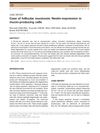
July 2009 in “Journal of dermatology” A 29-year-old man had a jaw plaque diagnosed as follicular mucinosis, linked to nestin-positive hair follicle stem cells.
 January 2014 in “Journal of Clinical and Investigative Dermatology”
 Young rats are better for testing hair loss treatments after chemotherapy.
 September 2011 in “Clinical Biochemistry”
 Certain sugars increase in some layers of the hair follicle during the middle of the healing process in rats, which may help improve healing.
 5 citations
,
August 2014 in “Archivos Argentinos de Pediatria”
5 citations
,
August 2014 in “Archivos Argentinos de Pediatria” A girl with Turner syndrome had psoriasis, alopecia areata, and trachyonychia.
 44 citations
,
May 2006 in “The Journal of the American Animal Hospital Association/Journal of the American Animal Hospital Association”
44 citations
,
May 2006 in “The Journal of the American Animal Hospital Association/Journal of the American Animal Hospital Association” Both treatments for pemphigus foliaceus in dogs are effective, but combination therapy has more side effects.
 4 citations
,
January 2014 in “Indian dermatology online journal”
4 citations
,
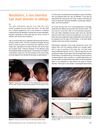
January 2014 in “Indian dermatology online journal” Monilethrix is a genetic hair disorder causing fragile, beaded hair with no effective treatment.
 3 citations
,
October 2021 in “PLoS ONE”
3 citations
,
October 2021 in “PLoS ONE” Piperonylic acid speeds up wound healing by reducing inflammation and boosting collagen.
 December 2024 in “Globus: an international journal of medical science, engineering and technology.”
 10% dalandan peel oil promotes hair growth effectively.
 November 2022 in “Brazilian journal of veterinary pathology”
 The Yorkshire terrier has a genetic hair loss condition not improved by treatment.
 April 2024 in “Iranian journal of veterinary medicine”
 43.1% of rabbits in Mosul City had mange, with Sarcoptes scabiei var. cuniculi being the most common.
 11 citations
,
August 2016 in “Journal of dermatological treatment”
11 citations
,
August 2016 in “Journal of dermatological treatment” Tip cryotherapy effectively treats idiopathic guttate hypomelanosis with minimal side effects.
 3 citations
,
March 2011 in “Informa Healthcare eBooks”
3 citations
,
March 2011 in “Informa Healthcare eBooks” Acne in children varies by age and severity, requires a pediatric treatment approach, and may need diagnostic evaluation for underlying conditions.
 2 citations
,
September 2022 in “Bioscientia medicina”
2 citations
,
September 2022 in “Bioscientia medicina” Topical vitamin D is effective in treating vitiligo with few side effects.
 May 2026 in “Ukrainian journal of veterinary sciences”
 Effective diagnosis and treatment of parasitic dermatitis in dogs require systematic approaches using specific drugs and preventive measures.
 January 2026 in “Pediatria Polska”
 Early diagnosis and treatment of tinea capitis in children is crucial to prevent permanent hair loss and scarring.
 January 2025 in “International Journal of Advanced Biochemistry Research”
 Three Persian cats with mange were successfully treated with Ivermectin injections.
 July 2018 in “Elsevier eBooks”
 Discoid Lupus Erythematosus often causes scarring hair loss, is influenced by genetics and environment, and requires early treatment to prevent worsening.
 August 2018 in “Journal of the American Academy of Dermatology”
 Reflectance confocal microscopy helped diagnose and manage a woman's hair loss without needing a biopsy.