4 citations
,
October 2024 in “Experimental Dermatology” CD8A and FOXD2-AS1 may be key for diagnosing and treating alopecia areata.
 11 citations
,
October 2017 in “Oncotarget”
11 citations
,
October 2017 in “Oncotarget” Gsdma3 affects hair growth by controlling Wnt5a, which influences hair cell development.
1 citations
,
March 2022 in “Journal of biological chemistry/The Journal of biological chemistry” Removing a specific gene in certain skin cells causes hair loss in mice by disrupting hair follicle development.
 January 2025 in “Cell Communication and Signaling”
 CXXC5 can both suppress and promote cancer, making it a complex target for treatment.
 29 citations
,
October 2011 in “British Journal of Dermatology”
29 citations
,
October 2011 in “British Journal of Dermatology” Certain microRNAs are more common in balding areas and might be involved in male pattern baldness.
The AMHR2-482A>G gene change is linked to higher PCOS risk.
 November 2023 in “Animal Bioscience”
 miR-133a-3p and miR-145-5p help goat hair follicle stem cells differentiate by controlling NANOG and SOX9.
 103 citations
,
March 2015 in “Nature Communications”
103 citations
,
March 2015 in “Nature Communications” A genetic region near the PAX1 gene is linked to a higher risk of scoliosis in females.
 1 citations
,
August 2018 in “bioRxiv (Cold Spring Harbor Laboratory)”
1 citations
,
August 2018 in “bioRxiv (Cold Spring Harbor Laboratory)” A new mutation in the TMEM173 gene and a risk allele in IFIH1 cause a unique set of immune-related symptoms.
 97 citations
,
March 2002 in “Molecular and cellular biology”
97 citations
,
March 2002 in “Molecular and cellular biology” Mutant CDP/Cux protein causes hair defects and reduced male fertility in mice.
 16 citations
,
February 2018 in “BMC Genomics”
16 citations
,
February 2018 in “BMC Genomics” Certain genetic markers linked to reproductive potential were identified by their impact on a protein's ability to bind to genes.
 2 citations
,
April 2020 in “bioRxiv (Cold Spring Harbor Laboratory)”
2 citations
,
April 2020 in “bioRxiv (Cold Spring Harbor Laboratory)” MendelVar is a tool that helps identify important genes by combining GWAS data with Mendelian disease information.
 January 2025 in “Cellular and Molecular Biology”
 The PIP5K1A gene helps cashmere growth in goats by promoting cell proliferation, and melatonin boosts its expression.
May 2025 in “Acta Dermato Venereologica” The Paxbp1 gene is crucial for healthy hair follicles.
 15 citations
,
December 2014 in “PLoS ONE”
15 citations
,
December 2014 in “PLoS ONE” A mutation in the iRhom2 gene causes hairless mice due to abnormal hair follicle development.
 December 2023 in “American journal of medical genetics. Part A”
 A new syndrome was linked to two new genetic changes in the MBTPS1 gene in a 14-year-old girl.
3 citations
,
April 2023 in “Veterinary sciences” Researchers found genes that may explain why some pigs grow winter hair, which could help breed cold-resistant pigs.
56 citations
,
February 2013 in “International Journal of Molecular Medicine” Growth factors help hair follicle stem cells grow and stay versatile.
Metabolic processes and key genes like FGF5, FGFR1, and RRAS significantly affect hair follicle growth in Inner Mongolian Cashmere goats.
 23 citations
,
December 2017 in “Scientific Reports”
23 citations
,
December 2017 in “Scientific Reports” ARL15 is important for fat cell development and the release of the hormone adiponectin.
 10 citations
,
November 2010 in “Journal of Dermatology”
10 citations
,
November 2010 in “Journal of Dermatology” Longer CAG repeats in gene linked to more severe hair loss in females.
2 citations
,
August 2020 in “CRC Press eBooks” Tabby mutations in mice affect hair follicle development and help study genetic mapping and certain medical conditions.
December 2010 in “TSpace” Activating androgen receptors in muscle can increase muscle mass and reduce fat.
 November 2022 in “Gigascience”
 A specific genetic deletion in goats affects cashmere yield and thickness.
 134 citations
,
February 2005 in “Neuropsychopharmacology”
134 citations
,
February 2005 in “Neuropsychopharmacology” GABRA2 gene variations impact alcohol response, and hair loss medication finasteride reduces some effects.
7 citations
,
June 2017 in “Gene” Overexpression of FGF5s makes Chinese Merino sheep grow longer and heavier wool.
 January 2026 in “Stem Cell Research & Therapy”
 ASLNC168501 can help treat hair loss by restoring hair follicle stem cell function.
 1 citations
,
February 2017 in “The American journal of dermatopathology/American journal of dermatopathology”
1 citations
,
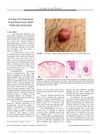
February 2017 in “The American journal of dermatopathology/American journal of dermatopathology” A man with a skin nodule was diagnosed with a rare skin condition called cutaneous focal mucinosis, which can be confused with other skin cancers.
2 citations
,
July 2023 in “Animals” FGF10 and non-coding RNAs are important for cashmere goat hair follicle development.
 14 citations
,
June 2022 in “BMC genomics”
14 citations
,
June 2022 in “BMC genomics” Key genes crucial for sheep hair follicle development were identified, aiding fine wool breeding and human hair loss research.