 2 citations
,
September 2012 in “Actas Dermo-Sifiliográficas”
2 citations
,
September 2012 in “Actas Dermo-Sifiliográficas” Societal pressure for the perfect body leads to health risks and disorders.
 1 citations
,
November 2025 in “Clinical and Experimental Medicine”
1 citations
,
November 2025 in “Clinical and Experimental Medicine” lncRNAs are important for understanding and treating skin diseases.
 1 citations
,
January 2023 in “IEEE access”
1 citations
,
January 2023 in “IEEE access” Deep learning helps detect skin conditions and is advancing dermatology diagnosis and treatment.
 1 citations
,
April 2016 in “Journal of Investigative Dermatology”
1 citations
,
April 2016 in “Journal of Investigative Dermatology” UV photography can help identify people at higher risk for skin cancer, and male pattern baldness at age 45 is linked to a higher risk of certain skin cancers.
 1 citations
,
September 2015 in “Elsevier eBooks”
1 citations
,
September 2015 in “Elsevier eBooks” SOX2 is crucial for skin cell function and hair growth, and it plays a role in skin cancer and wound healing.
 October 2007 in “Journal of Investigative Dermatology”
 The meeting highlighted the genetic basis of female pattern hair loss and various skin health insights.
September 2006 in “Experimental Dermatology” Targeting multiple pathways and understanding genetic mutations are crucial for effective melanoma therapy.
11 citations
,
February 2023 in “Journal of Investigative Dermatology” Low m6Ascores in melanoma predict better survival and response to immunotherapy.
 151 citations
,
November 2018 in “International Journal of Pharmaceutics”
151 citations
,
November 2018 in “International Journal of Pharmaceutics” Nanoparticles improve drug delivery through the skin but more research is needed on their long-term effects and skin penetration challenges.
110 citations
,
August 2011 in “Journal of Visualized Experiments” 3D skin models better mimic human skin and melanoma progression than older methods.
 84 citations
,
July 2003 in “European journal of biochemistry”
84 citations
,
July 2003 in “European journal of biochemistry” Mouse skin can produce and process serotonin, with variations depending on hair cycle, body location, and mouse strain.
 65 citations
,
January 2017 in “Postępy Dermatologii i Alergologii”
65 citations
,
January 2017 in “Postępy Dermatologii i Alergologii” High-frequency ultrasonography is a useful but underused tool in dermatology for assessing skin cancers, monitoring diseases, and evaluating treatments.
 39 citations
,
June 2019 in “Toxins”
39 citations
,
June 2019 in “Toxins” Bee venom might be a good alternative treatment for various skin conditions because it has many healing properties.
 36 citations
,
March 2014 in “Biomaterials”
36 citations
,
March 2014 in “Biomaterials” A new skin-whitening agent using a peptide from wheat is safe and effective at reducing skin pigmentation.
 30 citations
,
September 2009 in “Seminars in Cutaneous Medicine and Surgery”
30 citations
,
September 2009 in “Seminars in Cutaneous Medicine and Surgery” Dermoscopy has greatly improved the diagnosis of skin lesions and our understanding of their morphology and biology.
 10 citations
,
February 2015 in “Melanoma management”
10 citations
,
February 2015 in “Melanoma management” Dermoscopy is useful for many health professionals, not just dermatologists, in improving skin condition diagnoses and reducing unnecessary biopsies.
 6 citations
,
November 2020 in “Dermatology and Therapy”
6 citations
,
November 2020 in “Dermatology and Therapy” The free clinic successfully provided specialized skin care to uninsured patients.
 3 citations
,
May 2021 in “British Journal of Dermatology”
3 citations
,
May 2021 in “British Journal of Dermatology” The COVID-19 pandemic led to fewer skin checks and skin cancer diagnoses in Australia in 2020.
 July 2026 in “Frontiers in Immunology”
 Targeting protein lactylation may improve skin disease treatments.
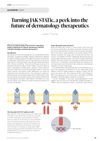 August 2024 in “New Zealand Medical Student Journal”
 JAK inhibitors show promise for treating skin diseases effectively and safely.
Keratinocytes can reduce the survival of certain melanoma cells, suggesting new therapy paths.
 June 2021 in “bioRxiv (Cold Spring Harbor Laboratory)”
 The gene Tfap2b is essential for creating a type of stem cell in zebrafish that can become different pigment cells.
 January 2021 in “Journal of clinical and cosmetic dermatology”
 Human skin responds to light with protective mechanisms, but more research is needed to understand these processes and their implications for health and therapy.
 April 2016 in “Journal of Investigative Dermatology”
 The symposium showed that stem cells are key for understanding and treating skin diseases and for developing new skin models and therapies.
 19 citations
,
April 2016 in “Experimental Dermatology”
19 citations
,
April 2016 in “Experimental Dermatology” Melanoblasts migrate to the skin using various pathways, and understanding this process could help with skin disease research.
 24 citations
,
March 2018 in “Pigment Cell & Melanoma Research”
24 citations
,
March 2018 in “Pigment Cell & Melanoma Research” The environment around melanocyte stem cells is key for hair regeneration and color, with certain injuries affecting hair color and potential treatments for pigmentation disorders.
 3 citations
,
August 2014 in “Journal of The European Academy of Dermatology and Venereology”
3 citations
,
August 2014 in “Journal of The European Academy of Dermatology and Venereology” Dutch dermatologists prioritized skin conditions like melanoma and psoriasis for guideline development, focusing on consistent care over cost or death rates.
 January 2019 in “Revista Medicina Cutánea Ibero-Latino-Americana”
 Vitamin D is important for skin health and can help improve various skin conditions.
20 citations
,
October 2019 in “JAMA Otolaryngology–Head & Neck Surgery” Head and neck melanoma cases rose by 51.1% in young males aged 15-39 from 1995 to 2014.
3 citations
,
November 2022 in “Frontiers in Oncology” Melanin may help melanoma cells grow by aiding their metabolism.