100 citations
,
December 2002 in “Journal of biological chemistry/The Journal of biological chemistry” Researchers mapped and categorized specific keratin-associated protein genes on human chromosome 21q22.1.
 61 citations
,
May 2016 in “Scientific reports”
61 citations
,
May 2016 in “Scientific reports” The peptide IMT-P8 can effectively deliver proteins into the skin and cells for potential skin treatments.
5 citations
,
July 2014 in “Molecular Biology Reports”  24 citations
,
April 2017 in “Oncology Reports”
24 citations
,
April 2017 in “Oncology Reports” The hair keratin gene KRT81 is found in both normal and breast cancer cells and helps them invade surrounding tissues.
 42 citations
,
January 2017 in “Genes”
42 citations
,
January 2017 in “Genes” The gene KAP22-1 affects wool yield and fiber shape in sheep.
1 citations
,
May 2004 in “Biochemical and Biophysical Research Communications” Two new gene clusters important for hair formation were found on human chromosome 11.
13 citations
,
July 1994 in “PubMed” Keratins K6 and K16 are expressed more freely in regenerating mouse skin than K1 and K10.
4 citations
,
December 2016 in “Blood” A new gene mutation may cause cyclic thrombocytopenia by affecting platelet production.
6 citations
,
April 2005 in “Journal of dermatological science” The study found nine new hair protein genes in human hair follicles.
March 2026 in “World Rabbit Science” DKK4 can be used to improve wool quality in Zhexi Angora rabbits.
14 citations
,
February 2022 in “The Journal of clinical investigation/The journal of clinical investigation” Scientists made a mouse model of a serious skin cancer by changing skin cells with a virus and a specific gene, which is similar to the disease in humans.
 November 2025 in “Molecular and Cellular Biomedical Sciences”
 There is no significant link between the MMP-1 rs1799750 polymorphism and androgenetic alopecia in the Indonesian population.
 15 citations
,
April 2001 in “Journal of Dermatological Science”
15 citations
,
April 2001 in “Journal of Dermatological Science” KF19418 promotes hair growth similarly to minoxidil but is not better in live mice.
2 citations
,
April 2020 in “International Journal of Dermatology and Venereology” Beta-HPV and MCPyV are linked to certain skin cancers, with ongoing research and vaccine development.
 January 2020 in “bioRxiv (Cold Spring Harbor Laboratory)”
 Semecarpus anacardium leaf extracts may offer safe, effective cancer treatment alternatives.
35 citations
,
January 2006 in “Cancer Research” Mice with extra PKCδ resist chemical-induced skin cancer but not UV-induced.
12 citations
,
May 2010 in “Journal of Clinical Oncology” MK-5108 is safe and shows potential against tumors, especially alone.
A KRT32 gene variant causes loose anagen hair syndrome.
3 citations
,
October 2024 in “Frontiers in Pharmacology” Compounds from Pterocarpus indicus may help treat benign prostatic hyperplasia by stopping cell growth.
226 citations
,
January 2006 in “International review of cytology” Keratin-associated proteins are crucial for hair strength and structure.
12 citations
,
January 2000 in “Biochemical and Biophysical Research Communications” The study mapped keratin 15 and 19 genes, aiding future genetic disorder research.
 September 1998 in “Hair transplant forum international”
 The document's content cannot be summarized because it is not accessible or understandable.
30 citations
,
October 1999 in “Differentiation” Mutant MK6a transgenes in mice cause blistering, hair loss, and potential human alopecia.
17 citations
,
November 2000 in “Journal of Investigative Dermatology” ZPK helps skin cells mature and may affect skin health.
 3 citations
,
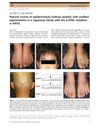
January 2019 in “Journal of Dermatology”
3 citations
,
January 2019 in “Journal of Dermatology” The p.P25L mutation in the KRT5 gene causes a rare skin condition that worsens over time and may lead to hair loss starting in young adulthood.
 4 citations
,
September 2010 in “Journal of Dermatological Science”
4 citations
,
September 2010 in “Journal of Dermatological Science” A new gene location for Keratosis follicularis squamosa was found on chromosome 7p14.3-7p12.1.
 January 2025 in “Nature Communications”
 CPK1 helps root hair growth in Arabidopsis by activating channels for calcium signaling.
 February 2020 in “Definitions”
 KRT72 gene helps form hair.
32 citations
,
November 1998 in “Journal of Biological Chemistry” Mouse and human keratin 16 can both form filaments, with differences likely due to the tail domain, not the helical domain.
505 citations
,
October 2011 in “Journal of clinical oncology” MK-2206 was safe and effectively blocked AKT signaling in cancer patients, warranting more trials.