 115 citations
,
November 2004 in “Brain Behavior and Immunity”
115 citations
,
November 2004 in “Brain Behavior and Immunity” Stress increases nerve fibers and immune cell activity in mouse skin, possibly worsening skin conditions.
109 citations
,
April 1997 in “Archives of Dermatological Research” Mast cell and nerve fiber interactions in mouse skin change with the hair cycle.
 76 citations
,
March 2005 in “Journal of Molecular Medicine”
76 citations
,
March 2005 in “Journal of Molecular Medicine” Certain mice without specific receptors or mast cells don't lose hair from stress.
35 citations
,
December 2020 in “International Journal of Molecular Sciences” Mast cells likely promote skin scarring and fibrosis, but their exact role is still unclear.
24 citations
,
June 2012 in “Journal of Feline Medicine and Surgery” Devon Rex cats with skin issues were successfully treated with antifungal medication.
 19 citations
,
February 2008 in “Archives of Dermatological Research”
19 citations
,
February 2008 in “Archives of Dermatological Research” Mast cells might contribute to hair loss by causing skin thickening.
 18 citations
,
September 1990 in “Veterinary Dermatology”
18 citations
,
September 1990 in “Veterinary Dermatology” Lambs' skin showed similar but more severe responses to a second orf virus infection, involving immune cells and new skin formation.
 14 citations
,
December 2007 in “Pediatric allergy and immunology”
14 citations
,
December 2007 in “Pediatric allergy and immunology” Newborns with the common rash Erythema Toxicum have many active mast cells in their skin, but these cells don't produce the LL-37 peptide.
13 citations
,
January 2016 in “Annals of Dermatology” Stress can slow hair growth by affecting certain cells and pathways.
 9 citations
,
January 2017 in “International Journal of Trichology”
9 citations
,
January 2017 in “International Journal of Trichology” The study suggests that mast cells might be involved in the hair loss condition telogen effluvium and could be a target for treatment.
 8 citations
,
May 2018 in “The Journal of Allergy and Clinical Immunology”
8 citations
,
May 2018 in “The Journal of Allergy and Clinical Immunology” Activating the Nrf2 pathway reduces inflammation and cell activation in human hair follicles, suggesting a potential treatment for certain hair loss conditions.
7 citations
,
August 2017 in “Journal of dermatological science” Sorafenib causes skin reactions by increasing the number and activity of skin mast cells.
7 citations
,
August 2008 in “Immunogenetics” A gene mutation in mice causes increased mast cells and disorganized hair follicles in their skin.
6 citations
,
January 2023 in “International journal of molecular sciences” Mast cells and CD8 T cells interact closely in skin diseases, affecting each other's behavior and contributing to conditions like psoriasis and eczema.
 6 citations
,
December 2013 in “Journal of Cutaneous Pathology”
6 citations
,
December 2013 in “Journal of Cutaneous Pathology” Certain immune cells are more common on the top of the head and might help predict or treat common hair loss.
 3 citations
,
February 2012 in “The American Journal of Dermatopathology”
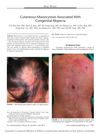
3 citations
,
February 2012 in “The American Journal of Dermatopathology” A 3-year-old girl with skin mast cell buildup and congenital baldness improved with treatment, suggesting a rare link between these conditions.
 3 citations
,
September 2019 in “American Journal of Men's Health”
3 citations
,
September 2019 in “American Journal of Men's Health” Finasteride may not affect gynecomastia recurrence after mastectomy.
 2 citations
,
November 2015 in “Actas Dermo-Sifiliográficas”
2 citations
,
November 2015 in “Actas Dermo-Sifiliográficas” The document suggests a possible link between mast cells and scarring alopecia, recommending more research for potential treatments.
1 citations
,
October 2025 in “Experimental Dermatology” Mast cells influence skin aging and are potential targets for anti-aging treatments.
1 citations
,
December 2023 in “JAAD International” Mast cells may significantly contribute to central centrifugal cicatricial alopecia.

Adipocytes in atopic dermatitis skin change and worsen inflammation and fibrosis.
December 2025 in “Molecular Pain” Targeting the MC-5-HT-HTR2A axis may help treat chronic itching.
November 2024 in “Journal of Investigative Dermatology” Nerve fibers may worsen mast cell activity, leading to abnormal elastic fiber buildup from sun exposure.
 April 2023 in “Journal of Investigative Dermatology”
 Mast cells and the CB1 receptor may be key in causing IgA vasculitis.
 December 2020 in “Galen Medical Journal”
 People with Alopecia Areata and Androgenic Alopecia have more mast cells in their scalp than healthy individuals, especially those with Alopecia Areata.
January 2020 in “JAAD case reports” Systemic mastocytosis may cause a type of hair loss called cicatricial alopecia.
April 2019 in “Journal of Investigative Dermatology” Frontal Fibrosing Alopecia involves disrupted cholesterol pathways, fibrosis, and increased mast cells.
 April 2019 in “The journal of investigative dermatology/Journal of investigative dermatology”
 Targeting cholesterol, fatty acids, fibrosis, and mast cells may help treat CCCA.
 April 2019 in “Journal of Investigative Dermatology”
 Lichen planopilaris involves disrupted fat metabolism, increased scarring, and mast cell activity.
 January 2025 in “Yonsei Medical Journal”
 Mastic gum and peppermint extracts may promote hair growth and health.