27 citations
,
December 2005 in “Journal of Cutaneous Pathology” The malignant pilomatricoma showed strong epithelial keratin expression, suggesting it may not calcify.
1 citations
,
April 2018 in “Journal of Investigative Dermatology” Lower proximal cup cells, not bulge stem cells, regenerate hair follicles after chemotherapy.
47 citations
,
December 2003 in “Journal of Investigative Dermatology” DS cells in hair follicles can help form and restore hair, especially in hair loss conditions.
January 2007 in “Zhonghua shiyan waike zazhi” Basal layer skin cells help form the epidermis and hair follicles.
 41 citations
,
June 2010 in “Journal of Investigative Dermatology”
41 citations
,
June 2010 in “Journal of Investigative Dermatology” New cells are added to the hair's dermal papilla during the active growth phase.
 November 2024 in “The Journal of Cell Biology”
 Basement membrane changes are crucial for hair follicle development.
 116 citations
,
September 2020 in “Nature Communications”
116 citations
,
September 2020 in “Nature Communications” The research identified various cell types in mouse and human teeth, which could help in developing dental regenerative treatments.
4 citations
,
March 2008 in “Korean Journal of Chemical Engineering” Mesenchymal cells can significantly boost human hair growth and longevity.
142 citations
,
June 2003 in “The journal of investigative dermatology. Symposium proceedings/The Journal of investigative dermatology symposium proceedings” Hair follicle stem cells can generate all hair cell types, skin, and sebaceous glands.
January 2003 in “Zhonghua shaoshang zazhi” Murine fetal epidermal stem cells can help regenerate hair follicles.
27 citations
,
May 2024 in “Clinical and Translational Medicine” Melanocyte stem cells are vital for skin and hair color and have potential in treating skin disorders and cancer.
50 citations
,
November 2010 in “Tissue Engineering Part A” Hair follicle cells and intestinal tissue can create strong, functional blood vessel replacements.
January 2006 in “Chinese Journal of Medical Aesthetics and Cosmetology” Microencapsulated human hair cells can successfully grow new hair follicles in mice.
 44 citations
,
April 2017 in “Genes & development”
44 citations
,
April 2017 in “Genes & development” Scientists found cells in hair that are key for growth and color.
January 2016 in “British Biotechnology Journal” DP cells can help in hair growth and regenerative medicine.
28 citations
,
July 2005 in “Journal of Investigative Dermatology” Sca-1+ cells in newborn mouse skin may become fat cells.
1036 citations
,
August 2019 in “Cells” Mesenchymal stem cells can help repair body tissues with low risk of rejection.
9 citations
,
September 2022 in “Frontiers in Physics” The technique accurately identifies and evaluates hair follicle structures in skin.
 6 citations
,
December 2011 in “Nature”
6 citations
,
December 2011 in “Nature” The circadian clock in skin cells controls their growth and rest cycles.
12 citations
,
July 2019 in “Veterinary Dermatology” Nestin-expressing progenitor cells become outer root sheath keratinocytes.
July 2019 in “Tumor Biology” Bone marrow-derived cells contribute to skin tumors, suggesting new treatment targets for non-melanoma skin cancers.
 11 citations
,
March 2024 in “Cell and Tissue Research”
11 citations
,
March 2024 in “Cell and Tissue Research” Telocytes have potential in therapy and tissue regeneration, but challenges in identification and cultivation remain.
100 citations
,
November 2017 in “EMBO Reports” Metabolic signals and cell shape influence how cells develop and change.
 2 citations
,
January 2024 in “Proceedings of the National Academy of Sciences of the United States of America”
2 citations
,
January 2024 in “Proceedings of the National Academy of Sciences of the United States of America” The research created a detailed map of skin cells, showing that certain cells in basal cell carcinoma may come from hair follicles and could help the cancer grow.
212 citations
,
August 2004 in “Proceedings of the National Academy of Sciences” Hair follicle cells can create new blood vessels in the skin.
7 citations
,
February 2009 in “Cell and tissue biology” 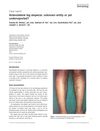 September 2018 in “International Journal of Dermatology”
 Anterolateral leg alopecia is a benign, nonprogressive hair loss condition on the lower legs that is not well understood and may resolve on its own.
 February 2008 in “Vlaams dierengeneeskundig tijdschrift”
 A cat's hair loss was linked to a severe pancreatic cancer.
 April 2023 in “The journal of investigative dermatology/Journal of investigative dermatology”
 Melanocytes are cells that make skin and hair color and help protect skin from sun damage.
 66 citations
,
December 2014 in “Nature Communications”
66 citations
,
December 2014 in “Nature Communications” Fibroblasts can be turned into melanocytes for potential skin treatments.