 1 citations
,
January 2020 in “bioRxiv (Cold Spring Harbor Laboratory)”
1 citations
,
January 2020 in “bioRxiv (Cold Spring Harbor Laboratory)” Dicer is crucial for hair growth in mice.
70 citations
,
August 2006 in “Cancer Research” AP-1 controls tumor cell type by affecting key signaling pathways.
43 citations
,
September 2001 in “Annals of Neurology” Hair root analysis can effectively detect somatic mosaicism in double cortex syndrome.
September 2022 in “European Journal of Dermatology” Gene sequencing is essential for diagnosing Junctional epidermolysis bullosa.
 30 citations
,
July 2019 in “Endocrinology”
30 citations
,
July 2019 in “Endocrinology” Certain HSD3B1 gene types are linked to worse prostate cancer outcomes and affect treatment response and other health conditions.
 May 2024 in “JAMA Dermatology”
 Oral contraceptive use may increase the risk of frontal fibrosing alopecia in women with a specific CYP1B1 gene variant.
 November 2025 in “Frontiers in Immunology”
 SQSTM1 gene issues may increase the risk of alopecia areata.
32 citations
,
January 2000 in “Human Heredity” Monilethrix severity varies and may be influenced by other genetic or environmental factors.
15 citations
,
March 2021 in “EMBO Reports” PRSS35 enzyme may help start skin tumors and could be a target for cancer treatment.
 286 citations
,
April 2009 in “The journal of neuroscience/The Journal of neuroscience”
286 citations
,
April 2009 in “The journal of neuroscience/The Journal of neuroscience” TRPA1 is crucial for mechanical sensitivity in skin sensory neurons.
211 citations
,
February 1994 in “Proceedings of the National Academy of Sciences” Too much parathyroid hormone-related protein in skin disrupts hair growth in mice.
153 citations
,
June 2015 in “GenomeBiology.com” The environment around the time of conception can change the VTRNA2-1 gene in a way that lasts for years and may affect disease risk.
55 citations
,
October 2008 in “American Journal Of Pathology” mIGF-1 in skin cells speeds up wound healing and hair growth in mice without harmful effects.
18 citations
,
November 2009 in “Calcified tissue international” A genetic mutation caused severe rickets and alopecia in an Indian patient, but high-dose calcium and phosphate treatment improved their condition.
 94 citations
,
April 2002 in “The Journal of clinical endocrinology and metabolism/Journal of clinical endocrinology & metabolism”
94 citations
,
April 2002 in “The Journal of clinical endocrinology and metabolism/Journal of clinical endocrinology & metabolism” A new gene mutation causes female pseudohermaphroditism due to glucocorticoid resistance.
December 2025 in “Animals” TGFBR1 slows down cell growth in fine-wool sheep hair follicles.
July 2022 in “Journal of Investigative Dermatology” Arg1+ macrophages may play a role in Alopecia Areata, offering new treatment targets.
 16 citations
,
March 2013 in “The Journal of Dermatology”
16 citations
,
March 2013 in “The Journal of Dermatology” Low TRPS1 expression in skin and hair cells is linked to hair problems in Trichorhinophalangeal syndrome.
8 citations
,
June 2016 in “Journal of Investigative Dermatology” A rare genetic deletion in the KRT1 gene causes unique skin symptoms in a family.
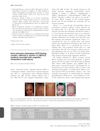 11 citations
,
September 2011 in “British Journal of Dermatology”
11 citations
,
September 2011 in “British Journal of Dermatology” New ABCA12 gene mutations were linked to a skin condition with scaling and hair loss, and a treatment helped with hair loss in a related case.
28 citations
,
February 2007 in “Cancer Research” Blocking certain proteins in mouse skin can reduce and shrink skin tumors.

Meis2 is essential for touch sensation and proper nerve connection to touch receptors in certain skin areas of mice.
September 2020 in “Research Square (Research Square)” Goat skin adapts to seasonal changes through genes that respond to daylight length, affecting hormone levels and potentially making skin cells light-sensitive.
 April 2016 in “Journal of Investigative Dermatology”
 Decreasing MIG6 can increase the movement and invasiveness of MEK-inhibited mutant NRAS melanoma, particularly when stimulated by EGF.
April 2016 in “The journal of investigative dermatology/Journal of investigative dermatology” Laminin-511 is involved in psoriasis development and can be regulated by cannabinoid receptor type 1.
27 citations
,
July 1997 in “PubMed” The harlequin ichthyosis mouse mutation causes thick skin and early death, resembling a human skin disorder.
2 citations
,
September 2016 in “Journal of Dermatological Science” Reduced TRPS1 leads to increased STAT3 and SOX9 in hair follicles, affecting hair growth.
21 citations
,
December 1991 in “Annals of the New York Academy of Sciences” Most mouse hair keratin genes are on chromosomes 11 and 15.
 March 2024 in “Cytologia”
 LncRNA MTC boosts growth of goat skin cells, improving cashmere quality.
7 citations
,
July 2001 in “Endocrinology” Vitamin D 1α-hydroxylase is crucial for bone health and vitamin D metabolism.