26 citations
,
September 2009 in “Clinical genetics” Arab APS1 patients have unique and recurrent AIRE gene mutations.
9 citations
,
November 2007 in “Blood” TMPRSS6 is crucial for controlling hepcidin and normal iron absorption.
 42 citations
,
July 2007 in “Journal of Biological Chemistry”
42 citations
,
July 2007 in “Journal of Biological Chemistry” Most Hairless gene mutations reduce its ability to work with the Vitamin D Receptor, which might explain a certain type of hair loss.
 September 2019 in “The journal of investigative dermatology/Journal of investigative dermatology”
 Not having enough cystatin M/E protein causes less hair growth and dry skin.
1 citations
,
December 2014 in “Journal of the Society of Cosmetic Scientists of Korea” CRF can cause hair loss, but blocking its receptors might prevent this.
380 citations
,
March 2000 in “Proceedings of the National Academy of Sciences” Overexpressing GLI-1 in mice skin can cause tumors like human basal cell carcinomas.
April 2024 in “Anais Brasileiros de Dermatologia”  April 2016 in “Journal of Investigative Dermatology”
 Decreasing MIG6 can increase the movement and invasiveness of MEK-inhibited mutant NRAS melanoma, particularly when stimulated by EGF.
June 2005 in “Journal of Investigative Dermatology” A bull with a gene mutation was asymptomatic, synthetic retinoids cause hair loss, and new therapeutic targets were identified for skin diseases.
 14 citations
,
July 2010 in “Experimental Dermatology”
14 citations
,
July 2010 in “Experimental Dermatology” A new mutation in the HR gene causes hair loss in a specific family.
 286 citations
,
April 2009 in “The journal of neuroscience/The Journal of neuroscience”
286 citations
,
April 2009 in “The journal of neuroscience/The Journal of neuroscience” TRPA1 is crucial for mechanical sensitivity in skin sensory neurons.
14 citations
,
September 1999 in “Mammalian genome” The scraggly mutation causes hair loss and skin defects in mice.
TNFα and interleukin-1 blockers reduce skin inflammation from EGFR antibody therapy.
150 citations
,
June 1999 in “Oncogene” 8 citations
,
March 2011 in “Endocrine” A new gene mutation causes vitamin D-resistant rickets and hair loss in two siblings.
 May 2023 in “Frontiers in Endocrinology”
 Blocking CRF1 receptors improved male hormone levels and reduced testicular tumor size in men with a specific adrenal condition.
1 citations
,
July 2006 in “Journal of Investigative Dermatology” A 4kb fragment of the desmocollin 3 promoter targets gene expression to specific skin and hair follicle areas.
 11 citations
,
January 2017 in “Biochemical and biophysical research communications”
11 citations
,
January 2017 in “Biochemical and biophysical research communications” 1α,25-dihydroxyvitamin D3 directly affects cartilage growth and development.
January 2022 in “Figshare” lncRNA MTC helps goat skin cells grow and may aid hair growth by controlling proteins linked to cell growth.
32 citations
,
November 2020 in “UNC Libraries” A point mutation in the androgen receptor gene causes complete androgen insensitivity.
lncRNA MRPS28 regulates hair follicle development in cashmere goats, affecting cashmere quality.
24 citations
,
July 1994 in “Journal of Investigative Dermatology”  April 2016 in “Journal of Investigative Dermatology”
 The Engrailed-1 gene plays a key role in the development of sweat glands in mice.
33 citations
,
June 2007 in “Gene Expression Patterns” CTIP2 may help in skin development and maintenance.
January 2025 in “Repository of Digital Objects for Teaching Research and Culture (University of Valencia)” Non-coding RNAs may be key in diagnosing and treating rare skin disorders.
 23 citations
,
December 2013 in “British Journal of Dermatology”
23 citations
,
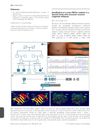
December 2013 in “British Journal of Dermatology” A new gene mutation linked to a skin condition was found in a Spanish family.
 1 citations
,
April 2016 in “Journal of Investigative Dermatology”
1 citations
,
April 2016 in “Journal of Investigative Dermatology” NLRP1 helps melanoma tumors grow by boosting inflammasome activation and reducing caspase-3 activity.
 14 citations
,
January 2015 in “Hormones and Cancer”
14 citations
,
January 2015 in “Hormones and Cancer” Androgen receptor inactivation delays skin cancer onset and reduces incidence in mice, with gender differences in susceptibility.
29 citations
,
April 2000 in “Journal of histochemistry and cytochemistry/The journal of histochemistry and cytochemistry” ICAM-1 helps regulate hair growth cycles and skin remodeling.
15 citations
,
June 2021 in “International Journal of Molecular Sciences” CMC2.24 and CMC2.23 reduce melanin safely and effectively.