 October 2022 in “Frontiers in Genetics”
 The research found new potential mechanisms in mouse hair growth by studying RNA interactions.
 August 2022 in “Gene Reports”
 New hair loss treatments could be improved by using combined biological markers.
GPC1 is important for blood vessel growth in hair follicles and could help treat hair loss.
GPC1 is important for hair growth by helping blood vessels form around hair follicles.
GPC1 is important for blood vessel growth in hair follicles and could help treat hair loss.
Glypican-1 is important for hair follicle blood vessel growth and could be a target for treating hair loss.
 November 2021 in “International Journal of Research in Dermatology”
 Low iron levels are linked to certain types of hair loss.
 January 2015 in “Вестник дерматологии и венерологии”
 Patients with non-scarring hair loss often have emotional disorders.
April 2022 in “Journal of the Medical Sciences” More severe hair loss worsens quality of life in men.
 February 2017 in “Vestnik dermatologii i venerologii”
 Hair loss can be treated with common methods like minoxidil and finasteride, but new potential treatments include growth factors, cytokines, and platelet-rich plasma injections.
October 2015 in “Vestnik dermatologii i venerologii” Alopecia significantly harms emotional and social well-being.
 October 2023 in “Pediatric blood & cancer”
 Thymic LCH may be underdiagnosed, so thymic ultrasound should be considered in infants with cutaneous LCH.
28 citations
,
December 2001 in “European Journal of Pharmacology” M50054 may help treat hepatitis and hair loss from chemotherapy.
December 2024 in “Pediatrics in Review” Early detection and treatment of Menkes disease with copper injections are crucial for better outcomes.
 January 2025 in “HemaSphere”
 The term "low-risk" in myelodysplastic syndrome is misleading and should be changed to better reflect patient experiences and needs.
8 citations
,
January 1977 in “Acta Haematologica” The treatment was effective for advanced non-Hodgkin's lymphomas.
January 2013 in “대한미용학회지” Chamaecyparis obtusa oil promotes hair growth in mice.
 1 citations
,
February 2017 in “The American journal of dermatopathology/American journal of dermatopathology”
1 citations
,
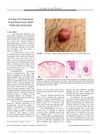
February 2017 in “The American journal of dermatopathology/American journal of dermatopathology” A man with a skin nodule was diagnosed with a rare skin condition called cutaneous focal mucinosis, which can be confused with other skin cancers.
 April 2016 in “Journal of Investigative Dermatology”
 A specific type of immune cells, called CD301b-expressing macrophages, are crucial for skin repair processes.
2 citations
,
February 2025 Merkel cell polyomavirus can infect and persist in skin cells, evading the immune system, but certain treatments can control it.
February 2026 in “ACS Omega” The hydrogel effectively treats oral mucositis by reducing oxidative damage and bacterial infection.
 December 2023 in “Redox biology”
 The substance DMC helps get rid of aging cells by triggering a process that causes cell death, which could treat age-related diseases.
Multiphoton microscopy helps understand and improve vitiligo treatments by visualizing skin cell changes.
 8 citations
,
January 2011 in “Experimental and Therapeutic Medicine”
8 citations
,
January 2011 in “Experimental and Therapeutic Medicine” Stromal cells in melanoma promote tumor growth and spread.
 16 citations
,
September 2018 in “Journal of Molecular Liquids”
16 citations
,
September 2018 in “Journal of Molecular Liquids” The PS-b-PAA copolymer nanomicelles are effective for delivering a cancer treatment drug in photodynamic therapy.
 November 2017 in “Journal of cosmetology & trichology”
 The combined treatment of a specific hair cocktail and microneedling device effectively restores hair in different baldness patterns.
March 2025 in “The Scientific Issues of Ternopil Volodymyr Hnatiuk National Pedagogical University Series pedagogy” Primary mitochondrial cytopathies often cause skin, endocrine, vision, and blood issues, needing careful diagnosis.
 April 2024 in “Pigment cell & melanoma research”
 Different types of resting melanocyte stem cells have unique characteristics and vary in their potential to become other cells.
16 citations
,
August 2000 in “British Journal of Dermatology” Removing the liver tumor improved the patient's skin condition and hair growth.
65 citations
,
March 2004 in “Journal of Clinical Investigation” Inhibiting ornithine decarboxylase may help prevent certain skin cancers.