 June 2026 in “Frontiers in Allergy”
 SSD patients have unique allergen sensitivities linked to skin and microbiota changes.
Trichoepithelioma and desmoplastic trichoepithelioma have distinct features that can be identified using reflectance confocal microscopy.
 5 citations
,
October 2014 in “Journal of cosmetic and laser therapy”
5 citations
,
October 2014 in “Journal of cosmetic and laser therapy” Combining physical dermabrasion with chemical peeling is more effective for skin treatment than chemical peeling alone.
 July 2025 in “Scientific Reports”
 Dermal papilla cell-conditioned medium can help reduce skin aging caused by oxidative stress.
 12 citations
,
November 2011 in “International Journal of Dermatology”
12 citations
,
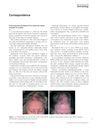
November 2011 in “International Journal of Dermatology” A woman developed a scalp condition from using minoxidil, which improved with a different treatment but left scarring.
 December 2016 in “John Wiley & Sons, Ltd eBooks”
 The document concludes that proper recognition and treatment of skin appendage disorders are important for management.
 6 citations
,
July 2019 in “Experimental Dermatology”
6 citations
,
July 2019 in “Experimental Dermatology” Skin can produce blood cells, often due to disease, which might lead to new treatments for skin and blood conditions.
 25 citations
,
January 2015 in “Advances in Psychosomatic Medicine”
25 citations
,
January 2015 in “Advances in Psychosomatic Medicine” Many skin patients also have mental health issues, and doctors should treat both together.
MSC-CM cream speeds up burn wound healing better than the control treatment.
 5 citations
,
September 1986 in “Pediatric Dermatology”
5 citations
,
September 1986 in “Pediatric Dermatology” A family showed a new condition with inherited hair loss and skin changes, possibly due to one genetic disorder.
January 2018 in “Contributions to management science” MicroRNAs are crucial for skin development, regeneration, and disease treatment.
 August 2018 in “Journal of Investigative Dermatology”
 A woman with dermatomyositis improved after treatment for neck panniculitis, suggesting similar treatment for related conditions.
 January 2016 in “International Journal of Dermatology and Venereology”
 DNA methylation changes are linked to skin diseases with inflammation.
19 citations
,
November 1985 in “Archives of Dermatology” The newborn's skin blisters healed without scarring, leaving some light spots, and stopped forming after four months.
1 citations
,
June 2014 in “Journal of developmental biology” Retinoic acid helps change skin cells and is important for skin development and hair growth.
 18 citations
,
November 2000 in “British Journal of Dermatology”
18 citations
,
November 2000 in “British Journal of Dermatology” Many skin patients have mental health issues, so dermatologists should consider psychological care.
May 2002 in “Journal of Investigative Dermatology” New findings on hair keratin, wound healing, and skin blistering were presented.
January 2014 in “Redalyc (Universidad Autónoma del Estado de México)” A Persian cat had a rare skin condition that didn't improve with treatment.
 August 2018 in “Journal of The American Academy of Dermatology”
 A 5-year-old girl with a rare skin disorder was effectively treated with skin creams instead of oral medication.
 26 citations
,
March 2018 in “Dermatology and Therapy”
26 citations
,
March 2018 in “Dermatology and Therapy” EPC-CM can reduce skin aging signs by boosting the skin's defense system.
 1 citations
,
January 2009
1 citations
,
January 2009 A 25-year-old Malay fireman had skin bumps on his neck that were removed successfully after other treatments failed.
20 citations
,
January 2014 in “Tissue and Cell” MEBO ointment helps activate and grow skin stem cells for burn healing.
3D models from confocal microscopy improve melanoma detection on sun-damaged skin.
15 citations
,
February 2020 in “Journal of Investigative Dermatology” Ceramide Synthase 4 is crucial for healthy skin barrier function.
RXR and RAR proteins in skin may help with cell growth, hair growth, and gland function.
1 citations
,
July 2023 in “Clinical Cosmetic and Investigational Dermatology” Familial dyskeratotic comedones are a rare, benign skin disorder that is hard to treat.
 17 citations
,
February 2015 in “Cell Death and Disease”
17 citations
,
February 2015 in “Cell Death and Disease” Inhibiting AP1 in mice skin causes structural changes and weakens the skin barrier.
 April 2015 in “Experimental Dermatology”
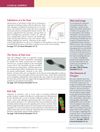
 Melanoma risk tools need improvement, certain gene mutations cause skin diseases and could be treated by targeting those mutations, skin wrinkling may relate to lung aging due to genetic factors, and oxidative stress affects hair loss but can be reduced in low oxygen.
 July 2016 in “The journal of investigative dermatology/Journal of investigative dermatology”
 Scientists created a new 3D skin model from cells of plucked hairs that works like real skin and is easier to get.