123 citations
,
November 2003 in “Neuroscience Letters” TRPV4 helps sense pressure in mouse skin.
 23 citations
,
October 2021 in “Cell Stem Cell”
23 citations
,
October 2021 in “Cell Stem Cell” Hair thinning causes stem cell loss through a process involving Piezo1, calcium, and TNF-α.
July 2026 in “Journal of Investigative Dermatology” Tissue stiffness affects sweat gland development by guiding cell differentiation through specific signals.
April 2022 in “Journal of Investigative Dermatology” Hair shaft miniaturization leads to hair follicle stem cell loss, suggesting Piezo1 as a potential treatment target.
 February 2026 in “Nature Communications”
 Inhibiting connective tissue sheath contraction may improve hair growth in male pattern baldness.
 December 2023 in “bioRxiv (Cold Spring Harbor Laboratory)”
 Abnormal contraction of connective tissue in hair follicles causes hair loss by killing off important cells, and treating this could improve hair growth.
 17 citations
,
September 2014 in “PLoS ONE”
17 citations
,
September 2014 in “PLoS ONE” SK2 channels help control sensory signals in rat muscle spindles and hair follicles.
 2 citations
,
September 2023 in “PLoS biology”
2 citations
,
September 2023 in “PLoS biology” Newly divided skin cells quickly move to join skin structures due to tissue tension and specific signals.
 19 citations
,
December 2016 in “The journal of pharmacology and experimental therapeutics/The Journal of pharmacology and experimental therapeutics”
19 citations
,
December 2016 in “The journal of pharmacology and experimental therapeutics/The Journal of pharmacology and experimental therapeutics” Certain drugs increase calcium levels in cancer cells by triggering internal calcium release.
 January 2023 in “bioRxiv (Cold Spring Harbor Laboratory)”
 Newly born mesenchymal cells quickly spread out in response to tissue tension during early development.
 11 citations
,
September 2011 in “Biochemical journal”
11 citations
,
September 2011 in “Biochemical journal” Neurotrophin-4 increases calcium current in specific mouse neurons through the PI3K pathway.
14 citations
,
February 2024 in “Biomolecules” TRPV channels are important in osteoarthritis and could be key to new treatments.
7 citations
,
August 2023 in “Frontiers in Immunology” Targeting TRP channels may help reduce excessive scarring.
 5 citations
,
March 2023 in “bioRxiv (Cold Spring Harbor Laboratory)”
5 citations
,
March 2023 in “bioRxiv (Cold Spring Harbor Laboratory)” Dynamic, light touch is sensed through a common mechanism involving Piezo2 channels in sensory axons.
 81 citations
,
June 2014 in “Cold Spring Harbor perspectives in medicine”
81 citations
,
June 2014 in “Cold Spring Harbor perspectives in medicine” Skin has specialized touch receptors that can tell different sensations apart.
 31 citations
,
November 2016 in “Cell Reports”
31 citations
,
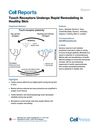
November 2016 in “Cell Reports” Touch sensitivity in mouse skin decreases during hair growth due to changes in touch receptors.
19 citations
,
February 2016 in “Journal of Biological Chemistry” KCNQ potassium channels help control the sensitivity of touch receptors in the skin.
 2 citations
,
May 2023 in “International Journal of Molecular Sciences”
2 citations
,
May 2023 in “International Journal of Molecular Sciences” The TRPV3 ion channel is important for skin and hair health and could be a target for treating skin conditions.
109 citations
,
November 2011 in “Nature Neuroscience” 11 citations
,
July 2015 in “Journal of Anatomy” SLVs help maintain muscle stretch sensitivity and could aid in treating hypertension and muscle spasticity.
Reducing PIEZO1 speeds up wound healing.
August 2025 in “Journal of Investigative Dermatology” Fibronectin is essential for hair follicle regeneration and may help rejuvenate aged skin.
140 citations
,
February 2014 in “Neuron” Delta opioid receptors help regulate touch sensation by reducing neurotransmitter release in the spinal cord.
TRPV4 channels in the skin may enhance the effects of acupuncture.
 23 citations
,
March 2010 in “Medical hypotheses”
23 citations
,
March 2010 in “Medical hypotheses” Merkel cells may have roles in sensing magnetic fields, creating fingerprints, Reiki energy healing, passing on environmental information to offspring, and influencing hair shape.

Stiffness gradients in alginate gels can guide cancer cell invasion and study cellular behaviors.
1 citations
,
January 2024 in “International journal of molecular sciences” TRPV4 helps cells repair tissue and reduce scarring by controlling calcium levels.
1 citations
,
January 2018 Sphingosine 1-phosphate and its receptor S1PR3 are key in controlling mechanical pain.
Sphingosine 1-phosphate helps control mechanical pain.
 286 citations
,
April 2009 in “The journal of neuroscience/The Journal of neuroscience”
286 citations
,
April 2009 in “The journal of neuroscience/The Journal of neuroscience” TRPA1 is crucial for mechanical sensitivity in skin sensory neurons.