 May 2026 in “Iconic Research and Engineering Journals”
 Polyherbal hair oils effectively promote hair growth and scalp health.
 December 2025 in “International Journal of Therapeutic Innovation.”
 The rice water hair mask effectively moisturizes, strengthens, and protects hair.
 December 2025 in “International Journal For Multidisciplinary Research”
 Microscopic hair analysis is important in forensics but has limitations; new technologies are improving its accuracy.
 September 2025 in “Journal of Drug Delivery and Therapeutics”
 Targeting hair follicles can effectively promote hair growth and treat hair disorders.
 July 2025 in “International Journal of Dermatology Venereology and Leprosy Sciences”
 Examining Survivin levels may help understand premature greying of hair.

The inner root sheath in hair follicles plays a key role in hair growth and health.
 January 2025 in “bioRxiv (Cold Spring Harbor Laboratory)”
 Rhamnose may help hair growth and pigmentation, making it a potential treatment for hair loss.
 January 2025 in “INTERANTIONAL JOURNAL OF SCIENTIFIC RESEARCH IN ENGINEERING AND MANAGEMENT”
 Herbal hair conditioners nourish and protect hair naturally without harsh chemicals.
 January 2025 in “International Journal of Advanced Research in Science Communication and Technology”
 Polyherbal hair dyes are safer and more eco-friendly than chemical dyes.

Polarized microscopy helps identify hair irregularities in genetic disorders.
 January 2025 in “International Journal of Pharmaceutical Research and Development”
 Vitex negundo oil promotes hair growth and may treat alopecia safely.

Using scalp stem cells can improve hair transplants.

Good nutrition may help prevent premature hair graying.
 June 2024 in “International Journal for Research in Applied Science and Engineering Technology”
 Flaxseed hair gel is effective for hair growth and dandruff, is stable, and has minimal side effects.
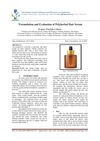 June 2024 in “International Journal of Pharmaceutical Research and Applications”
 Polyherbal hair serum can hydrate the scalp and promote hair growth safely.
 May 2024 in “Frontiers in medicine”
 A genetic mutation in the LIPH gene causes tightly curled hair that stops growing in some Japanese individuals.
 February 2024 in “International Journal of Health and Pharmaceutical”
 Black rice extract ointment significantly promotes hair growth in Wistar rats.
 February 2024 in “Biomedical materials”
 Scientists created a lab-grown hair follicle model that behaves like real hair and could improve hair loss treatment research.
 January 2024 in “International journal of homoeopathic sciences”
 Homeopathic treatments can effectively manage hair loss and improve well-being.
 December 2023 in “International Journal For Multidisciplinary Research”
 Indian medicinal plants can help with hair growth and common hair issues.
 November 2023 in “Frontiers in veterinary science”
 The study provides insights into hair growth mechanisms in yaks.
 September 2023 in “Asian journal of beauty & cosmetology”
 Lipids are important for healthy hair, but their exact role is not fully understood and needs more research.

A new system for classifying curly hair types using precise measurements can improve hair care products and cultural inclusion.
 January 2023 in “Han'gug mi'saengmul saengmyeong gong haghoeji/Han-guk misaengmul saengmyeong gonghak hoeji”
 NOC-4 extract promotes black hair and hair growth effectively.
 January 2023 in “Frontiers in bioscience”
 Artemis protein may help control hair growth and health by influencing cell processes.
 January 2023 in “Vìsnik problem bìologìï ì medicini”
 Androgenic alopecia causes hair follicle degradation and skin restructuring, but some hair elements remain.
 January 2023 in “Open Life Sciences”
 VEGFR-2 activation is likely involved in hair follicle growth, survival, and development.

New methods to classify curly hair types were developed based on shape and strength.
 November 2022 in “Research Square (Research Square)”
 Seasonal changes affect hair growth genes in Angora goats, possibly influencing mohair quality.

Water and fatty acids affect hair's surface differently based on hair damage, and models can help understand hair-cosmetic interactions.