Search
for
Sort by
Research
510-540 / 1000+ resultsresearch Survival of patchwork melanoblasts is dependent upon their number in the hair follicle at the end of embryogenesis
More melanoblasts in hair follicles mean better survival and proper hair pigmentation.
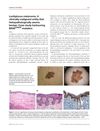
research Lentiginous melanoma. A clinically malignant entity that histopathologically seems benign. Case study harbouring BRAF V 600R mutation
A clinically suspected melanoma appeared benign under the microscope but was confirmed by specific tests and a rare mutation.
research Endothelin-1 combined with extracellular matrix proteins promotes the adhesion and chemotaxis of amelanotic melanocytes from human hair follicles in vitro
Endothelin-1 helps amelanotic melanocytes stick and move better on certain proteins.
research Evolution in action: highlighting a role for the Agouti gene in development?
The Agouti gene influences pigmentation and may have a developmental role in deer mice.

research 1272 p21Waf1/Cip1 is differentially expressed in epidermal versus follicular melanocytes and melanoma cells and is phenotypically regulated by UVB-mediated apoptosis
The protein p21 is more abundant in normal skin cells than in melanoma cells and may help protect against melanoma, with UVB light affecting its levels.
research Exploiting the Keratin 17 Gene Promoter To Visualize Live Cells in Epithelial Appendages of Mice
A specific gene segment can make mouse skin cells glow, helping study hair growth and gene effects.
research Extradermal melanin transfer? Lack of macroscopic spleen melanization in old C57BL/6 mice with de-synchronized hair cycle.
Old C57BL/6 mice with unsynchronized hair cycles show less melanin in their spleens.
research 457 Impact of alpha-melanocyte-stimulating hormone on mitochondrial function in human dermal fibroblasts
Alpha-MSH affects mitochondrial function, and MC1R mutations may increase skin aging.
research Malignant Melanoma and Its Stromal Nonimmune Microecosystem
The surrounding tissue plays a crucial role in the growth and spread of skin cancer.
research Pharmacological BACE1 and BACE2 inhibition induces hair depigmentation by inhibiting PMEL17 processing in mice
Blocking BACE1 and BACE2 enzymes causes hair color loss in mice.
research Repigmentation of leukoderma in a piebald patient associated with a novel c-KIT gene mutation, G592E, of the tyrosine kinase domain
A new gene mutation may allow some piebaldism patients to regain skin color in white patches.
research Disorders of Hair Pigmentation
Hair color is determined by melanin and can be affected by genetic conditions like albinism.
research Therapeutic Potential of Patient iPSC-Derived iMelanocytes in Autologous Transplantation
Patient-derived stem cell melanocytes could be a promising treatment for vitiligo.
research Serine-rich ultra high sulfur protein gene expression in murine hair and skin during the hair cycle
research Perkembangan Aksis Pars Intermedia Hipofise – Melanosit Kulit Monyet Ekor Panjang (Macaca fascicularis).
The PI's development is closely linked to skin and hair pigmentation in macaques.
research The ‘melanocyte-keratin’ mystery revisited: neither normal human epidermal nor hair follicle melanocytes express keratin 16 or keratin 6in situ
Human melanocytes in skin and hair follicles don't express keratin 16 or 6 naturally.

research Molecular Dissection of Mesenchymal–Epithelial Interactions in the Hair Follicle
Understanding gene expression in hair follicles can reveal insights into hair growth and disorders.
research Spatiotemporal Expression, Distribution, and Processing of POMC and POMC-derived Peptides in Murine Skin
POMC-derived peptides are important for skin functions like immune response and stress management.
research 1250 Development of an ex vivo human skin explant model to examine candidate gene functions in the hair follicle and epidermis
The model can effectively test gene functions and drug responses in human skin.
research Receptor tyrosine kinase Kit action in skin melanocytes: is it exclusively cell autonomous?
KIT's role in skin cells is not entirely independent, as other cells can influence its function.
research A role of melatonin in neuroectodermal‐mesodermal interactions: the hair follicle synthesizes melatonin and expresses functional melatonin receptors
Hair follicles produce and respond to melatonin, affecting hair growth and sensitivity to estrogen.
research Frequent downregulation of DMBT1 and galectin‐3 in epithelial skin cancer
DMBT1 and galectin-3 may help suppress epithelial skin cancer.
research Decision letter: Dynamics of nevus development implicate cell cooperation in the growth arrest of transformed melanocytes
Moles may stop growing due to cell cooperation, not just because of individual cell aging.
research Microarray Gene Expression Analysis of Lesional Skin in Canine Pemphigus Foliaceus
Canine pemphigus foliaceus involves significant immune activity and shares similarities with human pemphigus.
research Activation of the transcription factor Gli1 and the Sonic hedgehog signalling pathway in skin tumours

research Adam10 haploinsufficiency causes freckle-like macules in Hairless mice
A mutation in the Adam10 gene causes freckle-like spots on Hairless mice.
research GLI2 Is Expressed in Normal Human Epidermis and BCC and Induces GLI1 Expression by Binding to its Promoter
GLI2 activates GLI1, promoting skin tumor growth and hair development.
research Hair melanocytes as neuro-endocrine sensors—Pigments for our imagination
Hair melanocytes help the skin respond to stress and regulate hair pigmentation.
research Culture of amelanotic melanocytes derived from human fetal hair follicles
Melanocytes from human fetal hair follicles were successfully cultured, showing potential for hair disease research and clinical use.