 222 citations
,
January 2005 in “Endocrine journal”
222 citations
,
January 2005 in “Endocrine journal” Melatonin is important for skin health and protection, and can be made by the skin or applied to it.
2 citations
,
July 2025 in “Drug development & registration” A new algorithm accurately analyzes animal coat and skin colors quickly and easily.
2 citations
,
February 2018 Raman spectroscopy can help identify cancerous skin tissue during surgery.
121 citations
,
December 2001 in “American Journal of Dermatopathology” TB and BCC tumors show similar follicular differentiation patterns.
 60 citations
,
February 1997 in “Journal of Dermatological Science”
60 citations
,
February 1997 in “Journal of Dermatological Science” Liposomes can safely and effectively deliver substances to mouse hair follicles, potentially useful for human hair treatments.
July 2019 in “Tumor Biology” Bone marrow-derived cells contribute to skin tumors, suggesting new treatment targets for non-melanoma skin cancers.
 January 2017 in “Archives of clinical and biomedical research”
 Enhancing melanin's energy generation may help treat alopecia areata.
January 2025 in “Repository of Digital Objects for Teaching Research and Culture (University of Valencia)” Non-coding RNAs may be key in diagnosing and treating rare skin disorders.
92 citations
,
December 2005 in “The Journal of clinical investigation/The journal of clinical investigation” Human hair follicle stem cells can be isolated using specific markers for potential therapeutic use.
 April 2019 in “Journal of Investigative Dermatology”
 More dermatologists in an area are linked to better survival rates for melanoma.
133 citations
,
January 2009 in “Nature” Lgr5 and the vitamin D receptor are key in controlling skin inflammation and tumor risk in mice.
 10 citations
,
May 2016 in “Journal of Dermatological Science”
10 citations
,
May 2016 in “Journal of Dermatological Science” PDGF-BB helps young melanocytes grow but stops mature ones from growing, and it makes melanocytes more specialized.
33 citations
,
March 1994 in “PubMed” High ODC and low K1 and K10 may indicate early skin tumors in mice.
 19 citations
,
July 2009 in “Clinical and Experimental Dermatology”
19 citations
,
July 2009 in “Clinical and Experimental Dermatology” The study found that long-term sun exposure does not significantly affect follicular plugs on the scalp, and the scalp's appearance is unique compared to other body parts.
10 citations
,
September 2016 in “Journal of cutaneous medicine and surgery” Patients on dabrafenib and trametinib for melanoma often experience skin side effects.
 9 citations
,
November 2012 in “Archives of Dermatological Research”
9 citations
,
November 2012 in “Archives of Dermatological Research” MC4R gene variants not linked to female hair loss.
13 citations
,
April 1982 in “The Journal of Dermatology” Poly(ADP-ribose) synthesis is linked to skin cell differentiation.
 April 2016 in “Journal of Investigative Dermatology”
 MEK and BRAF inhibitors increase sebum production and accumulation, which could cause acne-like side effects.
10 citations
,
August 1998 in “Journal of Investigative Dermatology” 7 citations
,
November 2016 in “Oncotarget” UV exposure reduces Lgr6+ stem cells in mouse skin and they don't significantly contribute to skin cancer development.
21 citations
,
December 1991 in “Annals of the New York Academy of Sciences” Most mouse hair keratin genes are on chromosomes 11 and 15.
 60 citations
,
January 2004 in “The journal of investigative dermatology/Journal of investigative dermatology”
60 citations
,
January 2004 in “The journal of investigative dermatology/Journal of investigative dermatology” Applying a specific inhibitor lightens skin and hair color.
February 2025 in “Archives animal breeding/Archiv für Tierzucht” miRNA-211 reduces melanin in Cashmere goats by suppressing AP1S2.
 29 citations
,
January 2010 in “Methods in Enzymology”
29 citations
,
January 2010 in “Methods in Enzymology” The document concludes that careful design of genetic fate mapping experiments is crucial for accurate cell lineage tracing in mice.
 2 citations
,
December 2022 in “Scientific Data”
2 citations
,
December 2022 in “Scientific Data” The study maps how genes are regulated during mouse hair growth.
12 citations
,
September 1990 in “The Anatomical Record” Human anagen hair follicles have unique carbohydrate patterns during keratinization.
 19 citations
,
December 2006 in “Archives of dermatology”
19 citations
,
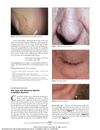
December 2006 in “Archives of dermatology” Hair casts and cutaneous spicules can be signs of multiple myeloma.
 January 2006 in “Yearbook of Dermatology and Dermatologic Surgery”
 Hair graying is caused by the loss of pigment cells due to poor maintenance of stem cells in the hair follicle.
15 citations
,
January 1991 in “Mammalian Genome”  November 2022 in “Journal of Investigative Dermatology”
 Blocking mTORC1 activity could increase hair pigmentation and potentially reverse greying.