 April 2026 in “Frontiers in Medicine”
 Farudodstat may help prevent hair loss in alopecia areata by stopping immune attacks on hair follicles.
 March 2026 in “Preprints.org”
 The combined stem cell secretome in the skin care product effectively reduces inflammation and promotes tissue regeneration.
 February 2026 in “Nature Communications”
 A specific group of immune and skin cells may cause chronic inflammation in atopic dermatitis.
 January 2026 in “Scientific Reports”
 PCOS involves immune and genetic factors, with key roles for T cells and specific genes.
January 2026 in “Journal of Investigative Dermatology” Special cells can help regrow hair in alopecia areata.
 December 2025 in “Italian Journal of Anatomy and Embryology”
 Understanding embryologic layers improves skin disorder diagnosis and supports developing targeted therapies.
 November 2025 in “Frontiers in Immunology”
 Immune cells are crucial for normal skin development and their dysfunction can cause skin disorders.
October 2025 in “Preprints.org” Adipose mesenchymal stem cells are best for skincare because they reduce inflammation and are safe and effective.
October 2025 in “International Journal of Molecular Sciences” Stem cells have great potential for treating various medical conditions.
 July 2025 in “Archives of Toxicology”
 The new skin model can predict how chemicals might cause skin allergies.
 May 2025 in “The Journal of Rheumatology”
 Chronic granulomatous disease may be linked to developing systemic lupus erythematosus.
 January 2025 in “American Journal of Translational Research”
 Erianin may effectively treat alopecia areata by targeting the immune system.
 February 2024 in “Skin research and technology”
 The research suggests that immune cells and a specific type of cell death called ferroptosis are involved in Frontal fibrosis alopecia.
 January 2024 in “Inflammation and regeneration”
 Th22 cells are essential for Tβ15-induced hair growth in mice.

Umbilical cord blood is a valuable source of stem cells for medical treatments, but its use is less common than other transplants, and there are ethical issues to consider.
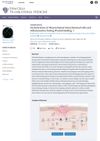 July 2023 in “Stem Cells Translational Medicine”
 Mesenchymal Stem/Stromal Cells (MSCs) help in wound healing and tissue regeneration, but can also contribute to tumor growth. They show promise in treating chronic wounds and certain burns, but their full healing mechanisms and potential challenges need further exploration.
 April 2023 in “The journal of investigative dermatology/Journal of investigative dermatology”
 Folliculotropic mycosis fungoides has unique molecular features and cell interactions that could guide targeted therapy.
 January 2023 in “Research Square (Research Square)”
 IGF2BP3 gene is up-regulated in keloid patients, suggesting potential targets for treatment.
 June 2020 in “Journal of Investigative Dermatology”
 Tiny particles from skin cells can help activate hair growth.
Live imaging helps us understand skin immune responses and develop treatments.
55 citations
,
April 2015 in “BMC medicine” Stem Cell Educator therapy helps regrow hair and improve life quality in alopecia areata patients.
 29 citations
,
May 2020 in “npj Regenerative Medicine”
29 citations
,
May 2020 in “npj Regenerative Medicine” Immune cells help regulate hair growth, and better understanding this can improve hair loss treatments.
 27 citations
,
September 2018 in “Nanomedicine: Nanotechnology, Biology and Medicine”
27 citations
,
September 2018 in “Nanomedicine: Nanotechnology, Biology and Medicine” Further research is needed to improve hair regeneration using stem cells and nanomaterials.
21 citations
,
December 2005 in “The journal of investigative dermatology/Journal of investigative dermatology” T-cells in alopecia areata scalp show abnormal regulation, leading to less inflammation.
 15 citations
,
July 2021 in “Bosnian Journal of Basic Medical Sciences”
15 citations
,
July 2021 in “Bosnian Journal of Basic Medical Sciences” Stem cell therapy is promising for treating various health conditions, but more research is needed to understand its full potential and address challenges.
 6 citations
,
September 2022 in “Frontiers in pharmacology”
6 citations
,
September 2022 in “Frontiers in pharmacology” Epimedium extract helps increase skin pigmentation and could be a new treatment for conditions with reduced pigmentation.
6 citations
,
November 2018 in “American journal of transplantation” UV light helped human hair transplants survive in mice without broad immunosuppression.
1 citations
,
January 2025 in “Genes & Diseases” Understanding T cells and signaling pathways can lead to better treatments for hair loss.
 1 citations
,
August 2018 in “bioRxiv (Cold Spring Harbor Laboratory)”
1 citations
,
August 2018 in “bioRxiv (Cold Spring Harbor Laboratory)” A new mutation in the TMEM173 gene and a risk allele in IFIH1 cause a unique set of immune-related symptoms.
 March 2024 in “International Journal of Cosmetic Science”
 Dandruff is linked to increased T cells and weakened immune protection in hair follicles.