January 2005 in “Enlighten: Publications (The University of Glasgow)” Melanocyte pathology requires keratinocyte hyperplasia and regulation dysfunction.
 4 citations
,
February 2022 in “International Journal of Dermatology”
4 citations
,
February 2022 in “International Journal of Dermatology” Porocarcinoma generally has low rates of recurrence, spread to lymph nodes, and death.
 43 citations
,
February 2008 in “Journal of cutaneous pathology”
43 citations
,
February 2008 in “Journal of cutaneous pathology” Melanocyte precursors in human fetal skin follow a specific migration pattern and some remain in the skin's deeper layers.
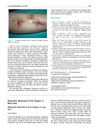 November 2012 in “Actas Dermo-Sifiliográficas”
 An 86-year-old man had a rare tongue melanoma but refused treatment, showing the need for early cancer detection and treatment.
Keratinocytes can reduce the survival of certain melanoma cells, suggesting new therapy paths.
10 citations
,
November 2007 in “Annals of Diagnostic Pathology” A rare benign tumor with hair follicle features was found on a man's trunk.
561 citations
,
April 2003 in “Journal of Investigative Dermatology” CD34 is a marker for isolating stem-like cells in mouse hair follicles.
June 2024 in “Dermatopathology” A rare type of skin cancer on the scalp can be mistaken for hair loss, causing delayed diagnosis and severe damage.
 June 2026 in “Frontiers in Oncology”
 GSDMA deficiency slows skin cancer growth.
8 citations
,
August 1986 in “Journal of Investigative Dermatology” April 2013 in “Cancer Research” SKH1 hairless mice have identifiable epidermal stem cells with specific markers.
 2 citations
,
September 2022 in “Annals of Medicine and Surgery”
2 citations
,
September 2022 in “Annals of Medicine and Surgery” A man with a rare scalp cancer was successfully treated, highlighting the need for early management to prevent spread and complications.
 May 2014 in “Journal of The American Academy of Dermatology”
 Living near more dermatologists and using certain cancer screening tests lowers the chance of being diagnosed with advanced skin cancer.
Loss of the p53 gene alone causes tumors, and losing both p53 and Rb genes speeds up aggressive skin cancer.
October 1967 in “Archives of Dermatology” A 42-year-old woman had a scalp lesion that didn't cause hair loss and showed specific changes under a microscope.

A 70-year-old man with skin cancer on both sides of his forehead was treated with surgery and cryotherapy, highlighting the need for early detection and prevention.
2 citations
,
January 1989 in “The Nishinihon Journal of Dermatology” Seborrheic keratosis likely originates from the upper regions of hair follicles.
 34 citations
,
July 2011 in “Journal of the European Academy of Dermatology and Venereology”
34 citations
,
July 2011 in “Journal of the European Academy of Dermatology and Venereology” The study concluded that scalp tumors show different patterns based on age, gender, and tumor thickness, and emphasized the importance of early detection and scalp examinations.
Loss of the p53 gene alone causes tumors, and losing both p53 and Rb genes speeds up aggressive skin cancer.
21 citations
,
September 1968 in “Cancer” Citrulline in certain skin tumors suggests they mimic hair growth, helping distinguish them from other cancer types.
178 citations
,
April 2011 in “Journal of Clinical Investigation” Basal cell carcinomas in mice can start from hair follicle stem cells and other skin cell types, depending on signaling levels.
207 citations
,
July 2006 in “Development” MTS24 marks a new type of skin cell that helps hair growth and repair.
 November 2023 in “International surgery journal”
 A man's neck lump was a trichilemmal cyst, not cancer, and should be fully removed due to rare risk of becoming malignant.
9 citations
,
January 2011 in “American Journal of Dermatopathology” Pilomatrixoma involves abnormal hair keratin production and cell death, causing debris and cysts.
 January 2025 in “Dermatology Review”
 Giant keratoacanthoma can look like squamous cell carcinoma, requiring careful diagnosis and surgical removal.
 July 2014 in “Plastic and Reconstructive Surgery”
 Sentinel lymph node biopsy is recommended for all types of desmoplastic melanoma due to higher rates of nodal metastasis.
 July 2014 in “Plastic and Reconstructive Surgery”
 Sentinel lymph node biopsy is recommended for all types of desmoplastic melanoma due to higher rates of nodal metastasis.
 January 2014 in “Pathology”
 Early subungual melanoma might be treated with less aggressive surgery because it invades the skin under the nail more slowly.
173 citations
,
July 2012 in “British Journal of Dermatology” Dabrafenib can cause skin growths and sometimes low-grade skin cancer.
January 2022 in “Optometric clinical practice” A woman had a non-cancerous skin tumor on her eyelid removed successfully.