19 citations
,
May 2009 in “Pediatric Dermatology” A 5-year-old girl's scalp scarring and hair loss from lupus improved with specific medications.
7 citations
,
June 2017 in “The Journal of Dermatology”  January 2016 in “Springer eBooks”
 Understanding drug interactions, side effects, and patient-specific factors is crucial for effective dermatological care.
12 citations
,
March 2021 in “JAAD Case Reports” Nail changes from immunotherapy can be managed without stopping cancer treatment.
 June 2024 in “Namık Kemal Tıp Dergisi”
 Psoriasis patients are more likely to experience maladaptive daydreaming.
 September 2023 in “Jurnal Ilmu Kesehatan Hewan”
 The dog improved significantly after treatment for skin mites and fungi.
Different connective tissue disorders have unique symptoms and treatments, with varying outcomes and often require ongoing care from a specialist.
 24 citations
,
September 2005 in “Journal of Cellular Biochemistry”
24 citations
,
September 2005 in “Journal of Cellular Biochemistry” Retinoids increase steroid sulfatase activity in leukemia cells through RARα/RXR and involves certain pathways like phosphoinositide 3-kinase and ERK-MAP kinase.
 November 2025 in “Archives of Dermatological Research”
 Using a higher concentration of triamcinolone acetonide leads to faster hair regrowth in scalp patchy alopecia areata.
14 citations
,
January 2015 in “Indian journal of dermatology, venereology, and leprology” Methylprednisolone infusions can help some people with severe alopecia regrow hair.
 May 2026 in “SHILAP Revista de lepidopterología”
 Dupilumab effectively treated severe alopecia areata in a child.
21 citations
,
December 2014 in “Clinics in dermatology” Squaric acid dibutylester effectively treats alopecia areata.
3 citations
,
January 2014 in “The Journal of Dermatology” Squaric acid dibutylester for alopecia areata can cause benign skin lymphoid growths.
 February 1990 in “Journal of The American Academy of Dermatology”
 New skin treatments in 1987-1988 showed effectiveness for various conditions, but some had side effects or risks.
 59 citations
,
January 2015 in “Nanoscale”
59 citations
,
January 2015 in “Nanoscale” The new micelle formulation delivers acne treatment more effectively and safely than current gels.
 June 2024 in “Indian Dermatology Online Journal”
 Topical tofacitinib is effective and safe for treating alopecia areata.
 1 citations
,
September 2022 in “BioNanoScience”
1 citations
,
September 2022 in “BioNanoScience” Tofacitinib can help hair grow back in alopecia patients but hair loss might return if the dose is lowered.

Baricitinib helped treat a man's beard hair loss when steroids didn't work.
 April 2017 in “Journal of Investigative Dermatology”
 The document concludes that various topical treatments show promise for skin conditions like atopic dermatitis, psoriasis, and hair loss.
November 2024 in “Journal of Investigative Dermatology” Secukinumab reduces immune activity in hidradenitis suppurativa skin.
 1 citations
,
October 2012 in “QJM”
1 citations
,
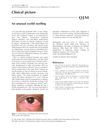
October 2012 in “QJM” A 47-year-old man's eyelid swelling didn't improve with basic treatments, so a biopsy was needed.
January 2023 in “Indian Journal of Natural Products and Resources” Suaeda monodiana extract may help treat skin diseases due to its protective and healing properties.
 1 citations
,
January 2026 in “Dermatology Reports”
1 citations
,
January 2026 in “Dermatology Reports” Tildrakizumab may cause alopecia areata, but stopping it and using corticosteroids can regrow hair.
1 citations
,
January 2000 in “PubMed” The treatment slightly increased hair growth and was safe for most women.
6 citations
,
March 2023 in “Journal of Ethnopharmacology” Jieduquyuziyin prescription helps treat SLE with atherosclerosis by improving cholesterol removal and reducing inflammation.
1 citations
,
September 2024 in “Life” Combining fractionated CO2 laser with tacrolimus may help treat chronic alopecia areata.
10 citations
,
May 2020 in “Dermatologic therapy” Tildrakizumab significantly improved recalcitrant lichen planopilaris and frontal fibrosing alopecia.
 January 2007 in “Journal of the American Academy of Dermatology”
 A 73-year-old man's grey-white hair turned dark brown after eczema treatment.
Alopecia universalis from alemtuzumab in multiple sclerosis can be reversed with specific treatments.
 2 citations
,
February 2018 in “InTech eBooks”
2 citations
,
February 2018 in “InTech eBooks” TNF-alpha inhibitors can cause various immune-related skin issues.