 September 2025 in “Experimental & Molecular Medicine”
 Small molecules KY19382 and KY19334 may help treat skin cancer by reducing CDK1 levels and blocking harmful cell signals.

A 70-year-old man with skin cancer on both sides of his forehead was treated with surgery and cryotherapy, highlighting the need for early detection and prevention.
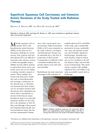 May 2006 in “Dermatologic Surgery”
 Radiation therapy successfully treated an elderly man's skin cancer and pre-cancerous scalp lesions.
 55 citations
,
March 2015 in “Carcinogenesis”
55 citations
,
March 2015 in “Carcinogenesis” WNT10A helps esophageal cancer cells spread and keep renewing themselves.
 June 2026 in “Frontiers in Oncology”
 GSDMA deficiency slows skin cancer growth.
 1 citations
,
October 2019 in “Journal of Craniofacial Surgery”
1 citations
,
October 2019 in “Journal of Craniofacial Surgery” 3D virtual planning can help in precise skull reconstruction for advanced skin cancer, but patient-specific factors must be considered.
 76 citations
,
June 2018 in “EMBO Reports”
76 citations
,
June 2018 in “EMBO Reports” YAP and TAZ proteins are necessary for the development of two types of skin cancer.
 3 citations
,
May 2018 in “European Journal of Dermatology”
3 citations
,
May 2018 in “European Journal of Dermatology” Photodynamic therapy may not work for erythroplasia of Queyrat and could lead to invasive squamous cell carcinoma.
 10 citations
,
January 2013 in “Journal of skin cancer”
10 citations
,
January 2013 in “Journal of skin cancer” PKC ε increases hair follicle stem cell turnover and may raise skin cancer risk.
 2 citations
,
August 2012 in “Aesthetic Plastic Surgery”
2 citations
,
August 2012 in “Aesthetic Plastic Surgery” The letter argues that blaming synthetic hair implants for scalp cancer based on one report is biased and possibly coincidental.
 1 citations
,
February 2009 in “Journal of Investigative Dermatology”
1 citations
,
February 2009 in “Journal of Investigative Dermatology” VEGF helps squamous cell carcinoma grow in ways beyond just blood vessel formation.

Deleting Smad4 and PTEN genes in mice causes rapid, invasive forestomach cancer.

Deleting Smad4 and PTEN genes in mice causes rapid, invasive stomach cancer.
 April 2018 in “Journal of Investigative Dermatology”
 CREB, a protein that can promote cancer traits, is controlled by β-catenin in skin cancer cells.
 9 citations
,
September 2024 in “Scientific Reports”
9 citations
,
September 2024 in “Scientific Reports” Cardamonin may help treat oral cancer by promoting cell death and stopping cancer cell growth.
6 citations
,
December 2019 in “Frontiers in genetics” GLI1 might protect against the start of skin cancer and is not linked to cancer severity.
11 citations
,
February 2018 in “Oncotarget” Lower SMAD2/3 activation predicts more severe skin cancer.
November 2025 in “Cancer Cell International” Cancer-associated fibroblasts promote tumor growth in skin cancer.
7 citations
,
May 2021 in “EBioMedicine” Increased methylation of the Filip1l gene may contribute to aggressive skin cancer.
 1 citations
,
September 2025 in “Journal of Zhejiang University SCIENCE B”
1 citations
,
September 2025 in “Journal of Zhejiang University SCIENCE B” Photodynamic therapy successfully treated skin cancer in a 53-year-old woman.
November 2025 in “Indian Dermatology Online Journal” Clouston syndrome can lead to skin cancer, so monitoring is crucial.
31 citations
,
October 2019 in “Genes & Diseases” Basal cell carcinomas and squamous cell carcinomas have different gene activity patterns, suggesting unique treatment approaches.
76 citations
,
February 2007 in “Cancer Research” Protein Kinase Cε increases skin sensitivity to UV damage and skin cancer risk.
 1 citations
,
November 2002 in “Journal of dermatology”
1 citations
,
November 2002 in “Journal of dermatology” The antibody created from BCC tissues reacts similarly to both BCC and hair follicles, suggesting BCC may come from hair follicle cells.
65 citations
,
March 2004 in “Journal of Clinical Investigation” Inhibiting ornithine decarboxylase may help prevent certain skin cancers.
64 citations
,
March 2004 in “Journal of Clinical Investigation” Targeting ornithine decarboxylase can help prevent skin cancer.
35 citations
,
January 2006 in “Cancer Research” Mice with extra PKCδ resist chemical-induced skin cancer but not UV-induced.
3 citations
,
November 2011 in “Small GTPases” Researchers found that hair follicle stem cells can become squamous cell carcinoma due to Ras activation, which could lead to new treatments.
100 citations
,
May 2006 in “American Journal Of Pathology” Matriptase is crucial for skin barrier, hair growth, and may contribute to skin cancer.
 5 citations
,
July 2022 in “Orphanet journal of rare diseases”
5 citations
,
July 2022 in “Orphanet journal of rare diseases” RSPO1 mutations in certain patients lead to skin cells that don't develop properly and are more likely to become invasive, increasing the risk of skin cancer.