3 citations
,
August 2023 in “Molecules” A compound from Sansevieria trifasciata shows strong antibacterial effects against E. coli and S. aureus.
 3 citations
,
March 2014 in “Journal of Industrial Microbiology & Biotechnology”
3 citations
,
March 2014 in “Journal of Industrial Microbiology & Biotechnology” Scientists found a new gene in a bacterium that can modify an immunosuppressant drug, potentially helping to treat hair loss.
3 citations
,
April 2010 in “The FASEB Journal” Estrogen and MLL enzymes work together to regulate genes important for hair growth and leukemia.
 142 citations
,
January 2019 in “Frontiers in Neuroendocrinology”
142 citations
,
January 2019 in “Frontiers in Neuroendocrinology” Postpartum depression is linked to changes in brain chemicals, inflammation, stress, and certain genes, and can potentially be identified by markers like specific steroids, serotonin levels, and vitamin D levels.
26 citations
,
May 2011 in “Tissue Engineering Part A” Hydrogel surface properties affect mouse embryoid body differentiation.
 21 citations
,
January 2010 in “JOURNAL OF HEALTH SCIENCE”
21 citations
,
January 2010 in “JOURNAL OF HEALTH SCIENCE” Abietic acid from pine resin can effectively inhibit testosterone 5α-reductase.
 3 citations
,
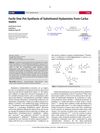
August 2017 in “Synlett”
3 citations
,
August 2017 in “Synlett” Scientists in India found a safer and efficient way to make a type of medicine called hydantoins from carbamates, which also worked well in making the seizure medicine, Ethotoin.
 2 citations
,
January 2011 in “Andrologia”
2 citations
,
January 2011 in “Andrologia” Flutamide and a new synthetic steroid affected brain and prostate chemicals and showed potential for treating androgen-related conditions and epilepsy.
April 2024 in “Natural Product Communications” Juniperus pruning woods can be used to make effective biopesticides.
 March 2023 in “Journal of pharmacognosy and phytochemistry”
 Unripe fruits of three banana species have many health-boosting compounds useful for medicine.
August 2013 in “日本医療薬学会年会講演要旨集” Hair contains complex lipids, including cholesterol and fatty acids, similar to skin.
 4 citations
,
August 2018 in “International Journal of Current Microbiology and Applied Sciences”
4 citations
,
August 2018 in “International Journal of Current Microbiology and Applied Sciences” Eclipta prostrata leaves contain various compounds with medicinal properties.
2 citations
,
August 2004 Early diagnosis and proper treatment improve outcomes for methylmalonic acidemia.
 April 2015 in “Journal of Nutritional Therapeutics”
 Looser dietary restrictions can improve growth and reduce illness in methylmalonic acidemia patients.
 December 2023 in “Research Square (Research Square)”
 12-Methoxy carnosic acid from rosemary might be a good natural treatment for hair loss.
16 citations
,
October 2018 in “BMC Complementary and Alternative Medicine” Crataeva nurvala leaves may help reduce anxiety and improve sleep.
January 2026 in “Molecules” A new perming method is less damaging to hair and works as well as traditional methods.
 1 citations
,
December 2022 in “International Journal of Science for Global Sustainability”
1 citations
,
December 2022 in “International Journal of Science for Global Sustainability” Mitrocarpus hirtus leaf extracts may help fight scalp ringworm.
June 2026 in “Clinical Case Reports” Early recognition and treatment of multiple carboxylase deficiency with biotin can prevent serious health issues in infants.
DiluCap improves how quickly minoxidil and finasteride dissolve and controls the release of melatonin and naltrexone.
20 citations
,
February 2017 in “European journal of pharmaceutical sciences” The MPA-ISO cocrystal improved solubility and dissolution rate, while the others did not.
October 2019 in “Zenodo (CERN European Organization for Nuclear Research)” Capilcep effectively promotes hair growth and is safe, but long-term effects need more research.
August 2025 in “OPAL (Open@LaTrobe) (La Trobe University)” Certain hydroxycinnamate derivatives may effectively inhibit enzymes linked to hair loss with low toxicity.
 April 2024 in “Research Square (Research Square)”
 16-MHA can restore the barrier and moisture of damaged hair, making it similar to undamaged hair.
4 citations
,
December 2024 in “European Journal of Medicinal Chemistry” New pyrazole-based inhibitors show promise for treating metabolic diseases and other conditions.
May 2010 in “International Journal of Cosmetic Science” Mercaptans make hair more prone to damage, with reduced hair being more affected than permed hair.
January 2023 in “Toxicological Research” March 2026 in “Drug Testing and Analysis” PTeCA is a reliable marker for detecting oxidative hair treatments.
 14 citations
,
August 2007 in “Bioorganic & Medicinal Chemistry Letters”
14 citations
,
August 2007 in “Bioorganic & Medicinal Chemistry Letters” The compound (1R,2S)-4-(2-Cyano-cyclohexyl-oxy)-2-trifluoromethyl-benzonitrile can stimulate hair growth and reduce oil production when applied topically.
December 2022 in “Scientific Reports” Compound 4 is a promising treatment for hair loss with low toxicity.