Search
for
Sort by
Research
810-840 / 1000+ resultsresearch Medium-molecular weight hyaluronic acid orchestrates hair follicle regeneration via CD44/AKT-driven endogenous ROS activation of β-catenin

research A Review (Research and Patents) on Jasmonic Acid and Its Derivatives
Jasmonic acid and its derivatives play important roles in plant health and have potential uses in medicine and agriculture.
research Hypothalamic–Pituitary–Thyroid Axis Hormones Stimulate Mitochondrial Function and Biogenesis in Human Hair Follicles
HPT axis hormones boost mitochondrial function and growth in hair follicles, potentially aiding hair health.
research The Use of New Hematological Markers in the Diagnosis of Alopecia Areata
Certain blood markers, especially MLR, can help diagnose alopecia areata.
research Assessment and Treatment Outcomes of Persistent Radiation-Induced Alopecia in Patients With Cancer
Persistent radiation-induced hair loss is dose-dependent, and treatments like topical minoxidil can be effective.

research Assessment of male pattern androgenic alopecia with topical niosomal minoxidil
Niosomal minoxidil, when applied topically, increases hair count more than conventional minoxidil solution.
research Efektivitas Terapi Minoksidil pada Alopesia Androgenetik: Studi in Vivo
5% minoxidil significantly increases hair follicle density.

research Intralesional Injection of Triamcinolone Acetonide, Methotrexate and Vitamin D in Treatment of Alopecia Areata: A Narrative Review
Methotrexate and vitamin D3 are potentially more effective and safer than triamcinolone for treating localized alopecia areata.
research Decision letter: Arabidopsis formin 2 regulates cell-to-cell trafficking by capping and stabilizing actin filaments at plasmodesmata
Arabidopsis Formin 2 stabilizes actin filaments to aid cell-to-cell trafficking.
research AP-1 and TGFß cooperativity drives non-canonical Hedgehog signaling in resistant basal cell carcinoma
AP-1 and TGFß work together to drive resistance in basal cell carcinoma, suggesting new treatment options.

research Abstracts for IMANA Pre-ISNA Convention, September 2006
The document's content could not be processed.

research Cutaneous features of myotonic dystrophy types 1 and 2: Implication of premature aging and vitamin D homeostasis
Patients with myotonic dystrophy often have skin problems that suggest early aging and vitamin D issues, and the severity of these problems is linked to their genetic condition and vitamin D levels.
research Comparison of self-assessed and clinician-assessed hirsutism diagnosed according to the modified Ferriman-Gallwey scale among female outpatients in Brazil
Self-assessed hirsutism scores are not reliable for clinical diagnosis but may help in screening.
research A rare LMNA missense mutation causing a severe phenotype of mandibuloacral dysplasia type A: a case report
A rare genetic mutation caused severe symptoms in a 6-year-old girl with mandibuloacral dysplasia type A.

research Comparative study between fractional carbon dioxide laser versus intralesional steroids injection in treatment of alopecia areata
Fractional CO2 laser is more effective and safer than steroid injections for treating alopecia areata.
research Chitin Derivative‐Based Detachable Microneedles for Effective Treatment of Androgenic Alopecia
Detachable microneedles with chitin derivatives effectively promote hair regrowth in androgenic alopecia without toxicity.

research Topical 15% Lactic Acid Solution versus Topical Betamethasone Valerate lotion in Treatment of Multiple patchy alopecia aerate.
Betamethasone valerate lotion is more effective for treating multiple patchy alopecia areata.
research A novel monilethrix mutation in coil 2A of KRT86 causing autosomal dominant monilethrix with incomplete penetrance
A new mutation in the KRT86 gene causes a hair disorder with variable expression.

research A Comparative Study between the Efficacy and Safety of 5% Minoxidil Solution and 5% Minoxidil Milky Lotion in the Treatment of Male Androgenic Alopecia.
Both 5% minoxidil solution and milky lotion effectively and safely treat male hair loss, with the lotion being a good alternative for those sensitive to certain ingredients.
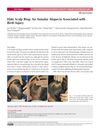
research Halo Scalp Ring: An Annular Alopecia Associated with Birth Injury
A hairless patch on a boy's scalp from birth injury improved with minoxidil treatment.

research The Role of Ischemia-modified Albumin and Ischemia-modified Albumin to Albumin Ratios in Patients with Alopecia Areata
IMA and IMA/albumin levels don't predict alopecia areata severity.

research Minoxidil (Mx) as a prophylaxis of doxorubicin – induced alopecia
Minoxidil not effective in preventing chemotherapy-induced hair loss.
research Matrix remodelling and MMP expression/activation are associated with hidradenitis suppurativa skin inflammation
Matrix changes and increased MMPs contribute to skin inflammation in hidradenitis suppurativa.

research 1315 An Integrated model of alopecia areata biomarkers highlights both Th1/Th2 upregulation, with stronger correlations between Th2 activation and disease severity
Both Th1 and Th2 immune responses are increased in alopecia areata, with Th2 response more strongly linked to how severe the disease is.
research Mechanisms that regulate androgen receptor transcriptional activity
DHT enhances androgen receptor activity more than testosterone, and MAGE-11 influences this activity through specific interactions.
research 026 Altered Skin Wound Healing in Homeobox Gene Msx-2 Knockout Mice
Msx-2 gene removal speeds up skin wound healing in mice.

research Abstracts Presented at the 12th Joint Meeting of the International Society of Dermatopathology, March 4-5, 2009, Marines Memorial Club & Hotel, San Francisco, CA, USA
Mast cells play a significant role in hair loss conditions like male pattern hair loss and alopecia areata.
research [Methotrexate to treat SAPHO syndrome with keloidal scars].
Methotrexate effectively managed SAPHO syndrome symptoms when other treatments failed.
research Identification and characterization of the hamster polyomavirus middle T antigen
The hamster polyomavirus middle T antigen is linked to tumors in hamsters and associates with a specific tyrosine kinase.