 66 citations
,
July 2015 in “Journal of Molecular Biology”
66 citations
,
July 2015 in “Journal of Molecular Biology” The document concludes that for hair and feather growth, it's better to target the environment around stem cells than the cells themselves.
 53 citations
,
September 2017 in “BMJ Open”
53 citations
,
September 2017 in “BMJ Open” Nearly all elderly nursing home residents had a skin disease, with dry skin being the most common.
 11 citations
,
October 2001 in “Dermatologic Clinics”
11 citations
,
October 2001 in “Dermatologic Clinics” The document concludes that DAB389-IL2 is promising for treating refractory cutaneous T-cell lymphoma, but more research is needed on its effectiveness and side effect management.
June 2014 in “Zagazig Journal of Pharmaceutical Sciences/Zagazig Journal of Pharmaceutical Science” Ascorbic acid, orlistat, and mastic gum can effectively reduce sweat odor.
6 citations
,
July 2025 in “Frontiers in Microbiology” Imbalanced skin bacteria worsen diabetic foot ulcers, but adjusting them might improve healing.
 January 2023 in “Journal of Ravishankar University”
 Hair loss can be caused by stress, aging, and harmful substances that create an imbalance in the body's natural processes.
 January 2023 in “Journal of the College of Physicians and Surgeons Pakistan”
 A rare ovarian tumor was successfully treated with surgery and chemotherapy.
 April 2024 in “Frontiers in microbiology”
 Certain gut bacteria may increase or decrease the risk of male pattern baldness.
 July 2025 in “BMC Microbiology”
 Pancreatic cancer can alter gut and skin bacteria, possibly causing skin issues.
227 citations
,
April 2020 in “Cell” More precise, personalized therapies are needed for autoimmune diseases.
March 2026 in “International Journal of Dermatology” Changes in scalp microbes may contribute to hair loss, suggesting new treatment options.
January 2018 in “Florence Research (University of Florence)” Melanoma and vitiligo patients have different gut fungi and bacteria compared to healthy people.
2 citations
,
January 2022 in “The Application of Clinical Genetics” A young Russian girl with Meier-Gorlin syndrome has two new mutations in the CDC6 gene.
 December 2024 in “Microorganisms”
 Microbiota changes in deer antler velvet aid in wound healing and tissue regeneration.
March 2024 in “Nutrients” Alopecia Areata is linked to specific gut bacteria and metabolites, indicating a complex gut microbiome.
78 citations
,
May 2019 in “Frontiers in Cellular and Infection Microbiology” DPK-060 in poloxamer gel effectively treats skin infections, but nanocarriers don't enhance its efficacy.
 1 citations
,
July 2022 in “PLOS ONE”
1 citations
,
July 2022 in “PLOS ONE” The study concluded that people with Lichen Planopilaris have a more diverse scalp bacteria and different metabolic pathways compared to healthy individuals.
 April 2024 in “Animal models and experimental medicine”
 PRP treatment helps hair growth and rebalances scalp bacteria in androgenetic alopecia patients.
 November 2023 in “Journal of Basic Microbiology”
 Green-synthesized zinc oxide nanoparticles effectively inhibit common fungi found on human scalp hair.
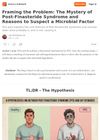 April 2026 in “Open MIND”
 Microbes in the small intestine may cause Post-Finasteride Syndrome symptoms.
 April 2026 in “Zenodo (CERN European Organization for Nuclear Research)”
 Microbes in the small intestine may cause Post-Finasteride Syndrome symptoms.
December 2025 in “Journal of Veterinary Clinics” CO₂ laser surgery successfully healed a dog's chronic paw condition.
1 citations
,
November 2022 in “Nutrients” Hair glucocorticoid levels and gut bacteria are linked to growth rates in piglets.
365 citations
,
November 2018 in “Journal of Allergy and Clinical Immunology” People with atopic dermatitis have different skin bacteria, and targeting these bacteria might help treat the condition.
181 citations
,
January 2019 in “Cell” Innate lymphoid cells help control skin bacteria by regulating sebaceous glands.
48 citations
,
January 2024 in “Frontiers in Pharmacology” Improving topical drug delivery involves overcoming skin barriers and using personalized dosing to enhance effectiveness.
46 citations
,
July 2022 in “Frontiers in Oncology” Cold atmospheric plasma is a promising and safe treatment for various skin conditions.
44 citations
,
May 2008 in “Acta Zoologica” Keratinization in embryos helped vertebrates adapt to land by forming a protective skin barrier.
40 citations
,
November 2021 in “International Journal of Molecular Sciences” Mutant keratins cause inflammation in Epidermolysis Bullosa Simplex, suggesting targeting them could help treat the disorder.
35 citations
,
October 2005 in “European journal of pharmaceutics and biopharmaceutics” Polymers increased skin permeation and stability of steroid hormones in liposomal formulations.