58 citations
,
February 2013 in “Journal of Biological Chemistry” LGR5 mainly stays inside cells, moving to the trans-Golgi network, and this process is important for its role in cell signaling.
12 citations
,
December 2021 in “Fundamental Research” Blebbistatin can reduce fibrosis by targeting myofibroblast contraction.
8 citations
,
March 2023 in “BMC Research Notes” Laser-capture microdissection effectively analyzes hair follicle microbiomes, revealing region-specific bacterial differences.
17 citations
,
March 2005 in “Journal of Investigative Dermatology” Autofluorescence in hair follicle stem cells can interfere with studies but may help isolate these cells.
January 2026 in “Open MIND” Fibroblasts play a key role in hair loss by affecting hair growth and causing inflammation.
 34 citations
,
October 1982 in “Journal of applied polymer science”
34 citations
,
October 1982 in “Journal of applied polymer science” Moisture content significantly affects how human hair breaks.
30 citations
,
February 2010 in “The journal of investigative dermatology/Journal of investigative dermatology” Plet-1 protein helps hair follicle cells move and stick to tissues.
 6 citations
,
March 2016 in “PLoS ONE”
6 citations
,
March 2016 in “PLoS ONE” The patient's hair was thinner and had fewer lipids due to a genetic mutation.
 42 citations
,
September 2015 in “Gene”
42 citations
,
September 2015 in “Gene” FGF5s can block the effects of FGF5, which may help control hair growth in cashmere goats.
28 citations
,
September 1998 in “Journal of Investigative Dermatology” Two distinct caspases in human skin help with cell death and skin formation.
34 citations
,
June 1992 in “Journal of Cutaneous Pathology” Harlequin ichthyosis involves abnormal skin cell structures and giant mitochondria, affecting skin and hair.
2 citations
,
November 1996 in “PubMed” Most people have similar hair protein patterns, but a rare variant was found in two women.
33 citations
,
February 2024 in “International Journal of Molecular Sciences” Understanding fibroblast issues in diabetic foot ulcers is key to creating better treatments.
 June 2020 in “Journal of Investigative Dermatology”
 Tiny particles from skin cells can help activate hair growth.
110 citations
,
April 2009 in “Cell Motility and the Cytoskeleton” β‐thymosins, especially thymosin β4, help in heart protection, wound healing, and hair growth by stabilizing actin in cells.
39 citations
,
December 1998 in “Journal of Cell Science” The LEF-1 binding site enhances gene expression in hair follicles, with other proteins aiding specific regulation.
46 citations
,
November 1963 in “Journal of Histochemistry & Cytochemistry” Arginine converts to citrulline in hair follicles as proteins harden.

The skin can still regenerate and function well even with fewer fibroblasts.
9 citations
,
November 2006 in “Journal of Microscopy” Dye mainly stays on the hair surface and endocuticle.
 October 2024 in “SPIRE - Sciences Po Institutional REpository”
 Glypicans help hair follicle stem cells differentiate by interacting with specific receptors, influencing hair growth.
53 citations
,
September 2004 in “American journal of medical genetics. Part C, Seminars in medical genetics” Mutations in keratin genes cause cell fragility and various skin disorders.
10 citations
,
December 2001 in “PubMed” The conclusion is that substances can penetrate hair fibers through multiple pathways, including both the cell membrane complex and the non-keratinous parts.
45 citations
,
December 2007 in “The FASEB journal” There are two types of stem cells in rodent hair follicles, each with different keratin proteins.
 November 2023 in “bioRxiv (Cold Spring Harbor Laboratory)”
 Scientists made a mouse that shows how a specific protein in the skin changes and affects hair growth and shape.
34 citations
,
September 2007 in “Experimental Dermatology” The outer layer of Merino wool is rich in sulfur proteins, making it resistant to damage.
82 citations
,
November 1959 in “Annals of the New York Academy of Sciences” 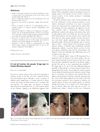 39 citations
,
July 2015 in “British Journal of Dermatology”
39 citations
,
July 2015 in “British Journal of Dermatology” The pseudo 'fringe sign' can also appear in frontal fibrosing alopecia, not just in traction alopecia, showing that this condition may be more common than thought.
The "sinuskissen" in cat hair follicles is mostly connective tissue, affecting fluid flow.
32 citations
,
November 1998 in “Journal of Biological Chemistry” Mouse and human keratin 16 can both form filaments, with differences likely due to the tail domain, not the helical domain.
2 citations
,
September 2004 in “Experimental Dermatology” Desmosomal adhesion is essential for healthy skin structure and function.