 78 citations
,
August 2002 in “Experimental Dermatology”
78 citations
,
August 2002 in “Experimental Dermatology” Researchers developed a quick and easy way to get and grow cells from the base of human hair follicles.
 2 citations
,
January 2020 in “Methods in molecular biology”
2 citations
,
January 2020 in “Methods in molecular biology” Scientists created early-stage hair follicles from human skin cells, which could help treat baldness and study hair growth.
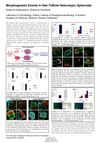
Researchers developed a method to create artificial hair follicles that may help with hair loss treatment and research.
56 citations
,
January 1970 in “Cell and Tissue Research” 949 citations
,
January 2001 in “Cell” Adult mouse skin contains stem cells that can create new hair, skin, and oil glands.
 4 citations
,
April 2015 in “Experimental Dermatology”
4 citations
,
April 2015 in “Experimental Dermatology” Certain genes controlled by OVOL1 are crucial for creating new hair follicles.
1 citations
,
February 2016 in “Cell Transplantation” Hair follicles have a more inactive cell cycle than other skin cells, which may help develop targeted therapies for skin diseases and cancer.
Fgf20 is crucial for hair follicle formation by influencing cell movement and growth.
 149 citations
,
July 2017 in “PLoS Biology”
149 citations
,
July 2017 in “PLoS Biology” Hair follicle patterns form through a mix of self-organization and signaling interactions.
January 2002 in “Basic medical sciences and clinics” Hair follicle stem cells are crucial for hair growth and renewal.
July 2026 in “Biochemical and Biophysical Research Communications” Fgf20 helps form hair follicle structures by stopping cell division and increasing cell movement.
November 2022 in “bioRxiv (Cold Spring Harbor Laboratory)” Researchers identified new cell types and genes in early hair follicle development.
July 2025 in “Journal of Investigative Dermatology” Wnt and SHH pathways help form hair follicles by coordinating cell processes.
2 citations
,
February 2025 in “Journal of Investigative Dermatology” Progenitor cells randomly decide their roles to maintain hair follicle growth.
14 citations
,
July 1983 in “Acta Dermato Venereologica” A method was developed to grow millions of hair cells from a single hair for research and storage.
 April 2023 in “Journal of Investigative Dermatology”
 The research found that certain factors in hair follicle cells control hair growth and development, and these could be used to create new treatments for hair loss.

Injecting follicular cells into skin can lead to the formation of new hair follicles.
 155 citations
,
August 2003 in “Journal Of Experimental Zoology Part B: Molecular And Developmental Evolution”
155 citations
,
August 2003 in “Journal Of Experimental Zoology Part B: Molecular And Developmental Evolution” Understanding hair growth involves complex interactions between molecules and could help treat hair disorders.
 40 citations
,
March 2017 in “The journal of investigative dermatology/Journal of investigative dermatology”
40 citations
,
March 2017 in “The journal of investigative dermatology/Journal of investigative dermatology” Growing hair follicles have high mitochondrial activity and ROS in specific regions, aiding hair formation.
854 citations
,
February 2002 in “The journal of investigative dermatology/Journal of investigative dermatology” Understanding hair follicle development can help treat hair loss, skin regeneration, and certain skin cancers.
38 citations
,
November 2005 in “The journal of investigative dermatology. Symposium proceedings/The Journal of investigative dermatology symposium proceedings” Understanding normal hair follicle development helps analyze abnormalities in mutant mice.
173 citations
,
August 2015 in “Developmental cell” The study identified unique genes in hair follicle cells and their environment, suggesting these genes help organize cells for hair growth.
 August 2012 in “Nature Cell Biology”
 Hair grows when stem cell offspring in the follicle base proliferate, influenced by the dermal papilla.
 September 2016 in “Journal of Dermatological Science”
 Protein extract from embryonic skin can create new hair follicles in adult life, primarily through effects on fibroblasts.
 April 2017 in “Journal of Investigative Dermatology”
 Early and late matrix progenitors in hair follicles create different cell layers, with early ones forming the companion layer and later ones forming the inner root sheath and hair shaft.
 January 2024 in “ACS Biomaterials Science & Engineering”
 A new method using a microfluidic device can prepare hair follicle germs efficiently for potential use in hair loss treatments.
2 citations
,
July 2009 in “Medical hypotheses” Identifying specific hair follicle parts could lead to better hair loss treatments.
August 2013 in “International Wound Journal” Non-hairy skin cells might be used to regenerate hair, helping with baldness and skin wounds.
 April 2023 in “The journal of investigative dermatology/Journal of investigative dermatology”
 Developing hair follicles form from ring-shaped patterns, with future stem cells originating from the outer ring, not the upper layers, as previously thought.