Search
for
Sort by
Research
360-390 / 1000+ resultsresearch Pustular Eruption in a Patient Treated With Trametinib
Trametinib can cause skin issues, but they can often be managed without stopping the drug.
research Alopecia Areata
Early-stage Alopecia Areata was effectively treated in less than six months.
research Microneedling improves minoxidil response in androgenetic alopecia patients by upregulating follicular sulfotransferase enzymes.
research A Review of Topical Corticosteroid Foams
Topical corticosteroid foams are effective, safe, and easy to use for treating various skin conditions.
research EFFICACY OF TOPICAL MINOXIDIL 5% AND BETAMETHASONE VALERATE 0.1% VERSUS BETAMETHASONE VALERATE 0.1% MONOTHERAPY IN NON-SEGMENTAL VITILIGO
The combination treatment showed some improvement but wasn't significantly better than using betamethasone valerate alone.

research A Research on "Gel Formulation Advancement for Treatment of Beard and Scalp Fungal Infections"
The new gel effectively treats scalp and beard fungal infections with fewer side effects.

research Enhanced Clinical Outcomes and Treatment Adherence in Patients Using Compounded Topical Minoxidil to Treat Androgenetic and Traction Alopecia.
Compounded topical minoxidil works better and is more tolerated than over-the-counter minoxidil for treating hair loss in Black women.
research Microbotox injection versus its topical application following microneedling in the treatment of wide facial pores: A split face comparative study
Intradermal microbotox injections work better and last longer for reducing large facial pores than topical application.
research Topical and intralesional therapies for alopecia areata
Many treatments for alopecia areata have inconsistent results; for under 10s, use minoxidil with a corticosteroid, and for over 10s, add ILC and consider diphenylcyclopropenone for widespread cases.
research Topikal %1 Pimekrolimus Tedavisine Cevap Veren Bir Alopesi Areata Olgusu
Topical 1% pimecrolimus effectively treated alopecia areata.
research Current Treatment of Alopecia Areata
There are no FDA-approved treatments for Alopecia Areata, and current options have varying success and relapse rates.
research Kerion Type of Tinea Capitis Treated with Double Pulse Dose Terbinafine
Double pulse dose terbinafine effectively treats kerion type of tinea capitis.
research Medium-dose prednisolone pulse therapy in alopecia areata
Medium-dose prednisolone pulse therapy is effective and safe for multifocal alopecia areata but not for more severe forms.
research Interventional Evaluation of Monoammonium Glycyrrhizinate-Glycine/DLMethionine Combination Tablets in Mild Alopecia Areata
The combination therapy may be more effective for mild alopecia areata, especially in patients with allergies.
research Optimization of treatment of microsporia of scalp in children
The combination treatment effectively and safely cured scalp microsporia in children faster and prevented recurrence.
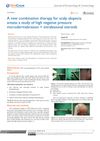
research A New Combination Therapy for Scalp Alopecia Areata: A Study of High Negative Pressure Microdermabrasion + Intralesional Steroids
Combining microdermabrasion with steroid injections improves hair regrowth in scalp alopecia areata.
research 049 Investigating the immunomodulatory mechanism of dithranol in alopecia areata through blood-based in vitro studies
Dithranol reduces inflammation in alopecia areata by lowering certain immune responses.
research Microneedles as transdermal drug delivery system for enhancing skin disease treatment
Microneedles can improve skin disease treatment by delivering drugs directly through the skin.
research Janus microneedles enabling orderly vitiligo treatment through spatiotemporal sequential promoting melanogenesis to transfer via PAR2 activation
A new microneedle treatment for vitiligo improves pigmentation by targeting immune regulation and promoting melanin transfer.
research Kerion celsi due to Microsporum audouinii: a severe form in an immunocompetent girl
A 9-year-old girl with a healthy immune system was successfully treated for a severe fungal scalp infection caused by Microsporum audouinii.
research The Comparative Potency of Hydrocortisone Analogs in Suppressing Growth of Hair in the Rat121From the Departments of Dermatology and Syphilology and of Anatomy, University of Michigan Medical School, Ann Arbor, Michigan.2Supported in part by research grants from the National Institutes of Health, United States Public Health Service (A-131 (C5)), the University of Michigan Memorial-Phoenix Project #145 and The Upjohn Company.
research Hair Follicle-Targeted Delivery of Azelaic Acid Micro/Nanocrystals Promote the Treatment of Acne Vulgaris
Azelaic acid micro/nanocrystals, especially with ultrasound and salicylic acid, greatly improve acne treatment.
research Clinical Application of Development of Nonantibiotic Macrolides That Correct Inflammation-Driven Immune Dysfunction in Inflammatory Skin Diseases
Nonantibiotic macrolides show promise for treating various inflammatory skin conditions.
research Efficacy and Safety of Combination 308-nm Excimer Laser and Intralesional Corticosteroid versus Intralesional Corticosteroid Monotherapy in the Treatment of Frontal Fibrosing Alopecia: A Pilot Study
Combining laser and corticosteroid is not better than corticosteroid alone for treating frontal fibrosing alopecia.
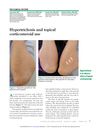
research Hypertrichosis and topical corticosteroid use
Prolonged use of topical corticosteroids can cause excessive hair growth.
research Particle Size Effect of Curcumin Nanocrystals on Transdermal and Transfollicular Penetration by Hyaluronic Acid-Dissolving Microneedle Delivery
Smaller curcumin nanocrystals penetrate skin and hair follicles better than larger ones.

research Tofacitinib Loaded Squalenyl Nanoparticles for Targeted Follicular Delivery in Inflammatory Skin Diseases
Tofacitinib nanoparticles can safely and effectively treat alopecia areata by targeting hair follicles.
research Bletilla striata polysaccharide-based dissolving microneedle patch integrated with nanoparticles for promoting hair regrowth
A new microneedle patch effectively promotes hair regrowth with less frequent dosing.
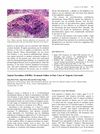
research Topical Tacrolimus (FK506): Treatment Failure in Four Cases of Alopecia Universalis
Topical tacrolimus did not regrow hair in alopecia universalis patients.