 June 2023 in “British journal of dermatology/British journal of dermatology, Supplement”
 A 13-year-old boy had both lichen planus and vitiligo, suggesting a possible link between the two conditions.
 January 2025 in “The Pharma Innovation”
 Nanospanlastic vesicles can improve glaucoma treatment by enhancing drug delivery to the eye.
 1 citations
,
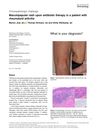
November 2020 in “International Journal of Dermatology”
1 citations
,
November 2020 in “International Journal of Dermatology” Methotrexate caused a rare skin rash in a rheumatoid arthritis patient, which resolved after stopping the drug.
 17 citations
,
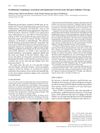
January 2010 in “Acta Dermato Venereologica”
17 citations
,
January 2010 in “Acta Dermato Venereologica” EGFR inhibitors can cause yellowish skin eruptions.
 1 citations
,
June 2014 in “International Journal of Dermatology”
1 citations
,
June 2014 in “International Journal of Dermatology” Pregnancy can trigger follicular mucinosis, which may resolve after delivery.
2 citations
,
May 2024 in “International Journal of Molecular Sciences” Targeting CD169+ skin macrophages may help treat psoriasis.
3 citations
,
November 2015 in “Jurnal Online Universitas Gadjah Mada (Universitas Gadjah Mada)” Mini punch grafts effectively healed a large ulcer in a child.
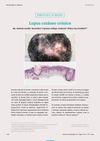 January 2024 in “Revista Dermatológica Centro Uraga”
 The patient has Chronic Cutaneous Lupus, a skin condition causing plaques and hair loss.
4 citations
,
September 2015 in “JAAD case reports” Substance P may play a role in the inflammation seen in keratosis follicularis spinulosa decalvans.
June 2026 in “Skin Appendage Disorders” Diffuse unpatterned alopecia causes widespread hair thinning and is hard to diagnose and treat.
 68 citations
,
August 2014 in “Stem Cells Translational Medicine”
68 citations
,
August 2014 in “Stem Cells Translational Medicine” Dermal papilla cells help wounds heal better and can potentially grow new hair.
34 citations
,
July 2013 in “Clinical Cosmetic and Investigational Dermatology” Erosive pustular dermatosis is a rare skin disease that's hard to treat and affects the scalp or legs.
 19 citations
,
August 1993 in “Journal of Cutaneous Pathology”
19 citations
,
August 1993 in “Journal of Cutaneous Pathology” Alopecia causes smaller hair follicles and affects growth-related structures.
 10 citations
,
February 2015 in “Clinics in Dermatology”
10 citations
,
February 2015 in “Clinics in Dermatology” The document concludes that changes in eyelashes and eyelid skin can indicate various local and systemic diseases.
1 citations
,
January 2022 in “Brazilian Journal of Pharmaceutical Sciences” Minoxidil can be effectively encapsulated in coated nanovesicles for potential drug delivery.

Daily hair care may cause holes in hair fibers.
44 citations
,
July 1993 in “Journal of Investigative Dermatology”  September 2017 in “Journal of Investigative Dermatology”
 The research concluded that hyaluronic acid affects the formation and growth of hair follicle-like structures in a lab setting.
 January 2025 in “Journal of Materials Chemistry B”
 A new treatment using special microneedles and a nitric oxide-releasing drug could improve hair growth and be more convenient for people with hair loss.
14 citations
,
January 1998 in “Dermatology” Polythelia pilosa is a type of extra breast tissue with hair and should be classified as such.

Microneedling is an effective way to treat hair loss from androgenetic alopecia.
 March 2025 in “International Journal of Trichology”
 FAPD in children may not depend on androgens and should be treated with anti-inflammatory measures and minoxidil.
7 citations
,
February 2019 in “Anais Brasileiros de Dermatologia” 76 citations
,
October 2000 in “Journal of the American Academy of Dermatology” Follicular mucinosis can be an early sign of aggressive mycosis fungoides.
7 citations
,
December 1970 in “Biochimica et Biophysica Acta (BBA) - Protein Structure” 11 citations
,
April 2012 in “American Journal of Dermatopathology” Adenolipomas may develop from gland entrapment by fat tissue, showing complex and varied forms.
21 citations
,
January 2008 in “Indian Journal of Dermatology Venereology and Leprology”  4 citations
,
September 2021 in “Dermatopathology”
4 citations
,
September 2021 in “Dermatopathology” The conclusion is that Erosive Pustular Dermatosis of the Scalp is a rare condition best treated with strong topical steroids and sometimes systemic treatment.
12 citations
,
January 1991 in “Acta Dermato Venereologica” Basal cell epithelioma-like changes are most similar to normal basal cells.
January 1997 in “Fundamental & Clinical Pharmacology”