1 citations
,
April 2009 in “Wiley Encyclopedia of Forensic Science” Microscopic hair analysis helps identify species and sometimes individuals in forensic science.
 December 2025 in “International Journal For Multidisciplinary Research”
 Microscopic hair analysis is important in forensics but has limitations; new technologies are improving its accuracy.
 31 citations
,
August 2001 in “PubMed”
31 citations
,
August 2001 in “PubMed” TrichoScan accurately measures hair growth and showed improved hair counts and thickness after finasteride treatment.
 3 citations
,
January 2020 in “Annals of Dermatology”
3 citations
,
January 2020 in “Annals of Dermatology” More atypical club hairs may indicate Telogen Effluvium.
10 citations
,
January 2020 in “Royal Society Open Science” A new automated method accurately measures hair damage using microscopic images.
4 citations
,
July 2024 in “BMC Zoology” Dromedary camel hair structure and mineral content change with age.
26 citations
,
December 2009 in “Laser Physics” Caffeine from shampoo penetrates hair follicles quickly and stays for at least 24 hours.
12 citations
,
May 2012 in “Journal of Biomedical Optics” Trichoscan® is best for measuring hair growth, RCM for analyzing hair follicles, and OCT is useful for both.
17 citations
,
February 2022 in “Microscopy Research and Technique” Scanning electron microscopy and elemental analysis can help identify animal species by their hair patterns and elements.
 January 2020 in “Annals of Dermatology”
 The document corrects details about examining hair from patients with a hair loss condition called Telogen Effluvium.
 2 citations
,
March 2005 in “International Journal of Cosmetic Science”
2 citations
,
March 2005 in “International Journal of Cosmetic Science” Human hair structure varies by ethnicity, and certain treatments can improve hair condition and appearance.
14 citations
,
July 2007 in “International Journal of Cosmetic Science” The new 3D imaging method accurately measures hair surface details quickly.
 1 citations
,
November 2022 in “DOAJ (DOAJ: Directory of Open Access Journals)”
1 citations
,
November 2022 in “DOAJ (DOAJ: Directory of Open Access Journals)” Male and female human hairs have different microscopic structures that can help in forensic analysis.
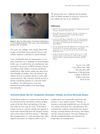 9 citations
,
November 2013 in “Dermatologic Surgery”
9 citations
,
November 2013 in “Dermatologic Surgery” Hair transplant complications were likely due to deep graft placement and rough handling.
 5 citations
,
March 2009 in “Pediatric Dermatology”
5 citations
,
March 2009 in “Pediatric Dermatology” The study found that pili bifurcati causes hair to intermittently split into two branches, each with its own outer layer.
50 citations
,
December 2000 in “Journal of Pharmaceutical Sciences” Hair follicles significantly enhance electroosmotic transport during iontophoresis.
5 citations
,
August 2016 in “International Journal of Cosmetic Science” Shampoo coacervates can cause scalp irritation due to released surfactants.
July 2024 in “Journal of Investigative Dermatology” September 1990 in “Journal of Dermatological Science”  1 citations
,
June 2012 in “Revista de la Escuela de Medicina Legal”
1 citations
,
June 2012 in “Revista de la Escuela de Medicina Legal” Microscopes are essential for telling apart human and animal hair in criminal investigations.
 January 2006 in “Seibutsu Butsuri”
 Curly and straight hair differ in how their internal fibers are arranged.
 43 citations
,
September 2001 in “Scanning”
43 citations
,
September 2001 in “Scanning” Hair treatments like bleaching increase friction by exposing tiny pores on the hair surface.

Hair microscopy is a useful and affordable way to diagnose hair disorders.
99 citations
,
January 2002 in “Plastic & Reconstructive Surgery” Fetal rat wounds heal without scars at 16.5 days gestation.
4 citations
,
April 2018 in “Journal of vacuum science and technology. B, Nanotechnology & microelectronics” The conclusion is that a new method can identify cosmetic residues on hair and match them to their products.
18 citations
,
August 2012 in “Clinical and Experimental Dermatology” Liposomal IGF-1 safely and effectively treats hair loss in hamsters.
28 citations
,
June 1991 in “Veterinary Dermatology” Black and white Saluki dogs have a unique hair loss condition different from Doberman pinschers.
 26 citations
,
April 2011 in “Skin Research and Technology”
26 citations
,
April 2011 in “Skin Research and Technology” In vivo confocal scanning laser microscopy is an effective, non-invasive way to study and measure new hair growth after skin injury in mice.
 May 2024 in “Frontiers in medicine”
 A genetic mutation in the LIPH gene causes tightly curled hair that stops growing in some Japanese individuals.