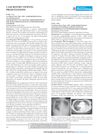
 May 2025 in “The Journal of Rheumatology”
 Atypical symptoms in lupus can indicate different kidney issues.
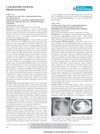 May 2025 in “The Journal of Rheumatology”
 Correct diagnosis is crucial for treating overlapping conditions like NMOSD and SLE effectively.
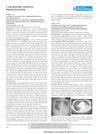 May 2025 in “The Journal of Rheumatology”
 Middle-aged women with dilated cardiomyopathy should be screened for antiphospholipid syndrome.
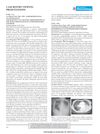 May 2025 in “The Journal of Rheumatology”
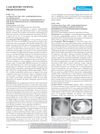
 Early recognition and a team approach are crucial for managing diffuse alveolar hemorrhage in antiphospholipid syndrome.
 May 2025 in “The Journal of Rheumatology”
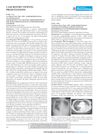
 Antiphospholipid syndrome can severely damage adrenal glands, requiring early diagnosis and treatment.
 May 2025 in “The Journal of Rheumatology”
 SLE can cause unusual gastrointestinal symptoms, and immunosuppressive therapy can be effective.
Whiskers can form without sensory nerves or Foxd1, thanks to Meis2 in mesenchymal cells.

Meis2 is essential for whisker development, independent of nerve involvement.
 October 2024 in “Российский физиологический журнал им И М Сеченова”
 Understanding barbering in lab rodents is important for animal welfare and research accuracy.
The mesenchymal stem cell secretome may effectively treat various diseases as an alternative to traditional stem cell therapies.
 May 2024 in “Scientific Reports”
 Androgen receptors in the mouse brain may explain cognitive and mood changes in prostate cancer treatment.
 March 2024 in “Journal of Applied and Natural Science”
 Mentha spicata leaves lower testosterone and aggression in female rats.
 September 2023 in “Bangladesh Journal of Neurosurgery”
 Stereotactic Radiosurgery is an effective non-invasive treatment for cerebral AVM, with successful outcomes and minimal side effects.

Female rats showed more panic-related behavior than males, influenced by hormonal cycles and certain drugs.
 October 2022 in “Rheumatology (Bulgaria)”
 Accurate diagnosis of progressive supranuclear palsy requires thorough neurological assessments and MRI.

Researchers found a genetic link for hereditary hair loss but need more analysis to identify the exact gene.
 June 2021 in “bioRxiv (Cold Spring Harbor Laboratory)”
 The gene Tfap2b is essential for creating a type of stem cell in zebrafish that can become different pigment cells.
 January 2019 in “Clinical neuropharmacology”
 A girl's hair-pulling condition improved greatly after she started vitamin D treatment.
Early NAS level changes affect alcohol consumption vulnerability.

Low-level laser therapy may help stem cells grow and function better, aiding in healing and tissue repair.
 62 citations
,
November 2009 in “Aging Cell”
62 citations
,
November 2009 in “Aging Cell” Hedgehog signaling helps keep hair follicle stem cells the same in both young and old human skin.
 33 citations
,
December 2015 in “Neuroendocrinology”
33 citations
,
December 2015 in “Neuroendocrinology” Finasteride treatment changes brain steroid levels and receptors, affecting brain function even after stopping treatment.
 2 citations
,
November 2012 in “InTech eBooks”
2 citations
,
November 2012 in “InTech eBooks” The document concludes that sex hormones are crucial for mammalian reproduction, health, and behavior, and require more research for therapeutic use.
 1 citations
,
September 2015 in “Elsevier eBooks”
1 citations
,
September 2015 in “Elsevier eBooks” SOX2 is crucial for skin cell function and hair growth, and it plays a role in skin cancer and wound healing.
 June 2023 in “International Journal of Research in Medical Sciences”
 Two brothers from Bangladesh were diagnosed with X-linked adrenoleukodystrophy, showing neurological and adrenal symptoms.
The PI's development is closely linked to skin and hair pigmentation in macaques.
 December 2018 in “Neuroradiology”
 MRI helps distinguish between pituitary adenomas and craniopharyngiomas, guides treatment for pediatric CNS tumors, and assesses rhinocerebral mucormycosis with a high mortality rate in transplanted patients.
21 citations
,
March 2021 in “Frontiers in Neurology” The posterior cerebellum helps maintain balance by adapting to sensory inputs and self-motion.
11 citations
,
November 1991 in “Journal of Neuropathology & Experimental Neurology” Brindled mice show abnormal catecholamine neuron development due to copper deficiency.
49 citations
,
March 1996 in “Experimental Brain Research”