19 citations
,
July 1994 in “Journal of Dermatological Science” Human hair keratin genes are similar to mouse genes and are specifically expressed in hair follicles.
 25 citations
,
April 2008 in “Archives of Dermatological Research”
25 citations
,
April 2008 in “Archives of Dermatological Research” Encapsulated human hair cells can substitute for natural hair cells to grow hair.
 41 citations
,
May 2001 in “PubMed”
41 citations
,
May 2001 in “PubMed” Different thicknesses of hair strands can indicate the severity of hair thinning.
 December 2022 in “Scientific Reports”
 Stem cells from whiskers can be transplanted to stimulate hair growth.
31 citations
,
September 1996 in “Differentiation” The upper dermal sheath can regenerate hair in rats.
 April 2018 in “Journal of Investigative Dermatology”
 Minoxidil didn't significantly increase hair growth in minipigs.
June 2026 in “Advanced Science” New cryomicroneedles can improve hair growth and regeneration.
 September 2019 in “The journal of investigative dermatology/Journal of investigative dermatology”
 Mouse skin glands need healthy nerves to grow properly during hair growth phases.
1 citations
,
October 1988 in “Clinics in Dermatology” Scientists identified and cloned specific keratin proteins in mouse hair.
 November 2022 in “The journal of investigative dermatology/Journal of investigative dermatology”
 The study found markers indicating that cells responsible for hair color are differentiating in specific areas of the hair follicle.
 3 citations
,
January 1998 in “ACTA HISTOCHEMICA ET CYTOCHEMICA”
3 citations
,
January 1998 in “ACTA HISTOCHEMICA ET CYTOCHEMICA” Hair keratins are mainly on macrofibrils in the cortex and in the endocuticle in the cuticle.
14 citations
,
May 1979 in “International Journal of Dermatology” Trichostasis spinulosa mainly affects the nose, with many tiny hairs in one follicle, possibly influenced by hormones and sunlight.
9 citations
,
July 2014 in “PubMed” Different S100 proteins have specific roles in various parts of the hair follicle.
2 citations
,
January 1990 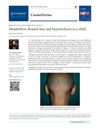 January 2026 in “Cosmoderma”
 A 9-year-old girl has a rare hair disorder causing beaded, sparse hair.

The human scalp has different types of pigment cells in hair follicles with varying abilities to produce pigment.
July 2025 in “Journal of Investigative Dermatology” Secreted inhibitors of Wnt and IGF signaling control hair and tooth development, creating species-specific patterns.
45 citations
,
March 2001 in “Journal of Investigative Dermatology” A new protein, mK6irs, is found in specific hair layers and may help understand hair growth and diseases.
 3 citations
,
November 2021 in “Applied Microscopy”
3 citations
,
November 2021 in “Applied Microscopy” Hair microscopy is a simple and cost-effective method to help diagnose systemic diseases in children.
5 citations
,
March 2022 in “STAR Protocols” The method helps study hair follicle stem cells and calcium signals in mouse skin.
 April 2018 in “Journal of Investigative Dermatology”
 Arrector pili muscle regulates hair follicle stem cells, DNA methylation needed for hair cycling, and Wnt/B-catenin signaling starts hair growth.
14 citations
,
July 2007 in “International Journal of Cosmetic Science” The new 3D imaging method accurately measures hair surface details quickly.
January 2010 in “Bradford Scholars (University of Bradford)” MicroRNAs are crucial for hair growth and skin balance.
28 citations
,
August 2019 in “BMC Genetics” miR-148a and miR-10a affect hair growth in Hu sheep.
2 citations
,
January 2002 in “Zhiwu Yanjiu” Capitate trichomes have more endoplasmic reticulum and vacuoles, while peltate trichomes have more plastids and larger subcuticular spaces.
30 citations
,
January 1994 in “Micron” Mature hair surfaces are formed by keratinized cells with developed layers, not just modified plasma membranes.
1 citations
,
May 2013 in “Polymer-korea” Micro-needles with minoxidil may help hair growth.
1 citations
,
September 2003 in “CRC Press eBooks” Hair is important for social and sexual communication in humans.
 16 citations
,
January 2023 in “Molecular Biomedicine”
16 citations
,
January 2023 in “Molecular Biomedicine” 3D-printed microneedles can precisely regrow hair in targeted areas.
 4 citations
,
January 2018 in “Advances in Experimental Medicine and Biology”
4 citations
,
January 2018 in “Advances in Experimental Medicine and Biology” The document concludes that hair follicles have a complex environment and our understanding of it is growing, but there are limitations when applying animal study findings to humans.