 18 citations
,
January 2006 in “Analytical Sciences”
18 citations
,
January 2006 in “Analytical Sciences” Method accurately measures minoxidil concentration in medicines.
 14 citations
,
January 2007 in “Journal of Dermatological Treatment”
14 citations
,
January 2007 in “Journal of Dermatological Treatment” Minoxidil solution had low effect, causing 99% to stop using it.
 14 citations
,
May 2005 in “Farmaco”
14 citations
,
May 2005 in “Farmaco” A method was created in 2005 to identify minoxidil, a hair growth ingredient, in products using two types of capillary zone electrophoresis, and it found that most products had about 2% minoxidil.
 13 citations
,
June 2016 in “Dermatologic Therapy”
13 citations
,
June 2016 in “Dermatologic Therapy” Minoxidil works better when applied on a damp scalp than a dry one.
 12 citations
,
June 2017 in “Cell Cycle”
12 citations
,
June 2017 in “Cell Cycle” Minoxidil foam helps hair growth by increasing good proteins and decreasing bad pathways in men with hair loss.
 10 citations
,
February 2016 in “Anais Brasileiros de Dermatologia”
10 citations
,
February 2016 in “Anais Brasileiros de Dermatologia” Topical minoxidil can cause excessive hair growth in children, so use it carefully.
 9 citations
,
April 2018 in “JAMA Dermatology”
9 citations
,
April 2018 in “JAMA Dermatology” Topical minoxidil improves hair loss in 80% of women with breast cancer undergoing endocrine therapy.
 8 citations
,
January 2011 in “Organic and Biomolecular Chemistry”
8 citations
,
January 2011 in “Organic and Biomolecular Chemistry” Minoxidil reacts to nitrosation 7 times more than phenol, mainly due to its -NH₂ groups, leading to the creation of N-nitrosominoxidil.
 6 citations
,
May 2020 in “Pharmacology Research & Perspectives”
6 citations
,
May 2020 in “Pharmacology Research & Perspectives” A new gel form of minoxidil is equally effective for hair growth and safer for the heart and other organs than the traditional solution.
 5 citations
,
April 2018 in “Journal of Cosmetic Dermatology”
5 citations
,
April 2018 in “Journal of Cosmetic Dermatology” New 5% minoxidil formula safely and effectively treats male hair loss.
 5 citations
,
January 1994 in “Skin Pharmacology and Physiology”
5 citations
,
January 1994 in “Skin Pharmacology and Physiology” Minoxidil absorption in skin is slowed by cleansing, depends on how long it stays on the skin, and is not much affected by reapplication.
 2 citations
,
October 2020 in “Journal of Pharmacology and Experimental Therapeutics”
2 citations
,
October 2020 in “Journal of Pharmacology and Experimental Therapeutics” Minoxidil does not work to inhibit lysyl hydroxylases in newborn mouse lungs.
 2 citations
,
December 2019 in “Biomedical dermatology”
2 citations
,
December 2019 in “Biomedical dermatology” Minoxidil works faster, but ketoconazole is a safer alternative for female hair loss.
 1 citations
,
June 2021 in “Journal of Cosmetic Dermatology”
1 citations
,
June 2021 in “Journal of Cosmetic Dermatology” Enzyme booster SULT1A1 greatly enhances hair regrowth with minoxidil.
 1 citations
,
July 2017 in “Pediatric emergency care”
1 citations
,
July 2017 in “Pediatric emergency care” Pediatric minoxidil exposures are usually not serious and can often be managed at home.
 1 citations
,
August 1995 in “Archives of Disease in Childhood”
1 citations
,
August 1995 in “Archives of Disease in Childhood” Minoxidil helped a boy regrow his hair after intense chemotherapy for leukaemia.
 June 2025 in “Samarra Journal of Pure and Applied Science”
 A new method accurately measures minoxidil in tablets.
 January 2025 in “Institutional Repositories DataBase (IRDB)”
 Maslinic acid from olive extracts promotes hair growth like minoxidil.
 March 2024 in “bioRxiv (Cold Spring Harbor Laboratory)”
 Minoxidil treatment improves heart defects in a DiGeorge syndrome model.
 September 2023 in “Translational medicine reports”
 Minoxidil ingestion can raise liver enzyme levels.
 January 2023 in “International Journal of Medicine in Developing Countries”
 Topical minoxidil improved hair loss in a patient when used consistently.

Low-dose oral minoxidil is safe and effective for treating hair loss, with most side effects being mild and reversible.
 July 2016 in “Australasian Journal of Dermatology”
 The journal covered various dermatology topics, including treatments, disease management, and research findings.
 August 2019 in “Journal of The American Academy of Dermatology”
 Platelet-rich plasma helps hair regrowth and improves quality of life in women with hair loss, but minoxidil may be more effective.
 May 2015 in “Journal of The American Academy of Dermatology”
 Niosomal minoxidil, when applied topically, increases hair count more than conventional minoxidil solution.
 29 citations
,
August 1985 in “Contact Dermatitis”
29 citations
,
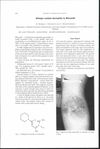
August 1985 in “Contact Dermatitis” Minoxidil can cause allergic reactions like burning, itching, and red bumps.
 40 citations
,
September 2017 in “F1000Research”
40 citations
,
September 2017 in “F1000Research” Oral minoxidil effectively reduces hair shedding in women with CTE, with no major side effects.
 January 2018 in “Elsevier eBooks”
 Minoxidil helps lower severe blood pressure and promotes hair growth but can have serious side effects and must be used continuously.
 32 citations
,
January 1994 in “Skin Pharmacology and Physiology”
32 citations
,
January 1994 in “Skin Pharmacology and Physiology” Minoxidil helps hair growth by activating enzymes in hair follicles.
 269 citations
,
August 2002 in “Journal of The American Academy of Dermatology”
269 citations
,
August 2002 in “Journal of The American Academy of Dermatology” 5% minoxidil works better for hair growth and density, with minor irritation.