 August 2025 in “Journal of the American Academy of Dermatology”
 Minoxidil can temporarily increase hair shedding, causing anxiety and treatment discontinuation.
 May 2015 in “Journal of The American Academy of Dermatology”
 5% minoxidil foam helps women with thinning hair.
6 citations
,
January 1977 in “PubMed” Minoxidil effectively lowers severe high blood pressure long-term but isn't for routine use.
 7 citations
,
November 2020 in “Journal of The American Academy of Dermatology”
7 citations
,
November 2020 in “Journal of The American Academy of Dermatology” Low-dose oral minoxidil may cause side effects like hypertrichosis and is not suitable for everyone.
 12 citations
,
June 2017 in “Cell Cycle”
12 citations
,
June 2017 in “Cell Cycle” Minoxidil foam helps hair growth by increasing good proteins and decreasing bad pathways in men with hair loss.
January 2002 in “Analecta malacitana: Revista de la Sección de Filología de la Facultad de Filosofía y Letras” Minoxidil is a popular hair growth treatment, but how it works isn't fully understood.
 5 citations
,
August 2021 in “Journal of The European Academy of Dermatology and Venereology”
5 citations
,
August 2021 in “Journal of The European Academy of Dermatology and Venereology” Sublingual minoxidil safely promotes hair growth.
 January 2024 in “Expert Opinion on Pharmacotherapy”
 Low-dose oral minoxidil is effective and safe for treating hair loss in men and women.
 54 citations
,
February 1986 in “Archives of Dermatology”
54 citations
,
February 1986 in “Archives of Dermatology” Higher minoxidil concentration (5%) works better for severe hair loss, with most patients seeing regrowth in 48-60 weeks.
Topical 5% minoxidil is safe and effective for treating hair loss in Korean men.
 63 citations
,
April 2003 in “Journal of The European Academy of Dermatology and Venereology”
63 citations
,
April 2003 in “Journal of The European Academy of Dermatology and Venereology” Minoxidil use increases facial hair growth in females, more in older users.
 March 1988 in “Archives of Dermatology”
 Topical minoxidil may not improve the appearance of balding men, according to a letter in this document.
 29 citations
,
August 1985 in “Contact Dermatitis”
29 citations
,
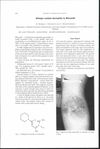
August 1985 in “Contact Dermatitis” Minoxidil can cause allergic reactions like burning, itching, and red bumps.
73 citations
,
November 1979 in “British Journal of Dermatology” Minoxidil can cause excessive hair growth.
April 2022 in “Journal of advances in medicine and medical research” Topical minoxidil 5% effectively improves hair density and width in men with androgenetic alopecia.
 May 2023 in “Elsevier eBooks”
 Minoxidil, finasteride, and dutasteride are treatments for hair loss.
May 2026 in “Reactions Weekly”  95 citations
,
December 1980 in “The New England Journal of Medicine”
95 citations
,
December 1980 in “The New England Journal of Medicine” Minoxidil helped bald patient regrow hair.
 January 2025 in “JAAD International”
 Bicalutamide added no extra benefit over minoxidil alone for female-pattern hair loss.
July 2022 in “Journal of Investigative Dermatology” The new minoxidil hydrogel is a promising alternative for hair loss treatment, with similar effectiveness and less skin irritation.
19 citations
,
October 1989 in “PubMed” Minoxidil helps hair growth by being sulfated in hair follicles.
 August 2023 in “Drug Design Development and Therapy”
 Minoxidil may work for hair loss by reducing androgen sensitivity and altering hormone-related enzymes.
2 citations
,
March 2009 in “Journal of Clinical Dermatology” Topical 5% minoxidil is safe and effective for treating hair loss in Korean men.
6 citations
,
July 1985 in “British Journal of Dermatology” Topical minoxidil showed limited effectiveness for hair regrowth in alopecia areata.
 17 citations
,
November 2002 in “Australasian Journal of Dermatology”
17 citations
,
November 2002 in “Australasian Journal of Dermatology” Saw palmetto causes allergic reaction, minoxidil causes skin irritation; use cautiously for hair loss.
 January 2025 in “Journal of Drugs in Dermatology”
 Oral minoxidil is easier to use and more satisfying for hair loss treatment than topical minoxidil.
 46 citations
,
January 1991 in “Journal of Investigative Dermatology”
46 citations
,
January 1991 in “Journal of Investigative Dermatology” Minoxidil works in liver and outer hair root sheath for hair growth.
 24 citations
,
September 2020 in “Dermatology and therapy”
24 citations
,
September 2020 in “Dermatology and therapy” Oral minoxidil 5 mg daily increases hair growth safely in men with hair loss, with minor side effects.
 May 2026 in “Zenodo (CERN European Organization for Nuclear Research)”
 Minoxidil can help grow facial hair, but more proof is needed.
 April 2016 in “Journal of Investigative Dermatology”
 Using a stimulating cream shampoo before applying Minoxidil helps it penetrate hair follicles better, enhancing its hair growth-promoting effect.