28 citations
,
January 2015 in “Journal of Cell Science” PINCH-1 is crucial for skin cell adhesion and movement, working with EPLIN and ILK.
 December 2023 in “The journal of cell biology/The Journal of cell biology”
 The mTurq2-Col4a1 mouse model shows how the basement membrane develops in live mammals.
A new sprayable hydrogel helps heal wounds faster and reduces inflammation.
 11 citations
,
December 2018 in “Bone”
11 citations
,
December 2018 in “Bone” Removing a methyl group from the ITGAV gene speeds up bone formation in a specific type of bone disease model.
 77 citations
,
January 1980 in “Carcinogenesis”
77 citations
,
January 1980 in “Carcinogenesis” TPA is about 50 times more effective at promoting tumors than MZ.
 6 citations
,
July 2018 in “Hair transplant forum international”
6 citations
,
July 2018 in “Hair transplant forum international” Dr. Parsa Mohebi created a new tool to improve hair transplant efficiency and reduce follicle damage.
 November 2022 in “Journal of Investigative Dermatology”
 Short-term treatment with ROCKi increases skin cell growth without changing stem cell features.
 January 2026 in “Drug Delivery and Translational Research”
 Multicomponent crystals in microneedles improve drug delivery for hair loss treatment.
3 citations
,
July 2023 in “Acta Biomaterialia” PepACS offers a safer, eco-friendly way to perm, dye, and repair hair.
 73 citations
,
April 2019 in “Experimental Dermatology”
73 citations
,
April 2019 in “Experimental Dermatology” The scalp's microorganisms significantly affect hair health and disease.
 45 citations
,
April 2019 in “International Immunology”
45 citations
,
April 2019 in “International Immunology” The study concluded that immune cells attacking hair follicles cause hair loss in alopecia, with genetics and environment also playing a role, and highlighted the potential of certain treatments.
22 citations
,
April 2020 in “Frontiers in Cellular and Infection Microbiology” Alopecia areata may be linked to scalp microbiome differences, suggesting potential treatments with prebiotics, probiotics, and postbiotics.
21 citations
,
May 2017 in “Paediatric drugs” Individualized treatment plans are crucial for children with alopecia areata, with promising options like JAK inhibitors showing significant hair regrowth.
19 citations
,
December 2023 in “Journal of Investigative Dermatology” Scalp hair follicle microbes affect hair health and could be used for treatments.
18 citations
,
September 2023 in “Experimental Dermatology” The skin microbiome plays a key role in treating atopic dermatitis.
9 citations
,
January 2014 in “World journal of clinical cases” Neomycin is a common cause of follicular contact dermatitis, which is treated by avoiding the allergen and using creams.
5 citations
,
April 2019 in “Veterinary Dermatology” Cats infested with Lynxacarus radovskyi can lose hair without inflammation, treatable with selamectin.
1 citations
,
June 2023 in “Journal of Patchouli and Essential Oil Products” Patchouli essential oil may help reduce eczema symptoms in infants and toddlers.
1 citations
,
January 2020 in “Progressive Agriculture” Buffaloes with skin issues were cured using tetracycline injections.
November 2025 in “Dermato” The skin microbiome is crucial for skin health and new treatments like probiotics can improve skin conditions.
November 2025 in “Biomedicines” JAK1 inhibitors can help reduce itchiness in atopic dermatitis.
 August 2025 in “Indian Dermatology Online Journal”
 Metaphors like "butterfly rash" and "moth-eaten" help doctors identify and describe skin conditions.
Ongoing monitoring and treatment are crucial to manage sarcoptic mange in reintroduced red foxes.
 April 2025 in “Journal of Applied Veterinary Science And Technology”
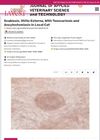
 The cat's health improved significantly after treatment.
 February 2025 in “Buletin Veteriner Udayana”
 A dog named Boby recovered from a skin infection and anemia after treatment, highlighting the need for pet cleanliness.

A man wrongly believed he had parasites, showing that delusional infestation can affect men and is often linked with other psychiatric issues, but can be treated with antipsychotics.
December 2007 in “Pediatrics in review” Some CAM therapies help with pediatric atopic dermatitis, but more research is needed.
 July 2001 in “Annals of Internal Medicine”
 The document's conclusion cannot be provided because the content is not accessible.
July 2026 in “Materials Today Bio” The MQ complex helps heal melanoma wounds by controlling ROS levels with light.
 August 2025 in “Macromolecular Bioscience”
 Microneedles with minoxidil and nitric oxide improve hair growth effectively and painlessly.