 12 citations
,
February 2010 in “Tetrahedron Letters”
12 citations
,
February 2010 in “Tetrahedron Letters” New minoxidil compounds with better water solubility were made, but their full effects and safety need more research.
11 citations
,
July 2023 in “Applied Nanoscience” 24 citations
,
September 2023 in “Science Advances” Mettl3 is essential for normal tissue development and self-renewal by regulating gene expression.
January 2026 in “Current Issues in Molecular Biology” miR-5110 affects alpaca pigmentation by altering specific gene expressions.
 11 citations
,
September 2011 in “Biochemical journal”
11 citations
,
September 2011 in “Biochemical journal” Neurotrophin-4 increases calcium current in specific mouse neurons through the PI3K pathway.
150 citations
,
May 1993 in “The journal of cell biology/The Journal of cell biology” Mouse Notch is important for determining cell roles in hair follicles.
 8 citations
,
August 2020 in “PLOS Computational Biology”
8 citations
,
August 2020 in “PLOS Computational Biology” A machine learning model called CATNIP can predict new uses for existing drugs, like using antidepressants for Parkinson's disease and a thyroid cancer drug for diabetes.
25 citations
,
April 1985 in “Journal of Investigative Dermatology” 1 citations
,
November 2014 in “Thérapie” Potassium channel activators like nicotinamide and minoxidil might help treat solid tumors.
13 citations
,
April 2010 in “Journal of dermatological science” Chemotherapy-induced hair loss is partly due to decreased laminin-511 and increased laminin-332.
Vinblastine and its metabolites may cause nausea and hair loss by binding to specific receptors and could lead to better chemotherapy drugs with fewer side effects.
September 2022 in “Research Square (Research Square)” 5% topical minoxidil improves hair density and quality in monilethrix patients.
 35 citations
,
September 2012 in “PloS one”
35 citations
,
September 2012 in “PloS one” Two distinct pathways direct proteins to vacuoles in Arabidopsis, affecting root hair growth and protein targeting.
 July 2025 in “ACS Pharmacology & Translational Science”
 Maslinic acid from olive extracts promotes hair growth like minoxidil.
November 2025 in “Journal of Investigative Dermatology” IMG-007 helps regrow hair and reduce scalp inflammation in severe alopecia areata.
 24 citations
,
January 2019 in “Theranostics”
24 citations
,
January 2019 in “Theranostics” Loss of Pten in certain hair follicle stem cells increases skin cancer risk.
37 citations
,
November 2007 in “Journal of Biological Chemistry” Ku80 is a key receptor for Thymosin β4, affecting cell migration and wound healing.
10 citations
,
November 2017 in “Letters in drug design & discovery” Researchers identified promising inhibitors for the BRD4 protein, including finasteride and amentoflavone.
89 citations
,
October 2003 in “Biology of the Cell” Galectin-1 helps in RNA processing in cell nuclei.
9 citations
,
August 2023 in “Molecules” Two peptides, RMYYY and VMYMI, may be effective anti-inflammatory drugs.
3 citations
,
October 1993 in “Endocrinology” May 2024 in “Archives of Dermatological Research” TAT-GILZ peptide promotes hair growth by boosting stem cell activity.
14 citations
,
August 2021 in “Journal of Pharmaceutical Sciences” Cholesterol- and phospholipid-free niosomes improve deep skin drug delivery.
April 2023 in “Journal of Investigative Dermatology” CD8+ T cells attack hair follicle stem cells, causing scarring and hair loss.
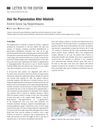 April 2025 in “Turkish Journal of Hematology”
 Nilotinib may cause gray hair to return to its original color.
September 2025 in “Blood Advances” Targeting androgen receptor signaling may improve acute myeloid leukemia treatment.
 5 citations
,
February 2017 in “Biomolecules & Therapeutics”
5 citations
,
February 2017 in “Biomolecules & Therapeutics” 4-O-Methylhonokiol helps protect skin cells from growth-stopping effects of a protein by regulating growth-related pathways.
 5 citations
,
February 2019 in “bioRxiv (Cold Spring Harbor Laboratory)”
5 citations
,
February 2019 in “bioRxiv (Cold Spring Harbor Laboratory)” Rapamycin may help treat Leigh syndrome by targeting protein kinase C.
165 citations
,
January 2006 in “Molecular Medicine” Matriptase is crucial for skin, hair, and immune cell health, and its imbalance can lead to cancer.