 1 citations
,
October 2020 in “The Egyptian Journal of Histology”
1 citations
,
October 2020 in “The Egyptian Journal of Histology” Ginseng was more effective than finasteride in treating enlarged prostate in rats.
March 2022 in “JAAD case reports” A man had a non-cancerous, fast-growing skin lump on his arm that was removed with surgery.
 8 citations
,
August 2014 in “Clinical and Experimental Dermatology”
8 citations
,
August 2014 in “Clinical and Experimental Dermatology” CTE and FPHL are different hair loss types with unique causes.
 6 citations
,
October 2022 in “Journal of cell science”
6 citations
,
October 2022 in “Journal of cell science” Keratin genes change gradually during skin cell development and should be used carefully as biomarkers.
6 citations
,
January 2022 in “BIO-PROTOCOL” The protocol allows easy imaging of dividing cells in C. elegans and can be used for other organisms.
 April 2023 in “Journal of Investigative Dermatology”
 POUF51 and HES3 are key in controlling stem cell numbers in psoriasis.
 November 2021 in “CRC Press eBooks”
 Anagen effluvium is a reversible condition causing sudden hair loss, often due to chemotherapy or head radiation.
 19 citations
,
October 1971 in “The BMJ”
19 citations
,
October 1971 in “The BMJ” Anticonvulsant drugs may cause temporary chromosomal abnormalities.
7 citations
,
January 1995 in “The Indian Journal of Animal Sciences” The Indian buffalo teat has a melanin-rich epidermis, no hair follicles, and a complex structure with muscle, blood vessels, and immune cells.
5 citations
,
August 2000 in “Archives of Pathology & Laboratory Medicine” The nodule on the woman's back was a benign hair follicle tumor, not cancer, but needed removal.
 4 citations
,
November 2020 in “BMC Dermatology”
4 citations
,
November 2020 in “BMC Dermatology” Researchers identified genes in scalp hair follicles that may affect hair traits and hair loss.
 4 citations
,
August 2017 in “International journal of molecular sciences”
4 citations
,
August 2017 in “International journal of molecular sciences” The conclusion is that Pigmented Epithelioid Melanocytoma can start from hair follicle stem cells or from a mole on the skin.
4 citations
,
November 2015 in “Research Journal of Medicinal Plant” Tridax procumbens extracts can harm cell division and increase cell death in onion roots.
1 citations
,
December 2023 in “Journal of Clinical Medicine” Scalp melanomas are more dangerous and likely to recur or cause death than other head and neck melanomas.
 1 citations
,
July 2022 in “bioRxiv (Cold Spring Harbor Laboratory)”
1 citations
,
July 2022 in “bioRxiv (Cold Spring Harbor Laboratory)” Keratin gene expression helps understand different types of skin cells and their development, and should be used carefully as biological markers.
1 citations
,
February 2018 in “bioRxiv (Cold Spring Harbor Laboratory)” Researchers can now observe live cell processes in the Drosophila midgut for extended periods.
April 2026 in “Development” Hemidesmosomes and Notch signaling help skin cells mature by moving them to the outer layer.
November 2025 in “Journal of Investigative Dermatology” Radiation-induced hair loss may be caused by hair growth stopping and inflammation in blood vessels.
June 2023 in “Dermatopathology” A woman had a unique skin growth with hair follicle, oil glands, fat cells, spindle cells, and nerve fibers.
The paper concludes that the patchiness of alopecia areata is likely due to when the immune attack happens in the hair growth cycle.
July 2019 in “Journal of the ASEAN Federation of Endocrine Societies” The woman had a rare adrenal tumor removed, and she recovered well with no signs of the tumor returning.
Mutant Cx43 causes slower wound healing and hair growth issues in ODDD.
 October 2005 in “CRC Press eBooks”
 Telogen effluvium is a condition where hair falls out due to various factors like illness, stress, or nutrient deficiency.
 13 citations
,
May 1993 in “International Journal of Dermatology”
13 citations
,
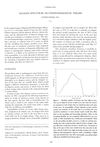
May 1993 in “International Journal of Dermatology” The paper suggests that telogen effluvium, a type of hair loss, may be a long-lasting condition triggered by stress or illness in people whose hair growth is unusually synchronized.
3 citations
,
August 2023 in “Biophysical Journal” Mitochondrial activity varies in cells before they stop growing, affecting their growth potential.
Deleting the MAD2L1 gene in mice led to rapid tumor growth despite chromosomal instability.
34 citations
,
October 1975 in “Biochimica et Biophysica Acta (BBA) - Nucleic Acids and Protein Synthesis”  3 citations
,
August 2012 in “Nature Cell Biology”
3 citations
,
August 2012 in “Nature Cell Biology” Certain proteins help nerve cells branch, and other findings relate to cancer, stem cell behavior, and cell division.
Deleting the MAD2L1 gene is tolerated in certain mouse cancer models.
9 citations
,
September 2013 in “Journal of histochemistry and cytochemistry/The journal of histochemistry and cytochemistry” Matriptase is highly active in hair follicles and sebaceous glands, especially during hair growth phases.