 1 citations
,
October 2025 in “Nature Communications”
1 citations
,
October 2025 in “Nature Communications” Cell size controls when stem cells divide.
 1 citations
,
July 2025 in “Frontiers in Endocrinology”
1 citations
,
July 2025 in “Frontiers in Endocrinology” ApoBDs, once seen as waste, are now viewed as potential tools for disease treatment and tissue repair.
 1 citations
,
November 2024 in “Romanian Journal of Morphology and Embryology”
1 citations
,
November 2024 in “Romanian Journal of Morphology and Embryology” Recent findings in cell biology help understand cell roles in health and disease.
 1 citations
,
January 2024 in “Annals of Dermatology”
1 citations
,
January 2024 in “Annals of Dermatology” Examining hair shape can help predict Alopecia Areata's progression.
 1 citations
,
July 2021 in “Current Issues in Molecular Biology”
1 citations
,
July 2021 in “Current Issues in Molecular Biology” Father's finasteride use may affect son's fertility and testicular function.
 1 citations
,
April 2021 in “Current Stem Cell Reports”
1 citations
,
April 2021 in “Current Stem Cell Reports” Eating less can improve stem cell function and increase lifespan.
 1 citations
,
January 2021
1 citations
,
January 2021 CD4+ skin cells may be precursors to basal cell carcinoma.
 1 citations
,
August 2020 in “Food Research”
1 citations
,
August 2020 in “Food Research” Plant extracts like Avicennia marina, Boehmeria nipononivea, and Camellia sinensis could potentially treat hair loss with fewer side effects than synthetic drugs.
 1 citations
,
January 2020
1 citations
,
January 2020 Ift20 is essential for hair follicle function and skin cell movement.
 1 citations
,
December 2016
1 citations
,
December 2016 Researchers created a model to understand heart aging, highlighting key genes and pathways, and suggesting miR-208a as a potential heart attack biomarker.
 1 citations
,
November 2015 in “Indian Journal of Clinical Biochemistry”
1 citations
,
November 2015 in “Indian Journal of Clinical Biochemistry” The conference presented findings on how vitamin D levels, genetic factors, and lifestyle choices like smoking and yoga affect various health conditions and diseases.
 1 citations
,
September 2013 in “Elsevier eBooks”
1 citations
,
September 2013 in “Elsevier eBooks” Hair ages and thins due to factors like inflammation and stress, and treatments like antioxidants and hormones might improve hair health.
 1 citations
,
January 2013 in “Springer eBooks”
1 citations
,
January 2013 in “Springer eBooks” Cosmeceuticals may benefit skin health but need more research for efficacy and safety confirmation.
 1 citations
,
January 2009 in “Elsevier eBooks”
1 citations
,
January 2009 in “Elsevier eBooks” The document concludes that a deeper understanding of skin aging and photodamage is needed to create better skin treatments.
 June 2026 in “Nano Research”
 3D bioprinted skin using liver cell exosomes helps heal wounds better.
 March 2026 in “Frontiers in Pharmacology”
 Taxifolin, found in onions and milk thistle, has health benefits but needs more research for safe use.
 February 2026 in “Cureus”
 Recognizing and managing skin side effects from chemotherapy improves patient quality of life and treatment success.
 January 2026 in “Nanoscale Advances”
 The nanocomposite effectively targets lung cancer cells without harming normal cells.

Plakophilin 1 helps control skin cell immune responses to prevent excessive inflammation.
 November 2025 in “Frontiers in Pharmacology”
 64 drugs can cause hair loss, needing better monitoring and updated labels.
 November 2025 in “EXPERIMENTAL ANIMALS”
 Stingless bee propolis may help regenerate hair follicles and improve pigment function in chemotherapy-induced hair loss.
 September 2025 in “Experimental & Molecular Medicine”
 Small molecules KY19382 and KY19334 may help treat skin cancer by reducing CDK1 levels and blocking harmful cell signals.

Amino acid storage proteins are essential for maintaining stem cells in female fruit flies.
 June 2025 in “International Journal of Research and Review”
 Unani medicine offers a natural, effective approach to treating hair loss with minimal side effects, but needs more scientific validation.
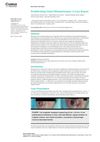
Recognizing and fully removing giant pilomatrixomas is crucial to prevent them from becoming cancerous.

CD4 T cells need IFN-γ to cause hair loss in alopecia areata.
 November 2024 in “Communities in ADDI (University of the Basque Country)”
 Antisense oligonucleotides show promise for treating Myotonic Dystrophy type I.

Blocking the Mitochondrial Pyruvate Carrier causes stress in hair follicles, which can be reduced by an ISR inhibitor.
 April 2024 in “Research Square (Research Square)”
 MSC-protein helps regenerate gum tissue and bone.
 January 2024 in “International Journal of Health Science”
 Scalp cooling and low-power light therapy show promise in reducing chemotherapy-induced hair loss but need more research.