SMP creates illusion of full hair, addressing various issues and bringing happiness to those with thinning hair.
 November 2023 in “Journal of Cosmetic Dermatology”
 Injecting a person's own fat into their scalp may help regrow hair and improve hair thickness in different types of hair loss.
 1 citations
,
May 2021 in “International Journal of Dermatology”
1 citations
,
May 2021 in “International Journal of Dermatology” Long hair follicular unit excision is effective for hair transplants, providing quick, natural-looking results with less pain but needs more time, staff, and skill.
4 citations
,
January 2014 in “Bone marrow transplantation” Alopecia areata can be transferred through stem cell transplants from affected siblings.
 14 citations
,
January 2021 in “Scientific Reports”
14 citations
,
January 2021 in “Scientific Reports” Using micro skin tissue columns improves skin wound healing and reduces scarring.
 153 citations
,
August 2002 in “Dermatologic Surgery”
153 citations
,
August 2002 in “Dermatologic Surgery” Follicular Unit Extraction (FUE) is a less invasive hair transplant method with minimal scarring, suitable for about 60% of patients, especially those needing fewer grafts and quicker recovery.
September 2025 in “Scientific periodicals of Ukraine” FUE with DHI effectively restores natural hair growth in difficult areas.
3 citations
,
November 2021 in “Clinical, Cosmetic and Investigational Dermatology” Autologous cellular micrografts improve hair density and thickness in the short term for androgenetic alopecia.
 10 citations
,
July 2001 in “Hair transplant forum international”
10 citations
,
July 2001 in “Hair transplant forum international” The document's conclusion cannot be provided because the document is not readable or understandable.
50 citations
,
December 2007 in “Journal of Biomedical Materials Research Part B Applied Biomaterials” Keratin-gelatin films improve skin graft success in dogs.

Hair loss from immunosuppressive drugs in transplant patients can affect well-being and treatment adherence, so personalized management is important.
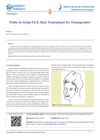
A hair transplant using hair from the back of the head and pubic area was successful in creating a feminine hairline for a male-to-female transgender person.
 September 2024 in “Journal of Cosmetic Dermatology”
 Robotic hair transplants are easier and quicker to learn than traditional methods.
 October 2010 in “Journal of Drugs in Dermatology”
 In 2010, Marco Toscani's team introduced a new scalpel for hair transplants that cuts parallel to hair follicles, reducing hair loss and improving on previous methods.
 July 2003 in “Journal of Cutaneous Medicine and Surgery”
 Minoxidil may improve hair transplants and combining treatments could help alopecia areata.
 2 citations
,
September 2007
2 citations
,
September 2007 Surgical hair restoration involves moving hair from a non-balding area to a balding area, with the transplanted hair not subject to male pattern baldness. Medications can slow hair loss and regrow some hair, but successful treatment needs careful planning, skill, and ethical responsibility due to progressive hair loss and limited donor hair.
 July 2024 in “Journal of Investigative Dermatology”
 A single medium, PRIME AIRLIFT, supports better human hair follicle formation in grafts.
January 2006 in “Zhongguo bingli shengli zazhi” Murine epidermal stem cells can develop into skin structures without rejection when implanted.
 January 1994 in “Hair transplant forum international”
 Scalp-reduction surgery can improve the area for hair transplants.
17 citations
,
May 2005 in “Hair transplant forum international” The study found that using growth factors from a person's own blood may help improve hair growth in baldness surgery.
 March 2021 in “Dermatological reviews”
 Hair transplant works well, but needs more research for better results.
 September 2024 in “Journal of Cosmetic Dermatology”
 Combining CGF and microneedling with betamethasone effectively treats resistant alopecia areata.
 43 citations
,
June 2016 in “Clinics in Plastic Surgery”
43 citations
,
June 2016 in “Clinics in Plastic Surgery” The conclusion is that fat grafting is safe and effective but carries risks that need careful management.
July 2005 in “Hair transplant forum international”  April 2018 in “Journal of Investigative Dermatology”
 High amphiregulin in the skin is a bad sign for acute graft-versus-host disease.
55 citations
,
July 2020 in “International Wound Journal” Fat grafting and PRP are safe for diabetic foot ulcers, but no significant healing differences were found.
 5 citations
,
October 2013 in “Clinics in Plastic Surgery”
5 citations
,
October 2013 in “Clinics in Plastic Surgery” Hair transplant improves with regenerative medicine and FUE technique.
 September 2009 in “Hair transplant forum international”
 Changing the direction of cuts can make it easier to put in implants.
 December 2023 in “Medical Times”
 The MEST method increases cell yield and volume for regenerative medicine but needs more testing.