 25 citations
,
May 1994 in “Journal of Investigative Dermatology”
25 citations
,
May 1994 in “Journal of Investigative Dermatology” Researchers found a new gene, hacl-1, that is active in mouse hair follicles during hair growth and may be important for hair biology.
 10 citations
,
July 2022 in “The journal of investigative dermatology/Journal of investigative dermatology”
10 citations
,
July 2022 in “The journal of investigative dermatology/Journal of investigative dermatology” Human nails and hair follicles have similar gene activity, especially in the cells that contribute to their growth and development.
 93 citations
,
June 2011 in “Journal of Neuroscience”
93 citations
,
June 2011 in “Journal of Neuroscience” p63 is essential for activating and differentiating stem cells in the nose's olfactory tissue.
35 citations
,
September 2009 in “Development” Necl2 affects skin cell behavior and slows wound healing.
 81 citations
,
January 2003 in “The FASEB Journal”
81 citations
,
January 2003 in “The FASEB Journal” Follistatin helps hair growth and cycling, while activin prevents it.
7 citations
,
April 2000 in “Mammalian Genome” A new mutation in mice causes crooked whiskers and messy hair.
 1 citations
,
September 2022 in “The journal of investigative dermatology/Journal of investigative dermatology”
1 citations
,
September 2022 in “The journal of investigative dermatology/Journal of investigative dermatology” MicroRNA-148a is crucial for maintaining healthy skin and hair growth by affecting stem cell functions.
9 citations
,
November 2022 in “Biology” Key genes and pathways influence wool traits in Merino sheep.
14 citations
,
December 1991 in “Annals of the New York Academy of Sciences” MYC protooncogenes may be important for hair growth, but more research is needed.
 January 2026 in “MDPI (MDPI AG)”
 The hairy ear mutation in mice is linked to changes in gene expression affecting hair growth.
 19 citations
,
August 2012 in “Cell death and differentiation”
19 citations
,
August 2012 in “Cell death and differentiation” Intu gene is crucial for hair follicle formation by helping keratinocytes differentiate through primary cilia.
1 citations
,
October 2019 in “PubMed” Removing the p75 gene in mouse skin cells didn't affect their skin or hair growth.
9 citations
,
July 2022 in “Journal of Biological Chemistry” WWP2 is crucial for tooth development in mice.
 9 citations
,
January 2021 in “International Journal of Medical Sciences”
9 citations
,
January 2021 in “International Journal of Medical Sciences” Sox10 is important for hair follicle development and hair growth cycles.
April 2018 in “Journal of Investigative Dermatology” Id2 gene helps keep hair follicle stem cells inactive.
November 2022 in “Journal of Investigative Dermatology” NCSTN gene mutation causes abnormal skin cell differentiation and more inflammation, contributing to Hidradenitis Suppurativa.
 9 citations
,
July 2001 in “Cell”
9 citations
,
July 2001 in “Cell” Cells from certain embryo parts can induce head formation in another embryo, involving complex signaling pathways.
990 citations
,
October 1999 in “Development” Activated LEF/TCF complexes are crucial for hair development and cycling.
15 citations
,
October 1976 in “Biochemical Journal” Naked-mouse hair lacks certain proteins and has less soluble fibril.
 28 citations
,
November 2018 in “Journal of Cellular and Molecular Medicine”
28 citations
,
November 2018 in “Journal of Cellular and Molecular Medicine” CXXC5 is a protein that controls cell growth and healing processes, and changes in its activity can lead to diseases like cancer and hair loss.
 1 citations
,
August 2019 in “Pediatric dermatology”
1 citations
,
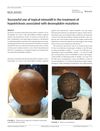
August 2019 in “Pediatric dermatology” Topical minoxidil helped an 8-year-old boy with a genetic hair disorder grow hair.
 April 2018 in “The journal of investigative dermatology/Journal of investigative dermatology”
 GATA6 is important for maintaining and differentiating cells in a key area of human skin.
 23 citations
,
September 2017 in “The journal of investigative dermatology/Journal of investigative dermatology”
23 citations
,
September 2017 in “The journal of investigative dermatology/Journal of investigative dermatology” NF-κB is crucial for different stages and types of hair growth in mice.
 April 2023 in “The journal of investigative dermatology/Journal of investigative dermatology”
 Folliculotropic mycosis fungoides has unique molecular features and cell interactions that could guide targeted therapy.
11 citations
,
November 1998 in “Journal of dermatological science” Knocking out certain genes in mice helps understand skin and hair growth problems.
42 citations
,
September 2003 in “Journal of Investigative Dermatology” A missing mK6irs1 gene causes hair loss in mice.
 November 2022 in “Journal of Investigative Dermatology”
 Low oxygen levels affect the behavior of certain proteins in human skin cells.
 17 citations
,
December 2006 in “Gene Expression Patterns”
17 citations
,
December 2006 in “Gene Expression Patterns” Scube3 gene affects mouse embryo growth in multiple areas, but needs more research.
4 citations
,
February 2023 in “International Journal of Stem Cells” The FTO gene hinders stem cells in hair follicles from becoming pigment cells.
 60 citations
,
March 2011 in “Proceedings of the National Academy of Sciences of the United States of America”
60 citations
,
March 2011 in “Proceedings of the National Academy of Sciences of the United States of America” RANK-RANKL signaling is essential for hair growth and skin health.