1 citations
,
January 1995 in “Lincoln University Research Archive (Lincoln University)” Wool growth is mainly controlled by external factors and specific proteins, not the follicles themselves.
 12 citations
,
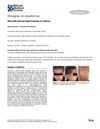
January 2014 in “The Pan African medical journal”
12 citations
,
January 2014 in “The Pan African medical journal” Minoxidil caused unwanted hair growth in a child, but stopped after stopping treatment.
 31 citations
,
March 2013 in “Gene”
31 citations
,
March 2013 in “Gene” Signaling pathways are crucial for hair growth in goats.
Editing the FGF5 gene in sheep increases fine wool growth.
September 2014 in “Journal of the American Academy of Dermatology” The girl likely has Loose anagen hair syndrome, which may improve on its own or with minoxidil.
 July 2023 in “Biomolecules”
 The new "whisker follicle microinjection assay" can test how different biomolecules affect hair growth and color.
 12 citations
,
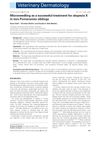
July 2015 in “Veterinary Dermatology”
12 citations
,
July 2015 in “Veterinary Dermatology” Microneedling helped two Pomeranian dogs with a hair growth disorder grow back 90% of their fur in 12 weeks, and the results lasted for a year.
 51 citations
,
July 2013 in “Bioorganic & Medicinal Chemistry Letters”
51 citations
,
July 2013 in “Bioorganic & Medicinal Chemistry Letters” Compounds from Polygonum multiflorum root, especially a new one, can boost hair growth more effectively than common treatments.
1 citations
,
January 2016 in “Journal of Biosciences and Medicines” The ACTH/MC2R system is crucial for controlling hair growth cycles in mice.
 May 2023 in “General and comparative endocrinology”
 Monkey hair cortisol levels are not affected by how fast their hair grows.
December 2025 in “Animals” TGFBR1 slows down cell growth in fine-wool sheep hair follicles.
 33 citations
,
February 1999 in “The journal of investigative dermatology/Journal of investigative dermatology”
33 citations
,
February 1999 in “The journal of investigative dermatology/Journal of investigative dermatology” IGF-1 increases whisker growth in transgenic mice.
11 citations
,
May 1995 in “The journal of investigative dermatology/Journal of investigative dermatology” 1 citations
,
September 2021 in “Frontiers in Endocrinology” Minoxidil can help transgender males grow facial hair before starting testosterone therapy.
 25 citations
,
August 1992 in “In vitro cellular & developmental biology”
25 citations
,
August 1992 in “In vitro cellular & developmental biology” The new system can grow hair in the lab and test hair growth treatments.
3 citations
,
June 1979 in “The Journal of Dermatology” Glycosaminoglycan levels peak early in hair growth and decrease as the cycle progresses.
 14 citations
,
September 2018 in “International Journal of Molecular Sciences”
14 citations
,
September 2018 in “International Journal of Molecular Sciences” Mackerel-derived fermented fish oil helps hair grow by activating growth pathways and increasing cell proliferation.
2 citations
,
May 1989 in “JAMA” Minoxidil can help hair growth but may not always look cosmetically good.
 4 citations
,
April 2018 in “Biotechnology Letters”
4 citations
,
April 2018 in “Biotechnology Letters” Human growth factor 20 can boost mouse whisker growth.
1 citations
,
May 1989 in “JAMA” Minoxidil can help hair growth but may not always look cosmetically good.
 February 2010 in “Journal of The American Academy of Dermatology”
 Mimicking growth factors in a topical solution can prolong hair growth phase and reduce hair loss without side effects.
 June 2020 in “The journal of investigative dermatology/Journal of investigative dermatology”
 Topical treatments led to hair regrowth in a man with linear morphea.
11 citations
,
October 1997 in “British Journal of Dermatology” Wool follicles grew fibres for 8-10 days in a serum-free culture, influenced by calcium, glucose, amino acids, and insulin.
7 citations
,
January 1989 Minoxidil and 4-MA can help treat hair loss.
 2 citations
,
September 2022 in “Frontiers in veterinary science”
2 citations
,
September 2022 in “Frontiers in veterinary science” Certain long non-coding RNAs are important for the growth of hair follicles in Inner Mongolian cashmere goats.
6 citations
,
July 2022 in “The FASEB Journal” Methionine helps improve hair growth in heat-stressed rabbits.
28 citations
,
July 2021 in “Pharmaceutics” Morus alba root extract promotes hair growth by activating hair follicles.
2 citations
,
July 2024 in “International Journal of Molecular Sciences” Csdc2 helps hair growth in cashmere goats by regulating specific genes.
 July 2023 in “Frontiers in Veterinary Science”
 Melatonin helps hair grow by activating the RORα receptor in goats.
23 citations
,
December 1991 in “Annals of the New York Academy of Sciences” Balding scalps slow down hair growth.