8 citations
,
April 2017 in “Journal of Dermatological Science” Hair loss is caused by the breakdown of a protein called COL17A1 in hair follicle stem cells.
 401 citations
,
January 2013 in “Postepy Dermatologii I Alergologii”
401 citations
,
January 2013 in “Postepy Dermatologii I Alergologii” The paper concludes that understanding melanocyte development can help in insights into skin diseases and melanoma diversity.
319 citations
,
March 2023 in “Science Advances” A wearable patch speeds up healing of chronic wounds by monitoring and treating them.
 316 citations
,
June 2017 in “Stem Cell Research & Therapy”
316 citations
,
June 2017 in “Stem Cell Research & Therapy” Fat tissue-derived cells show promise for repairing body tissues, but more research and regulation are needed for safe use.
 82 citations
,
May 2009 in “Development”
82 citations
,
May 2009 in “Development” EGF and KGF signalling prevent hair follicle formation and promote skin cell development in mice.
 47 citations
,
September 2023 in “Pharmacological Reports”
47 citations
,
September 2023 in “Pharmacological Reports” Vitamins A, B3, C, D, and E can improve skin health and immunity.
 26 citations
,
May 2017 in “Lasers in Medical Science”
26 citations
,
May 2017 in “Lasers in Medical Science” Laser therapy and hair growth factors significantly improve hair density in male baldness.
 20 citations
,
May 2007 in “Asian-Australasian Journal of Animal Sciences”
20 citations
,
May 2007 in “Asian-Australasian Journal of Animal Sciences” KAP8.2 gene variations affect cashmere quality in goats.
20 citations
,
March 2014 in “PubMed” Hair follicle stem cell research has advanced in understanding and using these cells for hair growth and skin repair.
12 citations
,
September 2022 in “Frontiers in Genetics” Enhancing CD8+ T cell function to induce ferroptosis in tumor cells may help treat skin melanoma.
 12 citations
,
August 2011 in “Asian-Australasian Journal of Animal Sciences”
12 citations
,
August 2011 in “Asian-Australasian Journal of Animal Sciences” KAP8.1 gene variations affect cashmere weight in Inner Mongolian goats.
6 citations
,
October 2023 in “Animal Biotechnology” A specific gene variation in goats is linked to better growth traits.
 5 citations
,
September 2017 in “Medicine”
5 citations
,
September 2017 in “Medicine” A patient with Cronkhite-Canada Syndrome developed colon cancer that spread to the liver, showing the need for regular cancer checks in such patients.
3 citations
,
April 2022 in “Biomolecules” Higher miR-34a levels and the A variant of the MIR-34A gene are linked to increased risk and severity of alopecia areata.
3 citations
,
May 2018 in “The Indian Journal of Animal Sciences” The KAP 7 gene affects wool traits in Rambouillet sheep, with the BB genotype showing the best wool characteristics.
 3 citations
,
April 1990 in “Archives of dermatology”
3 citations
,
April 1990 in “Archives of dermatology” The book reveals diverse patterns of hair growth in different species and advancements in hair and alopecia research.
 2 citations
,
September 2022 in “Frontiers in genetics”
2 citations
,
September 2022 in “Frontiers in genetics” Different proteins are linked to the varying thickness of sheep and goat hair types.
1 citations
,
October 2020 in “Research Square (Research Square)” A genetic variant in goats is linked to cashmere growth.
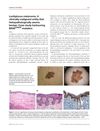 1 citations
,
March 2015 in “Journal of the European Academy of Dermatology and Venereology”
1 citations
,
March 2015 in “Journal of the European Academy of Dermatology and Venereology” A clinically suspected melanoma appeared benign under the microscope but was confirmed by specific tests and a rare mutation.

BLTP1 and KIF27 gene mutations can help breed better wool sheep.
October 2025 in “Animals” miR-200a reduces goose fibroblast growth by targeting PITX2 in the Wnt pathway.
September 2025 in “Genes” Certain gene variations in Jiangnan cashmere goats are linked to important traits like birth weight and fiber quality, useful for breeding.
 February 2025 in “Archives animal breeding/Archiv für Tierzucht”
 Certain gene combinations improve cashmere quality and production in Liaoning goats.
Encapsulating hair follicle cells in a special gel boosts their activity.
Editing the FGF5 gene in sheep increases fine wool growth.
 August 2023 in “Research Square (Research Square)”
 Two microRNAs affect hair follicle development in sheep by targeting specific genes.
 September 2022 in “Canadian journal of animal science”
 Certain gene variations are linked to the thickness of cashmere goat hair.
 January 2016 in “International journal of reproduction, contraception, obstetrics and gynecology”
 A certain gene variation is linked to a higher risk of polycystic ovarian syndrome in South Indian women.
June 2026 in “Iraqi Journal of Pharmaceutical Sciences ( P-ISSN 1683 - 3597 E-ISSN 2521 - 3512)” Androgen receptor expression in Iraqi women with breast cancer has limited prognostic value.
 July 2025 in “The Journal of Physiology”
 C-tactile afferents are linked to emotional touch and social bonding through hair movement.