 March 2026 in “Journal of Skin and Stem Cell”
 Periorbital melanosis may be linked to metabolic syndrome.
 November 2023 in “Gastroenterology”
 A woman with Budd-Chiari syndrome improved after treatment and needs a liver transplant, highlighting the importance of considering non-criteria antiphospholipid syndrome in similar cases.
 January 2026 in “Cosmoderma”
 A 9-year-old girl has a rare hair disorder causing beaded, sparse hair.
March 2025 in “Archives of Dermatological Research” miR-155-5p can help diagnose and track alopecia areata severity.
 April 2019 in “Journal of Investigative Dermatology”
 Merkel cell carcinoma is most likely to recur within two years of diagnosis, and factors like immune suppression, being over 75, and male sex increase this risk.
November 2025 in “Journal of Investigative Dermatology” IMG-007 helps regrow hair and reduce scalp inflammation in severe alopecia areata.
February 2025 in “Brazilian Journal of Hair Health” Multiparametric ultrasound is a useful non-invasive tool for assessing scalp conditions in alopecia areata patients.
 January 2025 in “International Journal of Dermatology Research”
 Higher MPV and CRP levels may indicate more severe alopecia areata.
 November 2025 in “Reumatismo”
 The choice between belimumab and anifrolumab depends on the specific symptoms of the patient's lupus.
6 citations
,
June 1986 in “The Journal of Dermatology” Reticular erythematous mucinosis syndrome can occur with minimal mucin deposition.
 June 2023 in “Romanian Medical Journal”
 The case shows how hard it is to tell apart Multiple Autoimmune Syndrome from other similar autoimmune conditions, but correct diagnosis is key for treatment to work.
 29 citations
,
June 2005 in “Journal of Zoo and Wildlife Medicine”
29 citations
,
June 2005 in “Journal of Zoo and Wildlife Medicine” Most hair loss in captive rhesus macaques is likely due to environmental and behavioral factors.
 November 2020 in “Journal of The American Academy of Dermatology”
 Certain immune markers may predict chemotherapy response in mesothelioma, and nivolumab is a tolerable and effective treatment for advanced non-small cell lung cancer.
3 citations
,
February 2022 in “Canadian Medical Association Journal” Severe hypothyroidism can cause eyebrow hair loss, but improves with thyroid hormone treatment.
January 2026 in “China CDC Weekly” Large language models can accurately identify monkeypox from medical records.
 10 citations
,
February 2015 in “Clinics in Dermatology”
10 citations
,
February 2015 in “Clinics in Dermatology” The document concludes that changes in eyelashes and eyelid skin can indicate various local and systemic diseases.
 August 2023 in “JAAD international”
 Most patients with Central Centrifugal Cicatricial Alopecia at the reviewed institution were middle-aged Black women, often with no symptoms, and commonly treated with topical medications.
20 citations
,
September 2003 in “Journal of Investigative Dermatology” Targeting MIG and MCP-1 may help treat inflammation in alopecia areata.
 4 citations
,
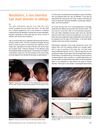
January 2014 in “Indian dermatology online journal”
4 citations
,
January 2014 in “Indian dermatology online journal” Monilethrix is a genetic hair disorder causing fragile, beaded hair with no effective treatment.
March 2022 in “Evidence-based Complementary and Alternative Medicine” Patients with deficiency syndrome, especially qi deficiency, have a higher risk of type 2 heart attacks.
2 citations
,
January 2012 Androgenetic alopecia is the only hair loss condition with specific diagnostic criteria in trichoscopy.
32 citations
,
January 2000 in “Human Heredity” Monilethrix severity varies and may be influenced by other genetic or environmental factors.
6 citations
,
January 2024 in “International Journal of Dermatology” Monoclonal antibodies are often linked to alopecia areata cases.
9 citations
,
March 2023 in “GeroScience”  1 citations
,
January 2006
1 citations
,
January 2006 Diagonal earlobe and preauricular creases may indicate higher coronary artery disease risk in men.
 March 2024 in “Skin research and technology”
 New dermoscopic criteria accurately diagnose and grade the severity of hair loss in androgenetic alopecia.
Higher EULAR/ACR scores in SLE patients predict more organ damage.
2 citations
,
March 2025 in “JAMA Dermatology” High-quality validation studies are needed to improve alopecia areata patient-reported outcome measures.
 26 citations
,
December 2022 in “Journal of the American Academy of Dermatology”
26 citations
,
December 2022 in “Journal of the American Academy of Dermatology” Monkeypox skin lesions show full-thickness skin death and swollen skin cells, with the virus found in affected cells.
December 2025 in “Chinese Medical Journal” Experts recommend starting systemic treatment for alopecia areata when the condition is severe or causes significant distress.