 January 2006 in “Seibutsu Butsuri”
 Curly and straight hair differ in how their internal fibers are arranged.
14 citations
,
February 2003 in “Journal of the American Academy of Dermatology” Folliculotropic mycosis fungoides can affect the central nervous system in advanced stages.
January 1996 in “Studia iuridica” Two new gene mutations cause a rare hair disorder.
September 1997 in “Clinical and Experimental Dermatology” Onychomatricoma is a unique nail tumor, not related to other hair-related tumors.
47 citations
,
July 1998 in “Journal of Investigative Dermatology” A new mutation, Glu402Lys, in hair keratin is linked to variable symptoms of monilethrix.

Curly wool has more orthocortex than straight wool.
53 citations
,
September 1999 in “Journal of Synchrotron Radiation” Keratinous tissues have multiple structural layers, including ordered keratin and lipid granules.
5 citations
,
April 2024 in “Science China Materials” 20 citations
,
December 1999 in “Journal of Investigative Dermatology” Mutations in the hHb6 gene cause the hair disorder monilethrix.
2 citations
,
January 2017 in “International Journal of Trichology” Trichoscopy can reveal specific hair and scalp changes in linear morphea.
24 citations
,
June 2003 in “Journal of Structural Biology” Sheet formation is key to macrofibril structure differences in wool.
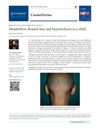 January 2026 in “Cosmoderma”
 A 9-year-old girl has a rare hair disorder causing beaded, sparse hair.
July 2025 in “Dermatology Practical & Conceptual” Hair changes and a high occipital hairline may help diagnose Trichorhinophalangeal Syndrome.
34 citations
,
November 1998 in “Journal of Investigative Dermatology” A common mutation in the hHb6 gene is linked to monilethrix, but other factors may also play a role.
 34 citations
,
January 2014 in “International Journal of Trichology”
34 citations
,
January 2014 in “International Journal of Trichology” Polarized dermoscopy is slightly better than nonpolarized for diagnosing hair disorders, with each method having its own strengths.
October 2019 in “European Journal of Dermatology” The boy's hair and skin color differences are due to a pigmentation disorder.
 1 citations
,
November 2002 in “Journal of dermatology”
1 citations
,
November 2002 in “Journal of dermatology” The antibody created from BCC tissues reacts similarly to both BCC and hair follicles, suggesting BCC may come from hair follicle cells.
175 citations
,
August 1997 in “Nature Genetics” 42 citations
,
July 2015 in “PLoS ONE” The study revealed the detailed structure of a keratin dimer, aiding understanding of how intermediate filament proteins function.
3 citations
,
January 2011 in “生物医学研究杂志:英文版” A new mutation in the KRT86 gene causes monilethrix in a Han family.
12 citations
,
June 2016 in “Clinical and experimental dermatology” A new genetic mutation in the TRPV3 gene causes Olmsted-like syndrome in a Mongolian family.
April 2016 in “Journal of the American Academy of Dermatology” A 4-year-old girl had a rare hair disorder affecting only part of her scalp.
 5 citations
,
September 1986 in “Pediatric Dermatology”
5 citations
,
September 1986 in “Pediatric Dermatology” A family showed a new condition with inherited hair loss and skin changes, possibly due to one genetic disorder.
September 2024 in “Archives of Dermatological Research”  149 citations
,
July 2017 in “PLoS Biology”
149 citations
,
July 2017 in “PLoS Biology” Hair follicle patterns form through a mix of self-organization and signaling interactions.
3 citations
,
January 2018 in “International Journal of Trichology” The new system helps detect and track early female hair loss better.
 15 citations
,
May 2014 in “Journal of dermatology”
15 citations
,
May 2014 in “Journal of dermatology” Zouboulis syndrome is a rare condition that helps diagnose monosomy 18p early.
13 citations
,
August 1985 in “The Journal of Dermatology” HKN-2 antibody targets specific skin and hair cells, showing keratin complexity.
Trichoscopic examination is crucial for diagnosing congenital triangular alopecia.