5 citations
,
November 2024 in “Frontiers in Nutrition” LB-P9 supplements improve hair health and satisfaction without side effects.
 1 citations
,
July 2022 in “Plant Cell, Tissue and Organ Culture (PCTOC)”
1 citations
,
July 2022 in “Plant Cell, Tissue and Organ Culture (PCTOC)” The study found that in Eclipta prostrata roots, coumestans come from acetate and shikimate pathways, and phenylpropanoid is made only through the shikimate pathway.
Antiseptic nanoparticle-emulsions may improve skin disinfection by targeting hair follicles.
 January 2025 in “Dermatologic Therapy”
 Low-dose oral minoxidil may help with symptoms and hair regrowth in lichen planopilaris without serious side effects.
 6 citations
,
May 2018 in “Plant Cell, Tissue and Organ Culture (PCTOC)”
6 citations
,
May 2018 in “Plant Cell, Tissue and Organ Culture (PCTOC)” Adding yeast extract and methyl jasmonate to Eclipta alba cell cultures increased the production of the compound wedelolactone.
 August 2023 in “Jurnal Pharmacia Mandala Waluya”
 Albizia saponaria bark extract at 20% concentration promotes hair growth in rabbits.
August 2018 in “Dermatologic Surgery”  12 citations
,
April 2023 in “Nano Biomedicine and Engineering”
12 citations
,
April 2023 in “Nano Biomedicine and Engineering” Silver nanoparticles made from jackfruit leaf extract are effective against bacteria and fungi.
January 2026 in “BioNanoScience” Myrtus communis Linn is a versatile medicinal plant used for treating many health issues and as a food additive.
26 citations
,
January 2005 in “PubMed” RUM-loaded SLN shows promise for treating acne and hair loss topically.
15 citations
,
April 2023 in “Biology” Plant and algal lipid droplets are promising for natural oil production but need better extraction methods.
May 2013 in “DOAJ (DOAJ: Directory of Open Access Journals)” The multimodal microemulsion with minoxidil, diclofenac, and tea tree oil is more effective for hair growth than minoxidil alone.
Liposomes with minoxidil and PEP penetrate skin slowly but reach deeper layers than foam.
 August 2025 in “International Journal of Applied Pharmaceutics”
 A stable Moringa seed oil hair serum was developed, offering a promising natural alternative for hair loss treatment.
 1 citations
,
May 2022 in “Scientific African”
1 citations
,
May 2022 in “Scientific African” Oleogels made from Cedarwood and Rosemary oils can enhance hair growth, but combining both oils doesn't increase the effect.
October 2017 in “Doctoral thesis, UCL (University College London).” Lipid-based nanoparticles are effective for applying hair growth treatments to the skin.
 13 citations
,
March 2014 in “Pediatric Dermatology”
13 citations
,
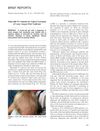
March 2014 in “Pediatric Dermatology” Minoxidil 5% solution significantly improved hair density in a girl with loose anagen hair syndrome over 28 months, with no side effects.
 June 2021 in “Current Biochemistry”
 Stingless bee propolis at a 6.25% concentration effectively stops dandruff-causing bacteria growth, performing better than ketoconazole.
4 citations
,
January 2014 in “JOURNAL OF CLINICAL AND DIAGNOSTIC RESEARCH” Oral minipulse therapy effectively treated bullous lichen planus in a 35-year-old woman.
15 citations
,
March 2019 in “Veterinary Dermatology” Three mousse products effectively reduced bacteria on dog hair for at least 10 days.
12 citations
,
June 2020 in “The anatomical record” miR-203a-3p helps hair follicle stem cells become specialized by targeting Smad1.
2 citations
,
December 2015 in “DOAJ (DOAJ: Directory of Open Access Journals)” Sonophoresis reduces skin absorption of sodium fluorescein in certain liposomes.
5 citations
,
September 2024 in “Biomolecules and Biomedicine” Total glucosides of paeony may help treat alopecia areata by reducing inflammation and hair loss.
January 2012 in “RepositóriUM (Universidade do Minho)” PLA nanoparticles can effectively deliver treatments to hair follicles, showing potential for hair therapy.
 September 2025 in “Jurnal Ilmu Kedokteran dan Kesehatan Indonesia”
 Bay leaf extract in pomade promotes hair growth.
 15 citations
,
September 2018 in “Dermatologic therapy”
15 citations
,
September 2018 in “Dermatologic therapy” Both emollients effectively reduced itching and improved skin moisture in xerotic eczema.
 April 2026 in “International Journal of Drug Delivery Technology”
 Herbal shampoos with natural ingredients are a safe and effective alternative to ketoconazole for treating seborrheic dermatitis.
April 2019 in “The journal of investigative dermatology/Journal of investigative dermatology” A synthetic sandalwood odorant can boost antimicrobial production in hair follicles, making them more resistant to bacteria.
13 citations
,
November 2022 in “Biomaterials Science” The microneedle patch effectively promotes hair regrowth by delivering miR-218.