 4 citations
,
January 2014 in “Indian dermatology online journal”
4 citations
,
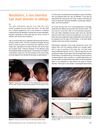
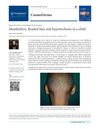
January 2014 in “Indian dermatology online journal” Monilethrix is a genetic hair disorder causing fragile, beaded hair with no effective treatment.
 1 citations
,
September 2023 in “Journal of The American Academy of Dermatology”
1 citations
,
September 2023 in “Journal of The American Academy of Dermatology” Low dose oral minoxidil can help with hair loss when used alone.
2 citations
,
November 2009 in “DSpace (Federal University of Santa Catarina)” Brunfelsia uniflora has good antioxidant properties and moderate antibacterial activity.
The extract of Guazuma ulmifolia Lam. has limited antioxidant properties and cannot prevent uric acid synthesis.
 9 citations
,
May 2018 in “International Journal of Current Microbiology and Applied Sciences”
9 citations
,
May 2018 in “International Journal of Current Microbiology and Applied Sciences” Certain plant compounds can help treat diabetes.
 14 citations
,
April 2018 in “ACS Biomaterials Science & Engineering”
14 citations
,
April 2018 in “ACS Biomaterials Science & Engineering” Nanoemulsion is a promising method for delivering luteolin to promote hair growth without minoxidil's side effects.
January 2025 in “Reactions Weekly” November 2024 in “Reactions Weekly” May 2023 in “Reactions Weekly” 8 citations
,
February 2025 in “Pharmaceuticals” Polyphenols may help treat skin diseases due to their anti-inflammatory and antioxidant effects.
 18 citations
,
January 2000 in “Food Science and Technology Research”
18 citations
,
January 2000 in “Food Science and Technology Research” Apple polyphenols, especially from unripe apples, can help prevent cells from turning into fat cells.
 December 2024 in “Tropical Journal of Natural Product Research”
 The developed carrier may improve hair growth treatments using brown algae extract.
December 2025 in “International Journal of Dermatology” Combining low-dose oral minoxidil with immunomodulators shows promise for treating alopecia areata but needs more research.
 26 citations
,
January 2016 in “Annals of Dermatology”
26 citations
,
January 2016 in “Annals of Dermatology” Ecklonia cava polyphenols help increase human hair growth and reduce hair loss.
 January 2021 in “Social Science Research Network”
 The new treatment using tiny lipid carriers to deliver minoxidil and latanoprost directly to hair follicles shows promise for alopecia.
February 2024 in “Cosmetics” The conclusion is that new plant-based treatments for hair loss may work by targeting certain enzymes.
4 citations
,
August 1985 in “Archives of Internal Medicine” Polysorbate 60 does not help with male pattern baldness.
April 2024 in “Natural Product Communications” Juniperus pruning woods can be used to make effective biopesticides.
 November 2024 in “Journal of Cosmetic Dermatology”
 The plant extracts may help treat hair loss by promoting hair growth and reducing DHT levels.
January 2026 in “SSRN Electronic Journal” 38 citations
,
January 2017 in “PPAR Research” PPAR-γ helps control skin oil glands and inflammation, and its disruption can cause hair loss diseases.
2 citations
,
February 2025 in “Journal of Nanobiotechnology” Modified frameworks with stearic acid enhance drug delivery and promote hair growth.
 68 citations
,
July 2011 in “Journal of Biochemistry/The journal of biochemistry”
68 citations
,
July 2011 in “Journal of Biochemistry/The journal of biochemistry” New LPA receptors (LPA4, LPA5, LPA6) have diverse roles in the body.
 January 2026 in “Cosmoderma”
 A 9-year-old girl has a rare hair disorder causing beaded, sparse hair.

Sublingual minoxidil increases hair thickness in men with hair loss.

Polyphenolic compounds may help hair growth but need more research.
 3 citations
,
November 2020 in “Phyton-international Journal of Experimental Botany”
3 citations
,
November 2020 in “Phyton-international Journal of Experimental Botany” Wedelolactone may help treat chronic diseases by acting as an antioxidant and affecting important proteins.
 January 1989 in “Skin research”
 The hair regrowth tonic effectively increased hair count and was safe for treating male pattern baldness.
1 citations
,
January 2013 A hair tonic with 7.5% daun talok and 2% daun pare promotes hair growth as effectively as minoxidil.