7 citations
,
August 2008 in “Immunogenetics” A gene mutation in mice causes increased mast cells and disorganized hair follicles in their skin.
 8 citations
,
November 1990 in “Archives of Dermatology”
8 citations
,
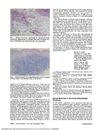
November 1990 in “Archives of Dermatology” A woman with EMS showed unusual skin mucinosis without the typical hard skin syndrome, suggesting EMS can cause skin mucinosis.
 November 2022 in “bioRxiv (Cold Spring Harbor Laboratory)”
 MOF controls skin development by regulating genes for mitochondria and cilia.
4 citations
,
October 2001 in “Mycoses” A young cat had a rare fungal infection caused by Microsporum gypseum.
January 1972 in “Open PRAIRIE (South Dakota State University)” Mimosine is toxic to animals, causing hair loss, infertility, and growth issues, but its exact harmful mechanism is unclear.
 8 citations
,
December 2020 in “Scientific reports”
8 citations
,
December 2020 in “Scientific reports” Selective breeding caused the unique curly hair in Mangalitza pigs.
5 citations
,
June 2020 in “Medicine” A patient with a rare disease had a unique genetic mutation linked to their symptoms.
30 citations
,
December 1996 in “Journal of Investigative Dermatology” 7 citations
,
April 2000 in “Mammalian Genome” A new mutation in mice causes crooked whiskers and messy hair.
5 citations
,
January 2024 in “Therapeutic Advances in Hematology” Mogamulizumab treatment in Sézary syndrome may cause skin issues and hair loss but can lead to a complete response.
694 citations
,
April 2000 in “Nature genetics” Msx2 deficiency in mice leads to bone growth and organ development problems.
 October 2023 in “Cell & bioscience”
 A special gene region controls the re-emergence of a primitive wool type in Merino sheep, improving their wool yield and adaptability.

The patient with total hair loss did not regrow hair despite treatment, indicating a poor outlook for this type of hair loss.
19 citations
,
February 2001 in “Journal of paediatrics and child health” A new mutation in the mitochondrial DNA was found in a boy with MELAS, even though his family didn't show typical signs.
 11 citations
,
December 2014 in “The American journal of pathology”
11 citations
,
December 2014 in “The American journal of pathology” A gene deletion in mice causes weak protein, immune issues, hair loss, airway problems, and wasting disease.
March 2026 in “Sexual Development” Tortoiseshell tomcats with XX/XY chimerism can be fertile.
20 citations
,
May 2011 in “Journal of Clinical Investigation” The study created a mouse model to mimic degenerative diseases for testing tissue repair and new therapies.
 January 2024 in “Australasian journal of dermatology (Print)”
 A boy's hair turned red because of genetic mutations, not lack of zinc.
66 citations
,
October 2002 in “Human molecular genetics online/Human molecular genetics” A gene mutation in mice causes skin defects and early death.
2 citations
,
January 2022 in “The Application of Clinical Genetics” A young Russian girl with Meier-Gorlin syndrome has two new mutations in the CDC6 gene.
A TNFAIP3 gene mutation can cause unusual and varied symptoms of lupus and Sjogren's syndrome.
89 citations
,
March 1996 in “Proceedings of the National Academy of Sciences” CD18-deficient mice developed psoriasis-like skin disease, useful for studying inflammatory skin disorders.
 14 citations
,
December 2010 in “Journal of human genetics”
14 citations
,
December 2010 in “Journal of human genetics” A Japanese patient with IFAP syndrome had a severe MBTPS2 gene mutation but showed milder symptoms than previously observed cases.
25 citations
,
May 2004 in “Prenatal Diagnosis” Prenatal genetic diagnosis may not predict MELAS syndrome severity in offspring.
September 1973 in “Primates” 1 citations
,
July 2018 in “JAMA dermatology” Poliosis causes white hair patches due to lack of melanin.
 1 citations
,
July 2023 in “Nature communications”
1 citations
,
July 2023 in “Nature communications” MOF controls key genes for skin development by regulating mitochondrial and ciliary functions.
 April 2016 in “The journal of investigative dermatology/Journal of investigative dermatology”
 MPZL3 is crucial for seborrheic dermatitis development.
 4 citations
,
August 2023 in “Nature Communications”
4 citations
,
August 2023 in “Nature Communications” Mouse zigzag hair bends form due to a 3-day cycle of changes in hair progenitors and their environment.
38 citations
,
September 1997 in “The journal of investigative dermatology/Journal of investigative dermatology” A mutation in mice causes hair loss and skin issues due to a defect in a gene affecting cell adhesion.