 13 citations
,
September 2011 in “Archives of dermatology”
13 citations
,
September 2011 in “Archives of dermatology” A patient with steroid sulfatase deficiency had a unique hair pattern and a brain malformation not previously linked to the condition.
June 2020 in “Zenodo (CERN European Organization for Nuclear Research)” Robertsonian translocation can cause recurrent miscarriages.
3 citations
,
May 2024 in “BMC Medical Genomics” A new ARID1B gene variation causes Coffin-Siris syndrome 1 and early high myopia in a Chinese family.
93 citations
,
May 1990 in “The EMBO Journal” Mice with extra sheep genes had hair that fell out and regrew in cycles.
January 2000 in “The Mouseion at the JAXlibrary (Jackson Laboratory)” The lanceolate hair-J mutation in mice helps understand human hair disorders like Netherton's syndrome.
 1 citations
,
April 2024 in “Science Advances”
1 citations
,
April 2024 in “Science Advances” Female cuckoo color differences are linked to their unique genes and help avoid male harassment.
 January 2024 in “Medical mycology journal”
 A mother and her two daughters got a skin infection from their cat.
Sox13 is a marker for early hair follicle development but not essential for skin and hair growth.
 1 citations
,
December 2022 in “BMC Genomics”
1 citations
,
December 2022 in “BMC Genomics” The Msx2 gene affects feather development in Hungarian white geese and a specific gene variation could indicate feather quality.
 75 citations
,
October 2010 in “Mammalian genome”
75 citations
,
October 2010 in “Mammalian genome” Sphynx cats are hairless and Devon Rex cats have curly hair due to specific genetic mutations.
62 citations
,
December 1966 in “Endocrinology” Injecting α-MSH made mice's hair turn black.
22 citations
,
March 1994 in “Journal of Heredity” A mutation in mice causes hair loss and immune problems.
6 citations
,
March 2017 in “Journal of the European Academy of Dermatology and Venereology” Identical twins with a rare KRT 86 gene mutation both have the hair disorder monilethrix.
2 citations
,
August 2020 in “CRC Press eBooks” Tabby mutations in mice affect hair follicle development and help study genetic mapping and certain medical conditions.
97 citations
,
March 2006 in “Journal of Investigative Dermatology” Mutations in the DSG4 gene cause a severe form of brittle hair and skin issues.
 4 citations
,
February 2025 in “BMC Genomics”
4 citations
,
February 2025 in “BMC Genomics” Black wool in Qira sheep is linked to specific gene mutations, especially in the TYRP1 gene.
11 citations
,
December 2017 in “Orphanet Journal of Rare Diseases” A new mutation in the ST14 gene broadens the understanding of ichthyosis-hypotrichosis syndrome.
20 citations
,
August 1979 in “PubMed” Adding zinc to marmosets' water improved their health, indicating their diet lacked enough zinc.
June 2024 in “Indian Journal of Veterinary Medicine” The young goat had anaplasmosis and copper deficiency.
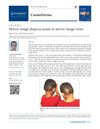
Mirror-image twins can have alopecia areata on opposite sides of their heads.
 53 citations
,
October 2014 in “Free radical biology & medicine”
53 citations
,
October 2014 in “Free radical biology & medicine” Defective mitochondrial DNA replication causes aging symptoms and increased oxidative damage in mice.
75 citations
,
September 1985 in “Archives of dermatology” Two boys had a rare skin condition needing to be differentiated from similar disorders, with unclear inheritance due to few cases.
 1 citations
,
March 2004 in “Journal of the American Academy of Dermatology”
1 citations
,
March 2004 in “Journal of the American Academy of Dermatology” Certain genes are linked to the risk of developing Alopecia Areata.
26 citations
,
April 2011 in “British Journal of Dermatology” New mutations in the DSG4 gene cause a rare hair condition.
September 2012 in “Annals of saudi medicine/Annals of Saudi medicine” The twins' condition is unique and doesn't match any known syndromes.
4 citations
,
January 2009 in “PubMed” A mutation in the KRT86 gene causes hair fragility in a Turkish family.
 9 citations
,
March 2018 in “European journal of dermatology/EJD. European journal of dermatology”
9 citations
,
March 2018 in “European journal of dermatology/EJD. European journal of dermatology” A new mutation in the ST14 gene causes a rare skin and hair disorder in a specific family.
6 citations
,
July 2005 in “Acta Ophthalmologica Scandinavica” Mitochondriopathy may cause eyelash loss.
 18 citations
,
January 2020 in “Ecology and evolution”
18 citations
,
January 2020 in “Ecology and evolution” Genes related to pigmentation, body rhythms, and behavior change during hares' seasonal coat color transition, with a common genetic mechanism in two hare species.