A new imaging method helps see and study touch nerve endings in mouse skin.
 32 citations
,
March 2014 in “PLOS ONE”
32 citations
,
March 2014 in “PLOS ONE” Mice lacking fibromodulin have disrupted healing patterns, leading to abnormal skin repair and scarring.
 9 citations
,
August 2013 in “Journal of Tissue Engineering and Regenerative Medicine”
9 citations
,
August 2013 in “Journal of Tissue Engineering and Regenerative Medicine” Transplanted baby mouse skin cells grew normal hair using a new, efficient method.
 June 2021 in “Experimental and Therapeutic Medicine”
 MEF/KSF-conditioned medium effectively grows mouse hair follicle stem cells with bone-forming potential.
 101 citations
,
December 2010 in “The journal of investigative dermatology/Journal of investigative dermatology”
101 citations
,
December 2010 in “The journal of investigative dermatology/Journal of investigative dermatology” Scientists turned mouse stem cells into skin cells that can grow into skin layers and structures.
 92 citations
,
August 2017 in “Proceedings of the National Academy of Sciences of the United States of America”
92 citations
,
August 2017 in “Proceedings of the National Academy of Sciences of the United States of America” Newborn mouse skin cells can grow hair and this process can be recreated in adult cells to potentially help with hair loss.
 41 citations
,
June 2013 in “PLOS ONE”
41 citations
,
June 2013 in “PLOS ONE” Engineered skin substitutes can grow hair but have limitations like missing sebaceous glands and hair not breaking through the skin naturally.
6 citations
,
January 2018 in “Advances in experimental medicine and biology” Researchers created artificial human skin using special cells, which could help treat skin conditions like albinism and vitiligo.
 788 citations
,
February 2007 in “Nature”
788 citations
,
February 2007 in “Nature” The document concludes that skin stem cells are important for hair growth and wound healing, and could be used in regenerative medicine.
79 citations
,
August 1998 in “The Journal of Cell Biology” Keratin 16 delays skin maturation and affects skin and hair development in mice.
 56 citations
,
June 2015 in “Nature Protocols”
56 citations
,
June 2015 in “Nature Protocols” Two-photon microscopy helps observe hair follicle stem cell behaviors in mice.
 5 citations
,
October 2020 in “Journal of radiation research”
5 citations
,
October 2020 in “Journal of radiation research” Vesicles from irradiated mouse cheek skin help cells survive radiation.
 2 citations
,
April 2019 in “Experimental Dermatology”
2 citations
,
April 2019 in “Experimental Dermatology” The article concludes that studying how skin forms is key to understanding skin diseases and improving regenerative medicine.
 May 2023 in “Stem cell research & therapy”
 New method efficiently isolates hair growth cells from newborn mouse skin.
 October 2023 in “bioRxiv (Cold Spring Harbor Laboratory)”
 Immune cells are essential for early hair and skin development and healing.
 418 citations
,
September 2012 in “Nature”
418 citations
,
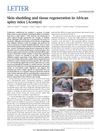
September 2012 in “Nature” African spiny mice can regenerate skin, hair, and cartilage, but not muscle, and their unique abilities could be useful for regenerative medicine.
37 citations
,
May 2021 in “Frontiers in Cell and Developmental Biology” Ng2+ perivascular cells in mouse skin come from specific fibroblast types and help in tissue repair.
 25 citations
,
August 1992 in “In vitro cellular & developmental biology”
25 citations
,
August 1992 in “In vitro cellular & developmental biology” The new system can grow hair in the lab and test hair growth treatments.
 13 citations
,
January 2020 in “Scientific Reports”
13 citations
,
January 2020 in “Scientific Reports” The African spiny mouse heals skin without scarring due to different protein activity compared to the common house mouse, which heals with scarring.
 1 citations
,
August 2018 in “Journal of Investigative Dermatology”
1 citations
,
August 2018 in “Journal of Investigative Dermatology” Muse cells keep their special features and can become different cell types even after being frozen and thawed three times.
 9 citations
,
January 2017 in “Elsevier eBooks”
9 citations
,
January 2017 in “Elsevier eBooks” Skin's epithelial stem cells are crucial for repair and maintenance, and understanding them could improve treatments for skin problems.
 83 citations
,
January 2015 in “World Journal of Stem Cells”
83 citations
,
January 2015 in “World Journal of Stem Cells” Hair follicle regeneration needs special conditions and young cells.
12 citations
,
August 2007 in “Human Molecular Genetics” Lymphotoxin-β is crucial for proper skin development in embryos.
69 citations
,
May 1997 in “Veterinary Pathology” The angora mouse mutation causes long hair and hair defects due to a gene deletion.
 43 citations
,
July 2019 in “Stem Cells International”
43 citations
,
July 2019 in “Stem Cells International” Advancements in creating skin grafts with biomaterials and stem cells are promising, but more research is needed for clinical application.
29 citations
,
October 2010 in “Journal of Investigative Dermatology” Activating Kras in mouse skin causes excess skin and hair loss.
 15 citations
,
September 2007 in “Cell & tissue research/Cell and tissue research”
15 citations
,
September 2007 in “Cell & tissue research/Cell and tissue research” Embryonic and adult stem cells are valuable for improving skin grafts and cell therapy.
4 citations
,
October 2004 in “Humana Press eBooks” Epidermal growth factor stops hair follicle formation in developing mouse skin.
 November 2023 in “npj regenerative medicine”
 Skin spheroids with both outer and inner layers are key for regrowing skin patterns and hair.
 2 citations
,
September 2022 in “Organoid”
2 citations
,
September 2022 in “Organoid” A new method was developed to efficiently grow skin hair follicles from stem cells, potentially aiding alopecia treatment.