 July 2024 in “Journal of Nanobiotechnology”
 Mouse cell exosomes help hair regrowth and wound healing by activating a specific signaling pathway.
 7 citations
,
January 2022 in “Molecules”
7 citations
,
January 2022 in “Molecules” Tectoridin helps human hair cells grow and makes mouse hair longer, suggesting it could treat hair loss.
 28 citations
,
October 2011 in “International Journal of Molecular Medicine”
28 citations
,
October 2011 in “International Journal of Molecular Medicine” Adenosine helps hair grow longer and stronger by boosting certain growth factors and signaling pathways.
3 citations
,
January 2023 in “Nutrients” Hordenine may help hair grow by activating a specific cell growth pathway.
13 citations
,
December 1983 in “Canadian journal of zoology” Heterotypic cell contacts likely help hair matrix cells differentiate during mouse hair follicle development.
 September 2017 in “Journal of Investigative Dermatology”
 Hair follicle cells change their DNA packaging during growth cycles and when grown in the lab.
 208 citations
,
December 2003 in “Journal of Investigative Dermatology”
208 citations
,
December 2003 in “Journal of Investigative Dermatology” Certain cells from hair follicles can create new hair and contribute to hair growth when implanted in mice.
 April 2016 in “Plastic and reconstructive surgery. Global open”
 Tafluprost could be a potential treatment for hair loss by promoting hair growth phase changes.
Muscarinic acetylcholine receptors help regulate and promote hair growth.
KY19382 helps to regrow hair and create new hair follicles.
 1 citations
,
September 2022 in “Journal of dermatological science”
1 citations
,
September 2022 in “Journal of dermatological science” Certain vitamins and their derivatives can help hair grow longer by activating specific growth signals.
 13 citations
,
March 2021 in “British Journal of Pharmacology”
13 citations
,
March 2021 in “British Journal of Pharmacology” KY19382 helps regrow hair and create new hair follicles.
 January 2006 in “The Journal of Korean Medicine Ophthalmology and Otolaryngology and Dermatology”
 Rubus coreanum may help hair growth but not through the tested mechanisms, and none of the herbal extracts help with acne.
 2 citations
,
January 2002 in “The Journal of Korean Medicine Ophthalmology and Otolaryngology and Dermatology”
2 citations
,
January 2002 in “The Journal of Korean Medicine Ophthalmology and Otolaryngology and Dermatology” Sophora flavescens extract helps hair grow and prevents acne.
 10 citations
,
June 2019 in “Journal of Tissue Engineering and Regenerative Medicine”
10 citations
,
June 2019 in “Journal of Tissue Engineering and Regenerative Medicine” Scientists successfully grew new hair follicles in regenerated mouse skin using mouse and human cells.
 10 citations
,
January 2014 in “BioMed research international”
10 citations
,
January 2014 in “BioMed research international” Rat whisker cells can help turn other cells into nerve cells and might be used to treat brain injuries or diseases.
 23 citations
,
June 2015 in “Journal of Tissue Engineering and Regenerative Medicine”
23 citations
,
June 2015 in “Journal of Tissue Engineering and Regenerative Medicine” Wnt1a helps keep cells that can grow hair effective for potential hair loss treatments.
 September 2016 in “Journal of Dermatological Science”
 Wnt-10b is important for keeping mouse skin cells healthy for hair growth.
 8 citations
,
November 2020 in “Frontiers in Cell and Developmental Biology”
8 citations
,
November 2020 in “Frontiers in Cell and Developmental Biology” Certain genes are more active in baby scalp cells and can help grow hair when added to adult mouse skin cells.
 1 citations
,
October 2001 in “Journal of Wood Science”
1 citations
,
October 2001 in “Journal of Wood Science” Some extracts from woods and fungi can promote hair growth better than a known hair growth substance.
 75 citations
,
August 2011 in “Journal of Investigative Dermatology”
75 citations
,
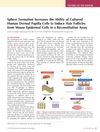
August 2011 in “Journal of Investigative Dermatology” Forming spheres boosts the ability of certain human cells to create hair follicles when mixed with mouse skin cells.
 20 citations
,
August 2015 in “International Journal of Molecular Medicine”
20 citations
,
August 2015 in “International Journal of Molecular Medicine” Human placental extract may help hair growth by affecting certain cell signals and could be more effective with minoxidil.
 14 citations
,
September 2018 in “Biochemical and Biophysical Research Communications”
14 citations
,
September 2018 in “Biochemical and Biophysical Research Communications” Growing hair cells with dermal cells can potentially treat hair loss.
 31 citations
,
August 2019 in “Regenerative Medicine”
31 citations
,
August 2019 in “Regenerative Medicine” Human placenta hydrogel helps restore cells needed for hair growth.
 3 citations
,
April 2022 in “International Journal of Molecular Sciences”
3 citations
,
April 2022 in “International Journal of Molecular Sciences” Scientists turned mouse skin cells into hair-inducing cells using chemicals, which could help treat hair loss.
 May 2023 in “Stem cell research & therapy”
 New method efficiently isolates hair growth cells from newborn mouse skin.
 3 citations
,
January 2018 in “PeerJ”
3 citations
,
January 2018 in “PeerJ” Researchers created a long-lasting mouse skin cell strain that may help with hair growth research and treatments.
 32 citations
,
April 2017 in “Scientific Reports”
32 citations
,
April 2017 in “Scientific Reports” Platelet-rich plasma can help grow more mouse hair follicles, but it doesn't work for human hair follicles yet.
 41 citations
,
June 2010 in “Journal of Investigative Dermatology”
41 citations
,
June 2010 in “Journal of Investigative Dermatology” New cells are added to the hair's dermal papilla during the active growth phase.
 24 citations
,
April 2012 in “Developmental Biology”
24 citations
,
April 2012 in “Developmental Biology” Dermal papillae cells, important for hair growth, come from multiple cell lines and can be formed by skin cells, regardless of their origin or hair cycle phase. These cells rarely divide, but their ability to shape tissue may contribute to their efficiency in inducing hair growth.