 October 2023 in “Journal of the Endocrine Society”
 A rare case of Cushing syndrome was successfully treated with one-sided adrenal gland removal, suggesting personalized treatment is important.
 May 2025 in “Science Advances”
 PIEZO1 helps keep hair follicle stem cells inactive, affecting hair growth.
 88 citations
,
July 2008 in “Development”
88 citations
,
July 2008 in “Development” BMP2 and BMP7 have opposite roles in feather formation.
 November 2022 in “The journal of investigative dermatology/Journal of investigative dermatology”
 Deleting the CD271 gene in mouse skin cells leads to disorganized skin and increased hair growth, suggesting CD271 is important for skin health.
5 citations
,
October 2022 in “Biology” CAP1 helps Arabidopsis plants grow better under ammonium stress.
14 citations
,
January 2005 in “Cell Stress and Chaperones” January 2026 in “Dermatologic Therapy” APCs may improve hair density in cicatricial alopecia but effects may not last long.
 January 2020 in “bioRxiv (Cold Spring Harbor Laboratory)”
 Certain genetic variants in ERN1, TACR3, and SPPL2C are linked to when Alzheimer's disease starts.
 September 2024 in “Cureus”
 A new method improves platelet testing for heart disease patients.
July 2025 in “Journal of Investigative Dermatology” Hhip-Cre effectively targets dermal papilla cells for gene manipulation in hair biology.
 30 citations
,
April 2017 in “European Journal of Cell Biology”
30 citations
,
April 2017 in “European Journal of Cell Biology” CIP/KIP proteins help stop cell division and support hair growth.
19 citations
,
July 1997 in “British Journal of Dermatology” LHTric-1 is a specific antibody useful for studying hair and nail formation.
EDM is better for isolating and growing human foreskin fibroblasts, and PPP helps repair UVB damage.
29 citations
,
January 2003 in “Genomics” A new mouse mutation causes skin and hair issues, influenced by another gene.
7 citations
,
December 1970 in “Biochimica et Biophysica Acta (BBA) - Protein Structure” 22 citations
,
September 2000 in “Journal of Investigative Dermatology” μ-Crystallin may help hair growth by affecting thyroid hormone levels in mouse hair follicles.
 66 citations
,
December 2014 in “Nature Communications”
66 citations
,
December 2014 in “Nature Communications” Fibroblasts can be turned into melanocytes for potential skin treatments.
 42 citations
,
February 1998 in “The Journal of Steroid Biochemistry and Molecular Biology”
42 citations
,
February 1998 in “The Journal of Steroid Biochemistry and Molecular Biology” PNU 157706 is a more effective treatment than finasteride for conditions caused by DHT, like enlarged prostate and hair loss.
22 citations
,
July 2021 in “Journal of Investigative Dermatology” April 2019 in “Journal of Investigative Dermatology” FGFR2 signaling controls Merkel cell formation in different skin regions.
 January 2024 in “Wiadomości Lekarskie”
 pbn-STAC effectively finds strategies for cellular reprogramming using deep reinforcement learning.
28 citations
,
November 2018 in “Journal of cellular physiology” miR-124 helps mouse hair follicle stem cells become nerve cells by blocking Ptbp1 and Sox9.
24 citations
,
March 2008 in “Neuroscience Research” Cat paws have complex touch sensors for detailed sensory processing.
43 citations
,
April 1996 in “Journal of Investigative Dermatology” 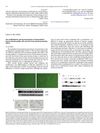 13 citations
,
September 2010 in “Journal of Dermatological Science”
13 citations
,
September 2010 in “Journal of Dermatological Science” Researchers made a cell line that grows quickly and can help with hair growth research.
26 citations
,
April 1996 in “Journal of Investigative Dermatology” 18 citations
,
December 2016 in “European journal of pharmacology” A new compound slows cancer cell growth and causes cell death by blocking cell cycle progression and increasing cell-damaging molecules.
24 citations
,
March 2016 in “Journal of Investigative Dermatology” TIP39 and PTH2R help control calcium levels and skin cell development.
 136 citations
,
April 2013 in “Clinical Cancer Research”
136 citations
,
April 2013 in “Clinical Cancer Research” The drug IPI-926 is safe at 160 mg daily and may help treat certain tumors, especially basal cell carcinoma.
18 citations
,
February 2001 in “Der Hautarzt” A woman with myotonic dystrophy had multiple skin tumors on her scalp, suggesting a genetic link.